Algeria
 Egypt
 Libya
 Morocco
 Sudan
 Tunisia
 Benin
 Burkina Faso
 Cabo Verde
 Côte d'Ivoire
 Ghana
 Guinea
 Guinea-Bissau
 Liberia
 Mali
 Mauritania
 Niger
 Nigeria
 Sierra Leone
 The Gambia
 Togo
 Cameroon
 Central African Republic
 Chad
 DR Congo
 Equatorial Guinea
 Gabon
 Republic of the Congo
 São Tomé and Príncipe
 Burundi
 Comoros
 Djibouti
 Eritrea
 Ethiopia
 Kenya
 Madagascar
 Malawi
 Mauritius
 Mozambique
 Rwanda
 Seychelles
 Somalia
 South Sudan
 Tanzania
 Uganda
 Angola
 Botswana
 Eswatini
 Lesotho
 Namibia
 South Africa
 Zambia
 Zimbabwe
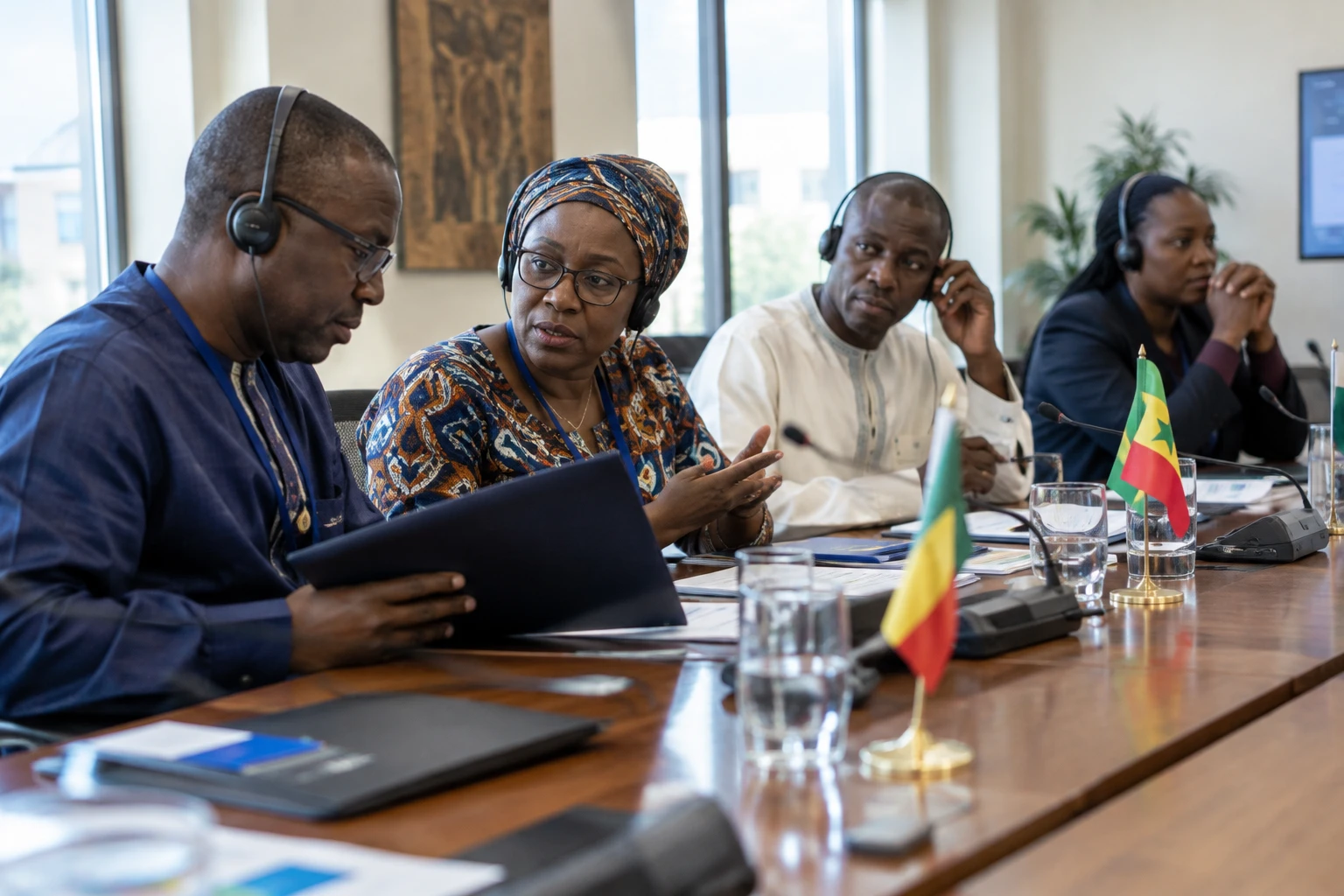
How can knowledge from elsewhere be embraced without losing one’s own history? In Senegal, as in many classrooms across the continent, this question remains closely associated with the work of Cheikh Hamidou Kane, the writer and statesman whose death invites renewed reflection on the ties between culture, education and independence.
A life at the crossroads of several worlds
Cheikh Hamidou Kane died in Dakar at the age of 98. The Senegalese Press Agency (APS) places his death on Saturday 3 October 2026; public tributes were paid the following day. Born in Matam, in northern Senegal, on 2 April 1928, he grew up between Quranic teaching and French schooling, before pursuing studies in law and philosophy in France. The APS and Senegalese Radio and Television (RTS) confirm the main stages of this journey. The biographical details published by the APS and the RTS tribute shed light on his path.
After Senegal gained independence in 1960, he took part in building the national institutions. He was notably governor of Thiès, then held ministerial posts, including in planning and industrial development. He also held regional responsibilities for UNICEF, based in Abidjan. His public career was not simply an interlude between books: it placed him at the heart of the choices facing a young state tasked with training its officials and setting its priorities.
This path between several systems of thought informs the central question of his first novel. Published in 1961, L’Aventure ambiguë portrays Samba Diallo, torn between the teaching of his Quranic master and a Western education. The book received the Grand Prix littéraire d’Afrique noire in 1962. The publication date and award are also listed in bibliographical and literary sources. The writer’s life and the significance of the novel are traced in a recent biographical notice.
From Samba Diallo’s dilemma to Salif Bâ’s action
The novel does not reduce its character to a choice between tradition and modernity. Instead, it examines the cost of an education that distances a young man from his community, and whether new knowledge can be embraced without treating one’s heritage as an obstacle. This question extends beyond Senegal: education systems inherited from the colonial period have long shaped the transmission of knowledge in several African countries, though the responses have not been the same everywhere.
In 1995, Kane published Les Gardiens du temple. The story shifts its focus to the first decades of independence and gives collective action a different role. Salif Bâ, an agricultural engineer, differs from Samba Diallo, but the two characters echo one another: understanding the world and acting upon it without breaking with the resources of one’s society. The Bibliothèque nationale de France lists the book under this publication date. The BnF’s bibliographical record for the novel allows the reference to be checked.
The two books thus develop a reflection that goes beyond individual choices. They also question the responsibility of institutions: who decides what knowledge is taught, in which languages, and for the benefit of which collective projects? For Senegalese readers, these questions concern schooling and cultural transmission. For audiences in other countries, they take different forms, depending on their languages, political histories and education systems.
A work read far beyond Senegal
Kane’s reception is part of a diverse African literary history, shaped by writers, publishers, teachers and readers across the continent. L’Aventure ambiguë has circulated in universities and schools far beyond Dakar. The APS reports that the book has been translated into more than 40 languages. Its reach is therefore not due solely to recognition from abroad: it has also been built in African spaces of reading, criticism and teaching.
Senegalese President Bassirou Diomaye Faye paid tribute to the author, saying that his work had given several generations words with which to think about opening up to the world’s knowledge without renouncing oneself. This formulation echoes the debate raised by the novel, but the tribute does not close the discussion. Readers can also challenge Samba Diallo’s answers, set the text against present-day realities and find new questions in it about language, faith or the place of local knowledge.
Across West Africa, Kane’s death also highlights the importance of intellectual exchange between neighbouring countries. Senegal belongs to the Economic Community of West African States (ECOWAS), a regional cooperation organisation. But the circulation of a novel is not confined to institutional frameworks: teachers, booksellers, libraries and universities also help ideas travel. The continent’s literary memory is built through these networks, across different languages and contexts.
His published work is compact, but his life connects literature with public service, individual reflection with the collective future. Cheikh Hamidou Kane leaves no definitive answer to Samba Diallo’s dilemma. Instead, he leaves a question to pass on: how can we learn from the world without giving up the ability to think from within our own society? In Senegal and elsewhere, generations studying his books will continue to test the answers.