Algeria
 Egypt
 Libya
 Morocco
 Sudan
 Tunisia
 Benin
 Burkina Faso
 Cabo Verde
 Côte d'Ivoire
 Ghana
 Guinea
 Guinea-Bissau
 Liberia
 Mali
 Mauritania
 Niger
 Nigeria
 Senegal
 Sierra Leone
 The Gambia
 Togo
 Cameroon
 Central African Republic
 DR Congo
 Equatorial Guinea
 Gabon
 Republic of the Congo
 São Tomé and Príncipe
 Burundi
 Comoros
 Djibouti
 Eritrea
 Ethiopia
 Kenya
 Madagascar
 Malawi
 Mauritius
 Mozambique
 Rwanda
 Seychelles
 Somalia
 South Sudan
 Tanzania
 Uganda
 Angola
 Botswana
 Eswatini
 Lesotho
 Namibia
 South Africa
 Zambia
 Zimbabwe
A release that reopens the political arena
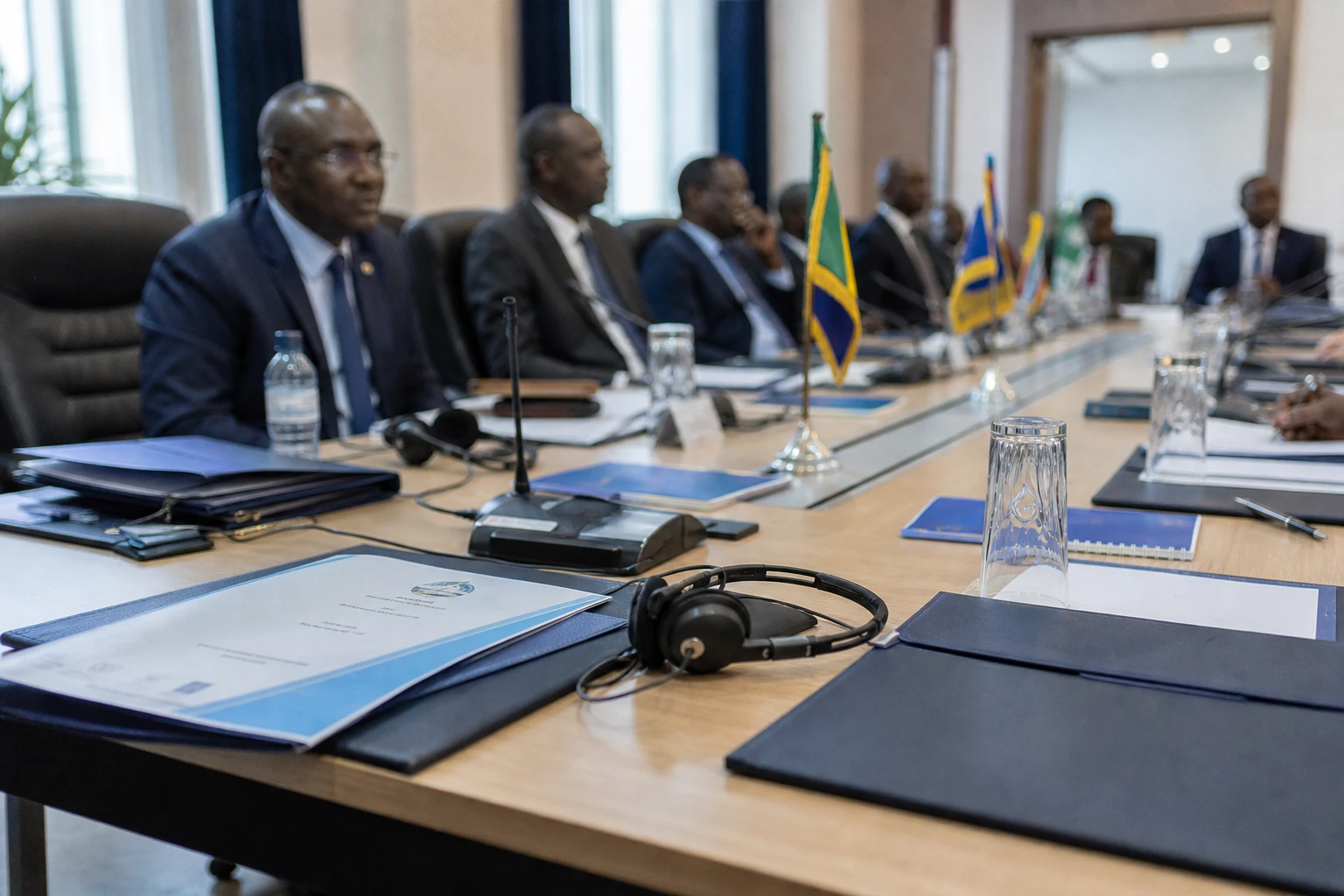
In N’Djamena, an opposition figure’s release from prison does not close a case. It opens another: the balance of power between a government seeking calm and an opposition that still wants to matter. In the case of Succès Masra, former prime minister and leader of Les Transformateurs, the question is no longer only judicial. It has become institutional, electoral and symbolic.
Chad remains marked by the period that began after the death of Idriss Déby Itno in 2021, followed by the May 2024 presidential election, won by Mahamat Idriss Déby Itno according to the official results, amid continuing disputes. The country is also a member of CEMAC, the Economic and Monetary Community of Central Africa, where the political balance in N’Djamena carries weight far beyond its borders.
What the end of the judicial chapter changes
Succès Masra was sentenced to 20 years’ imprisonment in the Mandakao case, then the Supreme Court upheld the sentence on 21 May 2026, closing off ordinary avenues of appeal. Several African media outlets noted at the time that, in practice, only a presidential pardon remained as a way to change his situation.
His release therefore comes in a specific context: the courts have spoken, but politics has not had the final word. That explains the significance of his first statement at the headquarters of Les Transformateurs in N’Djamena. He did not merely express his satisfaction at regaining his freedom. Above all, he hinted that a return to the political arena remained possible, in one form or another.
That is the most sensitive point. By proposing the idea of a unity government, Succès Masra is not simply asking for an act of clemency. He is also testing the government’s ability to turn an individual’s exit from crisis into a broader political agreement. In a presidential system such as Chad’s, the executive holds most of the levers of power. Any genuine opening would therefore have to come from the presidency, not simply from the opposition leader’s return to the headlines.
This prospect has a direct impact on several fronts. For the government, it could ease tensions without formally acknowledging an opposition victory. For Les Transformateurs, it would offer a way to survive after months of judicial and political pressure. For activists, finally, it might create some breathing space in a public arena that is often tightly controlled. But it resolves neither the divisions left by the 2024 election nor the mistrust stemming from arrests and trials linked to the opposition.
A signal for Chad, CEMAC and Central Africa
The significance of this case extends beyond Les Transformateurs alone. Within CEMAC, where Chad shares issues of stability, movement and economic integration with five other states, every major political crisis in N’Djamena has regional repercussions. The seat of the Community Court of Justice is also in N’Djamena, a quiet but tangible sign of the country’s institutional role in Central Africa.
The humanitarian and social context adds another layer. Recent United Nations reports on Chad describe a still-tense political climate, while several human rights organisations documented a crackdown on critical voices in 2026. In this context, the release of a figure such as Succès Masra can be read as a gesture of openness. It could also serve to reshape the political landscape without fully liberalising it.
This is where the continental stakes lie. In Central Africa, political transitions are rarely measured by a single gesture. They are judged by a sequence of actions: conviction, pardon, a return to dialogue, reform of the rules of the game. Chad, which has already experienced periods of repression followed by partial amnesties, is now entering a phase in which every decision by the presidency could strengthen or weaken the prospect of lasting calm.
What happens next will depend less on statements than on actions. A pardon without political openness would remain an isolated gesture. Dialogue without legal guarantees would be fragile. A unity government, if it were to take shape, would carry weight only if accompanied by clear rules on party participation, the security of public figures and the place of the opposition in the coming political cycle. In Chad, Succès Masra’s release closes nothing. On the contrary, it obliges the government to make clear what it intends to do with this lull.