Algeria
 Egypt
 Libya
 Morocco
 Sudan
 Tunisia
 Benin
 Burkina Faso
 Cabo Verde
 Côte d'Ivoire
 Ghana
 Guinea
 Guinea-Bissau
 Liberia
 Mali
 Mauritania
 Niger
 Nigeria
 Senegal
 Sierra Leone
 The Gambia
 Togo
 Cameroon
 Central African Republic
 DR Congo
 Equatorial Guinea
 Gabon
 Republic of the Congo
 São Tomé and Príncipe
 Burundi
 Comoros
 Djibouti
 Eritrea
 Ethiopia
 Kenya
 Madagascar
 Malawi
 Mauritius
 Mozambique
 Rwanda
 Seychelles
 Somalia
 South Sudan
 Tanzania
 Uganda
 Angola
 Botswana
 Eswatini
 Lesotho
 Namibia
 South Africa
 Zambia
 Zimbabwe
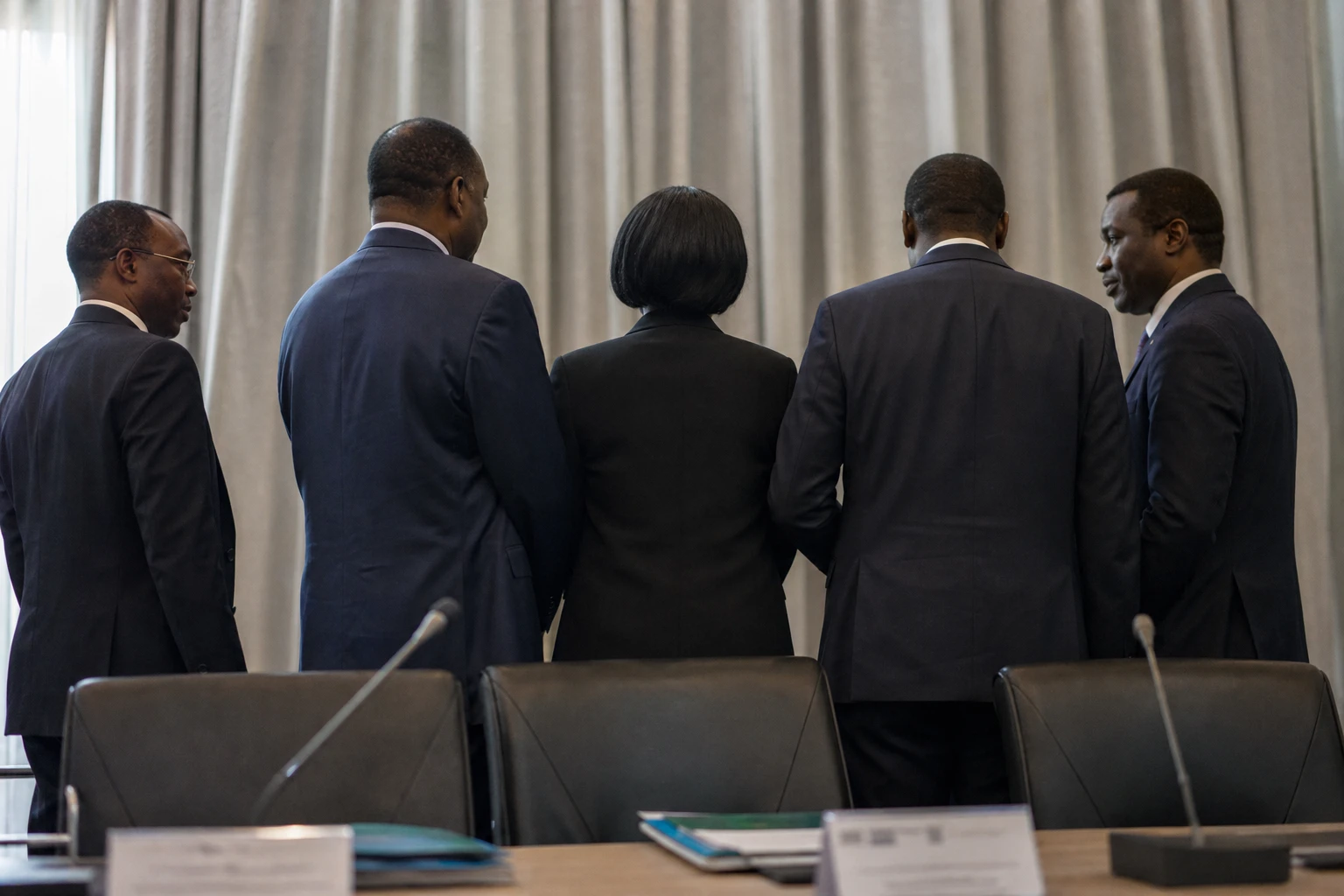
A release that goes beyond the Masra case alone
In Chad, a gesture of clemency does not, by itself, bring a political crisis to a close. It may, however, signal a moment of easing, or conversely an attempt to regain control of an increasingly fraught climate. The release of Succès Masra in N’Djamena should be read in that light.
The leader of the Les Transformateurs party is no ordinary opposition figure. A former transitional prime minister and then a candidate in the 2024 presidential election, he has become one of the most prominent figures in Chad’s political landscape. His case also forms part of the broader trajectory of a country engaged since 2021 in a transition under close domestic and regional scrutiny, with the Economic Community of Central African States (ECCAS) serving as a framework for mediation and monitoring.
What the pardon says, and what it does not
On Friday 14 August 2025, Succès Masra was pardoned by President Mahamat Idriss Déby, along with eight other political leaders who are members of the Political Actors’ Consultation Group. They were released in the evening, after several hours of waiting in N’Djamena. According to corroborated information, this was a presidential pardon, not an amnesty. The distinction matters: a pardon removes or reduces a sentence, but does not erase the conviction.
This legal point changes everything. As things stand, the beneficiaries remain deprived of certain political rights, including eligibility for office, unless another measure changes their situation. In other words, the prison door has opened, but not necessarily the door to political life. This choice allows the authorities to present a gesture of conciliation without entirely relinquishing the judicial advantage they secured just days earlier.
Succès Masra’s conviction, subsequently upheld by the Supreme Court, carried a 20-year prison sentence, together with substantial financial compensation. The authorities linked him to the deadly violence in Mandakao, in the south of the country, where 42 people were killed, according to information cited by several sources. Human rights organisations, however, denounced a case with a strong political dimension and a shrinking civic space in Chad.
An opposition figure, a trajectory, a balance of power
Succès Masra has long embodied an opposition that is urban, organised and highly visible in public debate. His return from exile in late 2023, following mediation led by Félix Tshisekedi within the framework of ECCAS, had already shown that political questions in Chad are not settled in N’Djamena alone. They are also negotiated in regional corridors, between the imperatives of stability and calculations of power.
His appointment as prime minister in January 2024 was presented as a moment of easing tensions. Ultimately, it chiefly exposed a fragile cohabitation between the centre of power and an opposition figure who was first accepted and then opposed once again. The episode says much about Chad’s system: an opening is possible, but it can be reversed as soon as it becomes politically costly.
For Les Transformateurs’ supporters, the release is a relief and a sign of political survival. For the authorities, it can demonstrate a capacity for clemency at a time when domestic and external pressure is mounting. For other opposition figures, it is above all a reminder of a simple reality: in Chad, political space sometimes opens up in phases, then closes again quickly.
The weight of the Chadian and Central African context
Chad is not going through this episode in isolation. Its economy remains fragile, constrained by oil revenues, security spending and social expectations. The country is also a military and diplomatic hub in the Sahel and Central Africa. In this context, every domestic political crisis could spill over into regional stability, trade and security co-operation. International institutions are therefore monitoring the case closely, not only because of governance, but also because of the risk of a lasting rupture.
ECCAS has already played a role in Succès Masra’s return to the country. It therefore remains an actor to watch should a new mediation process begin. The African Union, for its part, generally takes a cautious line on transitions, giving priority to institutional stability. But on the ground, such stability is meaningful only if it allows political pluralism to breathe. Without that, the announced easing of tensions would be no more than an interlude.
The gesture’s continental significance lies in this: several African states are now seeking to emerge from protracted transitions, dynastic reshuffles or cycles of electoral contestation. Chad shows that a government can alternate between sanctions, negotiation and clemency to retain the initiative. The question is whether this episode will lead to a genuine political reopening, or merely a tactical easing of tensions before the next institutional battles.