Algeria
 Egypt
 Libya
 Morocco
 Sudan
 Tunisia
 Benin
 Burkina Faso
 Cabo Verde
 Côte d'Ivoire
 Ghana
 Guinea
 Guinea-Bissau
 Liberia
 Mali
 Mauritania
 Niger
 Nigeria
 Senegal
 Sierra Leone
 The Gambia
 Togo
 Cameroon
 Chad
 DR Congo
 Equatorial Guinea
 Gabon
 Republic of the Congo
 São Tomé and Príncipe
 Burundi
 Comoros
 Djibouti
 Eritrea
 Ethiopia
 Kenya
 Madagascar
 Malawi
 Mauritius
 Mozambique
 Rwanda
 Seychelles
 Somalia
 South Sudan
 Tanzania
 Uganda
 Angola
 Botswana
 Eswatini
 Lesotho
 Namibia
 South Africa
 Zambia
 Zimbabwe
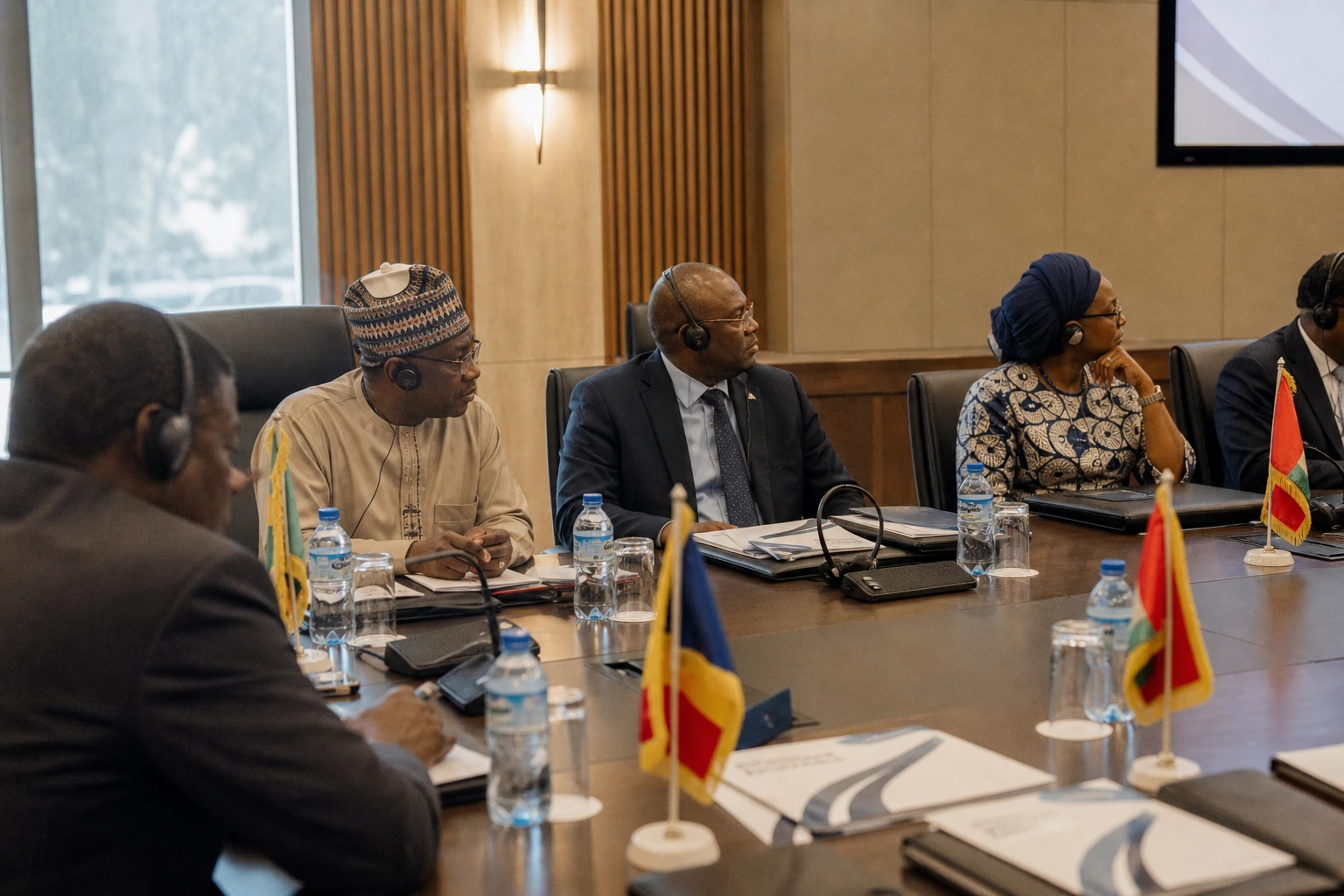
In N’Djamena, a case that reaches beyond the courtroom
In the Chadian capital, a trial linked to the Central African border is about more than a criminal case. It also tells the story of the movement of weapons, combatants and victims between two neighbouring states whose outlying regions remain porous. For several years, Chad and the Central African Republic have shared this reality: a long border, interconnected communities and violence that does not stop at the customs post.
The case concerns Martin Koumtamadji, better known as Abdoulaye Miskine, founder of the Central African Democratic Front of the People, as well as three co-defendants. Hearings were adjourned several times before one was held on 31 August in N’Djamena, before the criminal court, with a phase devoted to inquiries and the testimony of civil parties from the Chad–Central African Republic border area. The trial was due to continue on 1 September with the prosecution’s closing submissions, which had been announced.
What the prosecution alleges, and why the context is sensitive
The charges listed in the court schedule are serious: creating and participating in an insurrectionary movement, abductions, unlawful confinement, serious abuse, murder, rape and extortion of property. The documents consulted also indicate that the Chadian state has joined the proceedings as a civil party. In this type of case, the court is not only judging individual acts; it is also examining whether there was a chain of command, a modus operandi and an impact on civilians living in an already fragile area.
Testimony from the civil parties took up a large part of the 31 August hearing. According to available accounts, they came to describe violence attributed to the armed group in localities near the border. The defence, for its part, challenged the consistency of some accounts, pointing to discrepancies in dates and locations. This is a standard line of defence in a criminal trial, but it takes on particular significance when the events date back several years and witnesses have often lived, fled or rebuilt their lives on both sides of the border.
One point deserves to be stated precisely. Abdoulaye Miskine is not an ordinary figure in the Central African conflict. The United Nations Security Council describes him as the president and commander-in-chief of the FDPC, an armed group involved in violent activities. The UN also notes that the FDPC took part in the peace process signed in Bangui on 6 February 2019, while continuing to be cited for serious abuses, attacks on civilians and interference with movement along key routes.
From the Central African conflict to Chadian justice
The political heart of the case lies in Bangui as much as in N’Djamena. In 2019, the United Nations said that Abdoulaye Miskine had been arrested in Chad and placed under the control of the Chadian authorities. A 2020 UN report states that he was detained in November 2019, remained in custody in N’Djamena despite extradition requests from the Central African Republic, and was brought before a judge on 1 June 2020 before being jailed. Other UN documents say he was arrested in N’Djamena and was, at the time, being held in Klessoum prison.
This timeline explains why the proceedings are being followed beyond Chad. They touch on the relationship between national justice, judicial co-operation and the regional management of armed groups. Chad sits at the crossroads of several Sahelian and Central African crises. In this context, trying an alleged rebel leader on its territory is also a way of asserting the capacity to deliver justice for acts that crossed the border. This is an important signal for the rule of law, but also for victims seeking established facts, not merely political narratives.
The Miskine case also illustrates a reality familiar across Central Africa: peace agreements, even when signed, do not automatically dissolve armed structures or accumulated grievances. The FDPC was included in the Central African peace process in 2019, but the United Nations continued to link its leader to violence, abuses against civilians and obstruction of humanitarian aid. In other words, signing a document does not automatically bring a local war to a close. It often opens a quieter phase involving disarmament, arrests, legal disputes and the gathering of evidence.
A case closely watched across Central Africa
For N’Djamena, the stakes are institutional. For border villages, they are tangible. Affected communities expect alleged violence to be named, investigated and judged methodically. Defence lawyers, meanwhile, seek to challenge possible inconsistencies, because a sound criminal case must rest on dates, locations and identities established with care. Between these two positions, the court must uphold the standard of proof.
The regional significance is clear. In the CEMAC area, where borders are often more administrative than real, every case of this kind is a reminder that security does not depend on armies alone. It also depends on judges, court registries, co-operation mechanisms and states’ ability to implement their decisions throughout their territory. The next stage of the trial will show whether the prosecution’s submissions confirm a strictly criminal interpretation of the facts, or whether the court intends to give wider significance to the violence alleged in the border area.
Beyond this specific case, the Miskine affair is a reminder of an often-underestimated truth: in Central Africa, stabilisation also depends on ordinary justice. When a conflict leaves behind alleged atrocities, a trial becomes a place of clarification. And in the Chadian capital, that is now what the parties are waiting for, each with their own interests, memories and evidence.