Algeria
 Egypt
 Libya
 Morocco
 Sudan
 Tunisia
 Benin
 Burkina Faso
 Cabo Verde
 Ghana
 Guinea
 Guinea-Bissau
 Liberia
 Mali
 Mauritania
 Niger
 Nigeria
 Senegal
 Sierra Leone
 The Gambia
 Togo
 Cameroon
 Central African Republic
 Chad
 DR Congo
 Equatorial Guinea
 Gabon
 Republic of the Congo
 São Tomé and Príncipe
 Burundi
 Comoros
 Djibouti
 Eritrea
 Ethiopia
 Kenya
 Madagascar
 Malawi
 Mauritius
 Mozambique
 Rwanda
 Seychelles
 Somalia
 South Sudan
 Tanzania
 Uganda
 Angola
 Botswana
 Eswatini
 Lesotho
 Namibia
 South Africa
 Zambia
 Zimbabwe
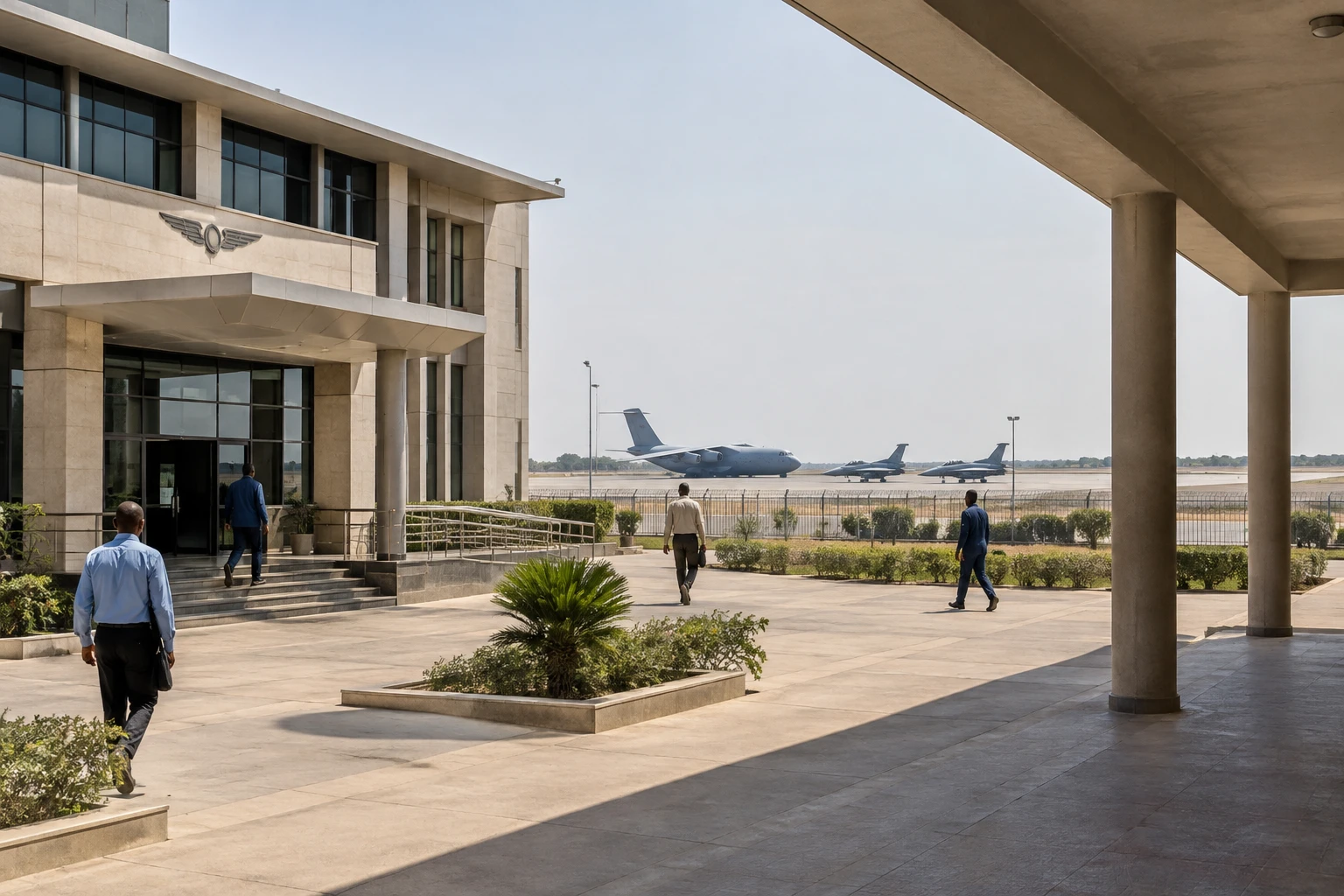
Can a stopover lasting a few hours mark the return of a military partnership? For Chad and France, the announced arrival of French aircraft in N’Djamena will above all be a test: cooperation is resuming, but in a form that the Chadian authorities want to control.
A supervised return after the troops’ departure
On 29 October, the French military’s spokesperson announced that a detachment comprising two Mirage 2000s and a CASA transport aircraft would soon make a technical stop in Chad. Training activities are also planned. The exact date and duration of the stop have not been made public. The stopover is part of Exercise GEX, scheduled to run from 8 to 30 November in Côte d’Ivoire and Gabon, with around 30 French military personnel, according to information released publicly.
This would be the first announced stopover by French fighter aircraft since French forces withdrew from Chadian territory. It comes after a meeting in Paris on 13 October between French President Emmanuel Macron and Chadian President Mahamat Idriss Déby. Their defence ministers then signed a declaration of intent to structure bilateral cooperation in this area.
The timing marks a change in tone, not an automatic restoration of the former arrangement. In November 2024, N’Djamena denounced the defence cooperation agreement. The last French military personnel left the country, and the N’Djamena base was handed back to the Chadian authorities on 30 January 2025. France says its military disengagement and the return of its facilities in N’Djamena, Faya and Abéché were completed on that date. The official timeline of the French withdrawal from Chad illustrates the scale of the institutional rupture.
Sovereignty at the heart of the new arrangement
Paris presents the stopover as a resumption of cooperation, conducted with the agreement of the Chadian authorities and in respect of their sovereignty. This clarification directly addresses the reason N’Djamena gave in 2024: its desire to review a military relationship it considered unsatisfactory and to decide on its partnerships according to its own priorities.
In the account published around the announcement, Chadian interlocutors close to the discussions say military exchanges never ceased entirely. They describe the closure of the bases as a reset rather than a definitive end to contacts. This interpretation should be attributed to those interlocutors: it does not mean that the previous agreements have been reinstated. The declaration of intent signed in October opens a framework for discussion, but the detailed arrangements for the new cooperation have not been made public.
The difference is tangible. A stopover authorised for a regional exercise does not amount to the return of a permanent presence. The aircraft are arriving under limited terms, for a mission described as temporary. Any subsequent change would depend on the agreement of the Chadian authorities. Government sources cited in reports on the announcement have raised the possibility of a French redeployment if needed, but no such request has been reported.
Security and diplomatic interests converge
For Chad’s government, restoring some exchanges could meet training and surveillance needs in a complex border environment. The country shares borders with several states facing tensions, including Sudan and the Central African Republic. To the west, the Lake Chad region remains affected by violence from armed groups. This geography gives N’Djamena’s defence choices a regional dimension, without allowing the conclusion that the stopover is a response to a specific threat.
France, for its part, is seeking to maintain defence ties with African partners after reducing or ending several permanent military arrangements on the continent. The passage through Chad could facilitate an activity linked to an exercise in Côte d’Ivoire and Gabon. However, on its own, it does not support the conclusion that France is re-establishing itself in the Sahel. The announced format, authorisations and temporary nature are decisive.
The resumption also comes as the Chadian authorities say they want to diversify their partners, notably towards Russia, Turkey and China. This choice does not necessarily mean that one partnership replaces another. Rather, it reflects the pursuit of greater diplomatic room for manoeuvre. For the leaders, the challenge is to retain several options. For the armed forces, training and technical exchanges can be valuable, provided their content and oversight are clearly defined.
A signal to watch in Central Africa and the Sahel
Chad is a member of the Central African Economic and Monetary Community (CEMAC), which brings together six countries around economic and monetary integration. It also plays a role in security dynamics in the Lake Chad basin, an area shared with several neighbouring countries. Bilateral cooperation with Paris therefore takes place in an environment where one state’s choices can affect regional security exchanges, but do not determine its neighbours’ policies on their own.
The sequence above all reveals a relationship being reshaped. In 2024, Chad secured the departure of French forces and the return of the bases. In October 2026, the two governments paved the way for limited cooperation activities, subject to Chadian authorisation. The central question now will be implementation: what training, how often, under what rules, and without what permanent presence?
The stopover announced for November will provide a first concrete indicator. It will show how Paris and N’Djamena translate their declaration of intent into practice, while also gauging the place Chad intends to reserve for its other partners. For now, the facts establish the temporary return of aircraft and an official willingness to renew military dialogue. They prove neither the reinstatement of the former agreement nor the return of a French base.