Algeria
 Egypt
 Libya
 Morocco
 Sudan
 Tunisia
 Benin
 Burkina Faso
 Cabo Verde
 Côte d'Ivoire
 Ghana
 Guinea
 Guinea-Bissau
 Liberia
 Mali
 Mauritania
 Niger
 Nigeria
 Senegal
 Sierra Leone
 The Gambia
 Togo
 Cameroon
 Central African Republic
 DR Congo
 Equatorial Guinea
 Gabon
 Republic of the Congo
 São Tomé and Príncipe
 Burundi
 Comoros
 Djibouti
 Eritrea
 Ethiopia
 Kenya
 Madagascar
 Malawi
 Mauritius
 Mozambique
 Rwanda
 Seychelles
 Somalia
 South Sudan
 Tanzania
 Uganda
 Angola
 Botswana
 Eswatini
 Lesotho
 Namibia
 South Africa
 Zambia
 Zimbabwe
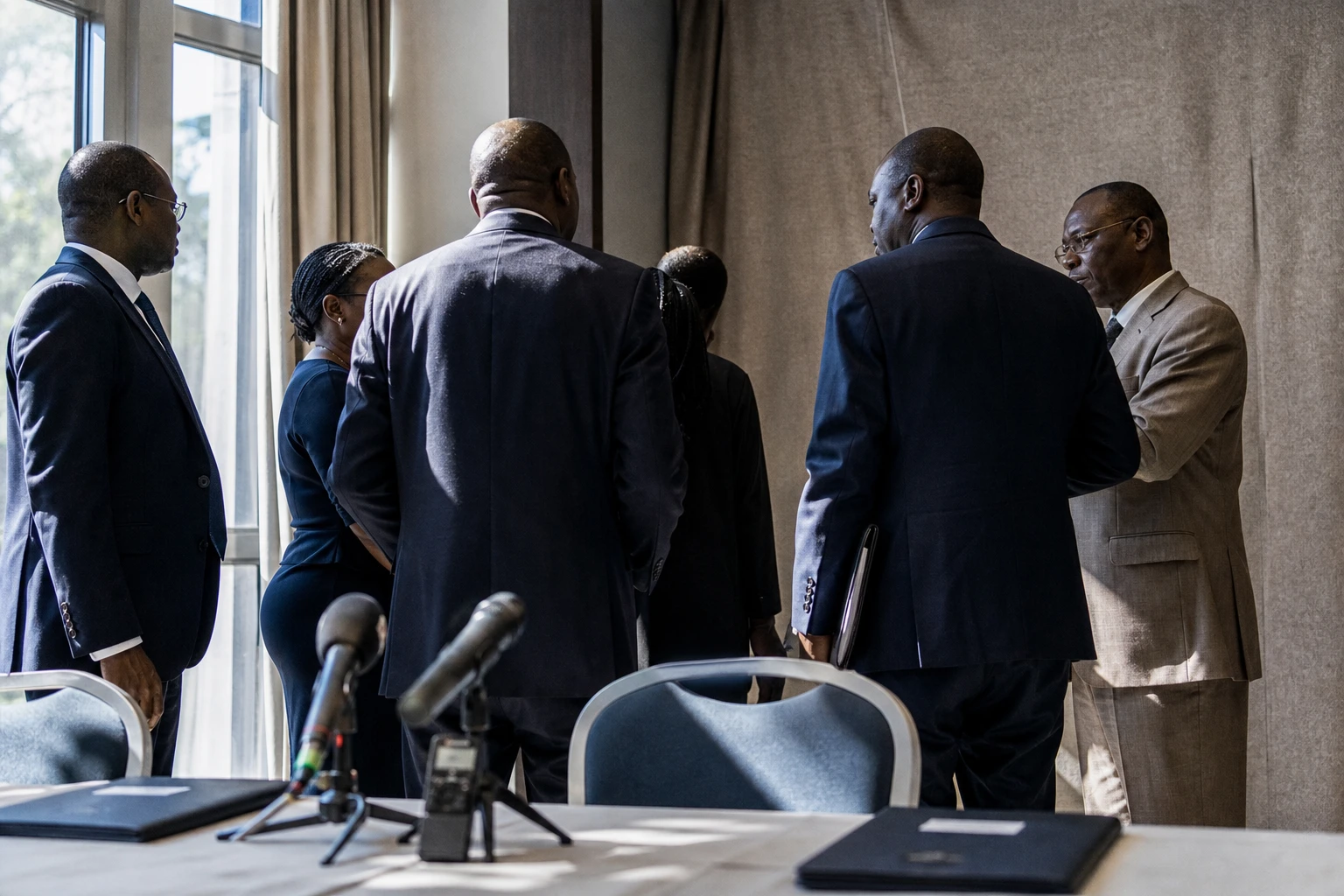
In N’Djamena, his release has not closed the legal case. A month after receiving a presidential pardon, Max Kemkoye revisited his conviction and the conditions of detention faced by leaders of the former Group of Consultation of Political Actors (GCAP). His message is aimed squarely at how the state operates: in his view, Chadian justice no longer adequately protects citizens’ rights.
The president of the Union of Democrats for Development and Progress (UDP) was speaking on Saturday 26 September 2026 at his party’s headquarters in the Chadian capital. The press conference was his first public statement since his release from Klessoum prison, following the presidential decree of 14 August 2026.
A pardon that secures release but does not settle the political debate
Max Kemkoye was one of eight leaders of the former GCAP sentenced on 8 May 2026 to eight years in prison. The ruling was handed down by a court in N’Djamena after their arrest in late April, when a protest march banned by the authorities was due to take place in the capital.
The charges included criminal conspiracy, rebellion, insurrection and unlawful possession of weapons of war. The defendants contested these classifications. Their defence had denounced proceedings based, it said, on offences that either did not exist or had not been sufficiently established.
On 14 August, President Mahamat Idriss Déby Itno granted a pardon to the eight political leaders, as well as former prime minister Succès Masra. The measure led to their release, but did not dispel the political tensions triggered by their arrest and conviction.
Another dispute emerged in the days that followed. Government officials raised the need to possess one’s civil and political rights in order to lead a political party. The pardoned opposition figures rejected this interpretation. Max Kemkoye argues that a conviction for a minor offence is not, in itself, enough to bar someone from leading a political organisation.
The distinction matters. A presidential pardon ends the execution of a sentence, but its effect on political rights depends on the applicable law and the precise nature of the conviction. The debate therefore goes beyond Max Kemkoye’s personal case. It concerns whether the leaders who have been released can fully resume their public activities.
Justice at the centre of the dispute
Speaking to journalists, the UDP president accused the authorities of using the justice system to settle political scores. He also denounced corruption and the continued detention of people he considers innocent.
“We simply want to tell the President of the Republic that today, in Chad, justice as an institution no longer exists,” he said. This is his political assessment. It is not, in itself, a judicial finding on the system as a whole.
Max Kemkoye nevertheless focused on a specific institutional issue: the independence of magistrates. In his view, a state cannot guarantee civil liberties if judges do not make their decisions free from political, administrative or financial pressure.
His remarks come amid workplace tensions affecting the day-to-day operation of Chadian justice. In September 2026, the National Union of Court Registry Staff threatened to continue a strike linked, among other things, to the implementation of measures concerning allowances. The justice minister held talks with union representatives. In the jurisdiction of the N’Djamena Court of Appeal, court clerks were subsequently requisitioned to keep the courts operating.
These difficulties do not prove Max Kemkoye’s political accusations. They do, however, show that questions of justice extend beyond high-profile trials. They also concern resources, delays, access to case files and the courts’ ability to function regularly.
Klessoum, another source of controversy
The opposition figure also gave a highly critical account of Klessoum prison, where he was held. He says the facility lacks medical staff and medicines, and that food provision is inadequate.
He put the number of detainees at more than 4,000 and estimated that a large proportion had never been tried or had been held for several years. These claims are attributed to his testimony and require independent verification before they can be stated definitively.
Pre-trial detention nevertheless remains a central issue. When someone waits a long time for trial, prison can become a punishment before a final decision has even been handed down. The consequences for families are immediate: loss of income, disruption to children’s education and repeated costs associated with visits or legal defence.
The situation also affects detainees differently depending on their resources. Those with a lawyer of their choice and political support are better able to bring attention to their cases. Detainees from modest backgrounds or living far from N’Djamena often have fewer means to challenge proceedings or obtain medical care.
A national crisis with regional repercussions
The controversy is part of the political trajectory that began after the death of Idriss Déby Itno in April 2021. The military transition, extended before the 2024 presidential election, led to the election of Mahamat Idriss Déby Itno. Since then, the authorities have sought to stabilise institutions, while the opposition has regularly challenged the conditions of political competition.
Chad is a member of the Economic and Monetary Community of Central Africa (CEMAC), which brings together six states that share, among other things, a common currency and economic cooperation mechanisms. CEMAC is not intended to adjudicate Chadian legal disputes directly. However, institutional instability in one of its members can affect regional confidence, investment and cross-border cooperation.
The Chadian case also resonates at African Union level. After several unconstitutional changes of government across the continent, the question is no longer only whether elections are held. It also concerns the independence of institutions, the protection of the opposition and whether citizens can challenge a decision without fearing that the justice system will be used against them.
The next flashpoint will be political as well as legal: whether the pardoned opposition figures can resume their roles, clarification of their civil rights and scrutiny of detention conditions. The authorities in Chad will need to show that a pardon is no substitute for justice. The opposition, meanwhile, will seek to turn its release into an institutional battle without losing its ability to participate in public life.