Algeria
 Egypt
 Libya
 Sudan
 Tunisia
 Benin
 Burkina Faso
 Cabo Verde
 Côte d'Ivoire
 Ghana
 Guinea
 Guinea-Bissau
 Liberia
 Mali
 Mauritania
 Niger
 Nigeria
 Senegal
 Sierra Leone
 The Gambia
 Togo
 Cameroon
 Central African Republic
 Chad
 DR Congo
 Equatorial Guinea
 Gabon
 Republic of the Congo
 São Tomé and Príncipe
 Burundi
 Comoros
 Djibouti
 Eritrea
 Ethiopia
 Kenya
 Madagascar
 Malawi
 Mauritius
 Mozambique
 Rwanda
 Seychelles
 Somalia
 South Sudan
 Tanzania
 Uganda
 Angola
 Botswana
 Eswatini
 Lesotho
 Namibia
 South Africa
 Zambia
 Zimbabwe
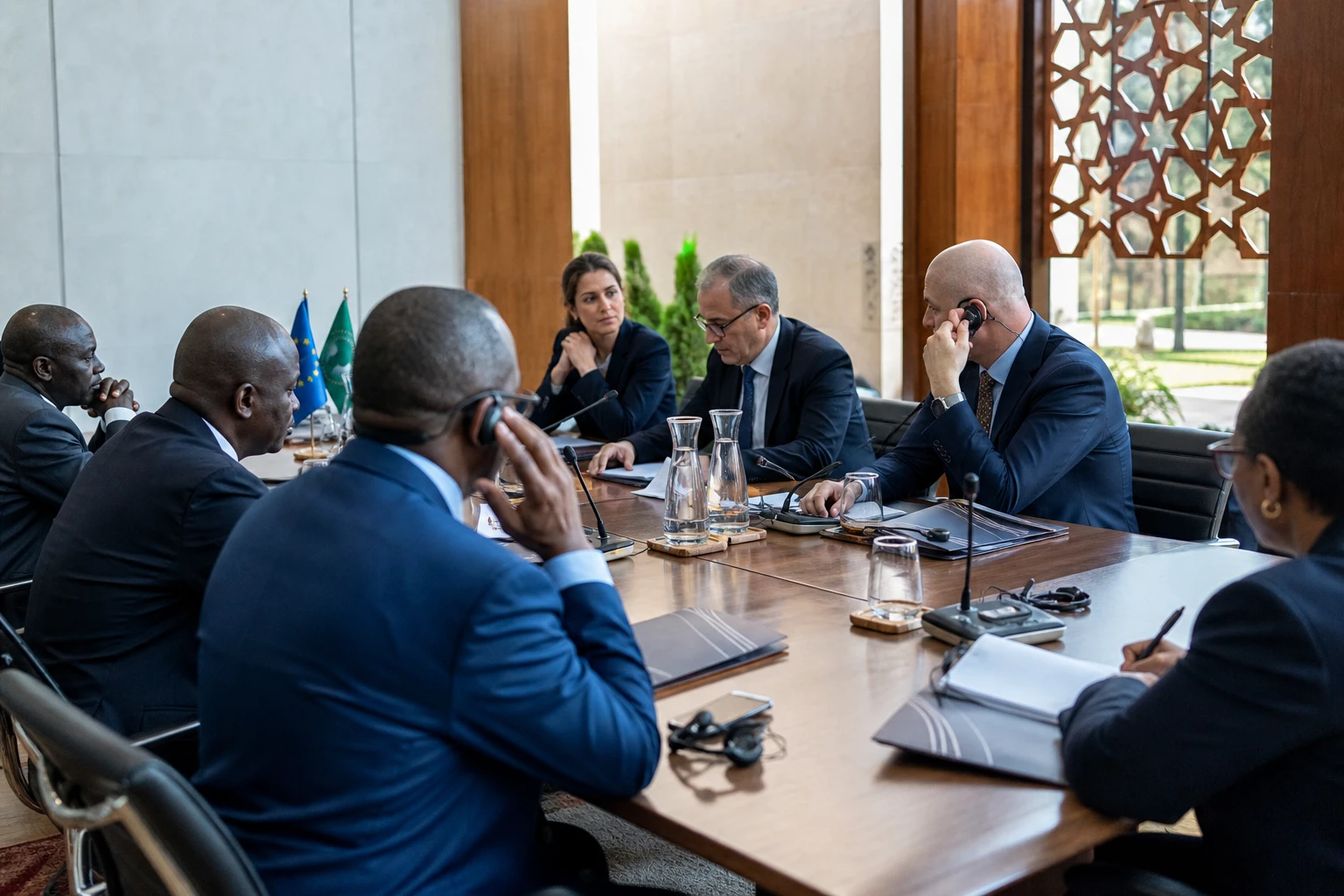
In Ceuta, the issue is no longer simply one of border control. It now concerns the return of several thousand people, the protection of minors and the strength of the partnership between Rabat and Madrid. A meeting in New York between the Moroccan and Spanish foreign ministers is seeking to contain a crisis that extends far beyond the enclave itself.
A migration issue becomes a diplomatic test
Moroccan Foreign Minister Nasser Bourita and his Spanish counterpart, José Manuel Albares, met on Thursday 24 September 2026 at the United Nations headquarters in New York. Their discussions focused on the return of people who entered Ceuta irregularly on 30 and 31 July.
According to information reported by Spanish public television, Morocco has pledged to co-operate with Spain in organising these returns. Spanish authorities estimate that around 10,000 people are still in the enclave, following the voluntary departure of a large proportion of those who arrived.
This co-operation does not mean that every case can be handled in the same way. Adults, asylum seekers and unaccompanied minors are subject to different procedures. Spanish and European law require, in particular, an individual assessment for children who are without their parents.
José Manuel Albares described this co-operation as a result of dialogue with Rabat. Nasser Bourita, for his part, reiterated Morocco’s readiness to work on returns, while rejecting accusations that would directly attribute responsibility for the influx to the Moroccan government.
The Moroccan minister believes that responsibility for people who are not returned now lies with the Spanish authorities. This position leaves Madrid with a dual obligation: to manage immediate reception and to respect the safeguards set out in immigration and asylum law, as well as child protection rules.
Huge figures, but still disputed
The influx on 30 and 31 July was exceptional in scale. Initial Spanish estimates put the number of entries at several tens of thousands. The government later revised the figures upwards, to around 80,000 people, according to data reported by the Spanish press.
These figures should nevertheless be treated with caution. They count crossings that were sometimes very brief, quick returns to Morocco and repeated movements around the El Tarajal border post. The number of people who actually remained in Ceuta is therefore significantly lower than the total number of recorded entries.
Spanish public television reported that around 10,000 people remained in the city at the end of September. Other local officials gave different estimates, ranging from 8,000 to more than 12,000 people. This discrepancy illustrates the difficulty of identification and administrative tracking in such a fast-moving situation.
Pressure is particularly intense in Ceuta, a small city whose accommodation capacity was designed for much smaller flows. Sports facilities, reception centres and social services have been mobilised. At the same time, the authorities must maintain services for the enclave’s residents.
The situation is also weighing on those who have arrived. Some are seeking international protection. Others want to reach mainland Spain. Minors, meanwhile, must be placed in the care of the relevant services and cannot be returned automatically.
Rabat challenges the account of established responsibility
In Madrid, the political debate quickly focused on the role of the Moroccan authorities. Spanish Prime Minister Pedro Sánchez said that border controls had failed during the influx. He did not, however, publicly claim that Rabat had ordered or organised the operation.
A Spanish investigation is now examining the circumstances in which the mass entry took place. Police documents refer to the presence of Moroccan agents near the border and what was deemed to be an insufficient response. Other evidence points to the possible guidance of groups towards certain crossing points.
This information remains part of an ongoing investigation. It does not amount to a judicial finding establishing the Moroccan government’s responsibility. The distinction is essential, since the investigation concerns population movements, messages circulated on social media and the conduct of security forces on both sides.
Rabat therefore rejects the idea that bilateral relations should be conducted through public accusations. For Morocco, the issue is part of a broader partnership with Spain, marked by security co-operation, trade and the management of migration. The migration issue nonetheless remains linked to political disagreements between the two capitals.
Ceuta and Melilla hold a special place in this relationship. These two cities under Spanish administration are located on the North African coast and remain claimed by Morocco. Their status is a lasting political sensitivity, even when Rabat and Madrid co-operate on economic or security matters.
A local border at the heart of European balances
Ceuta’s president, Juan Jesús Vivas, says the city cannot bear the human, financial and administrative cost of the crisis alone. He is calling for greater support from the European Union, particularly to strengthen border infrastructure and reception capacity.
Ceuta’s request reflects a regional reality. The border between Morocco and the enclave is also one of the land contact points between Africa and the European area. Decisions taken there affect co-operation between Rabat, Madrid and Brussels, particularly on returns and border surveillance.
For Ceuta’s residents, the immediate priority is to preserve security, public services and economic activity. For the people stranded in the enclave, it is to obtain a clear decision on their status. For Morocco, the issue touches on sovereignty, the dignity of its citizens and its relationship with Spain.
What happens next will therefore depend on several steps. The authorities will have to clarify the criteria for returns, distinguish between adults and minors, and process any asylum applications. They will also have to establish responsibility for how the influx unfolded, without turning an investigation into a political verdict.
The New York meeting has opened a channel for co-operation, but it does not resolve the underlying disagreement. Rabat wants to avoid being portrayed as the organiser of an operation it does not acknowledge. Madrid is seeking to restore control of its border and secure returns. Between them, Ceuta remains the flashpoint where migration, law, sovereignty and regional power dynamics intersect.