Algeria
 Egypt
 Libya
 Sudan
 Tunisia
 Benin
 Burkina Faso
 Cabo Verde
 Côte d'Ivoire
 Ghana
 Guinea
 Guinea-Bissau
 Liberia
 Mali
 Mauritania
 Niger
 Nigeria
 Senegal
 Sierra Leone
 The Gambia
 Togo
 Cameroon
 Central African Republic
 Chad
 DR Congo
 Equatorial Guinea
 Gabon
 Republic of the Congo
 São Tomé and Príncipe
 Burundi
 Comoros
 Djibouti
 Eritrea
 Ethiopia
 Kenya
 Madagascar
 Malawi
 Mauritius
 Mozambique
 Rwanda
 Seychelles
 Somalia
 South Sudan
 Tanzania
 Uganda
 Angola
 Botswana
 Eswatini
 Lesotho
 Namibia
 South Africa
 Zambia
 Zimbabwe
When a border becomes a political test
In Ceuta, the border did more than let people through. It put two capitals, two administrations and, above all, the minimum trust needed to sustain migration controls to the test. In the Spanish autonomous city, the mass arrivals exposed a familiar but still explosive dynamic: a mix of rumours, crowds, smuggling networks and a belated state response.
For Morocco, the stakes go beyond managing a border crossing. Rabat remains caught between social pressure in the country’s north, heightened surveillance of the coasts and border towns such as Fnideq, and a bilateral relationship with Madrid that any incident can weaken. For Spain, Ceuta remains a sensitive point: a European enclave in North Africa, a few kilometres from Tétouan, where every crisis immediately takes on a national and European dimension.
What the facts show
Spain’s prime minister, Pedro Sánchez, said that no evidence gathered by Spanish services established any involvement by the Moroccan authorities in the migration crisis that shook Ceuta. He also said that none of the intelligence services with which Spain usually co-operates had passed on any indication to that effect. This assessment is based on situation reports from Spain’s National Intelligence Centre and national police.
That same day, Madrid announced a major package: 6,000 additional reception places and €168 million to support Ceuta and its local economy. The Spanish government presented the aid as an emergency response, as the city remained affected by the presence of thousands of people still there after the late-July rush.
The figures themselves continue to fluctuate depending on the authorities. Spanish estimates put the number still in the enclave at about 5,000, including 1,200 unaccompanied minors, while local officials give a higher total. The discrepancy reflects the immediate challenge: identifying, directing and accommodating people and, in some cases, arranging their return to Morocco under the applicable rules.
Why the crisis grew so large
The events cannot be read solely as a migration episode. They unfolded amid disinformation on social media, where messages gave the impression that the border was open and that crossing into Ceuta was easy. Press investigations and fact-checking analyses showed that old videos, images taken out of context and calls to mobilise circulated rapidly between Morocco and other countries, fuelling the influx.
The Moroccan authorities, for their part, rejected the idea that the movement was spontaneous or accidental. The Interior Ministry said it had detected posts and anonymous messages calling for collective and illegal crossings into Ceuta and Melilla, the two Spanish enclaves on Morocco’s northern coast. Rabat also reiterated its commitment to co-operating against irregular migration and human trafficking.
On the ground, the impact on Ceuta’s residents was immediate. Reception centres were overwhelmed, makeshift tents housed new arrivals, and local protests denounced hygiene and safety conditions. Ceuta, an EU territory in North Africa, thus embodies a familiar paradox: a heavily monitored border can quickly become overwhelmed if political co-ordination breaks down.
What this means for Morocco and the region
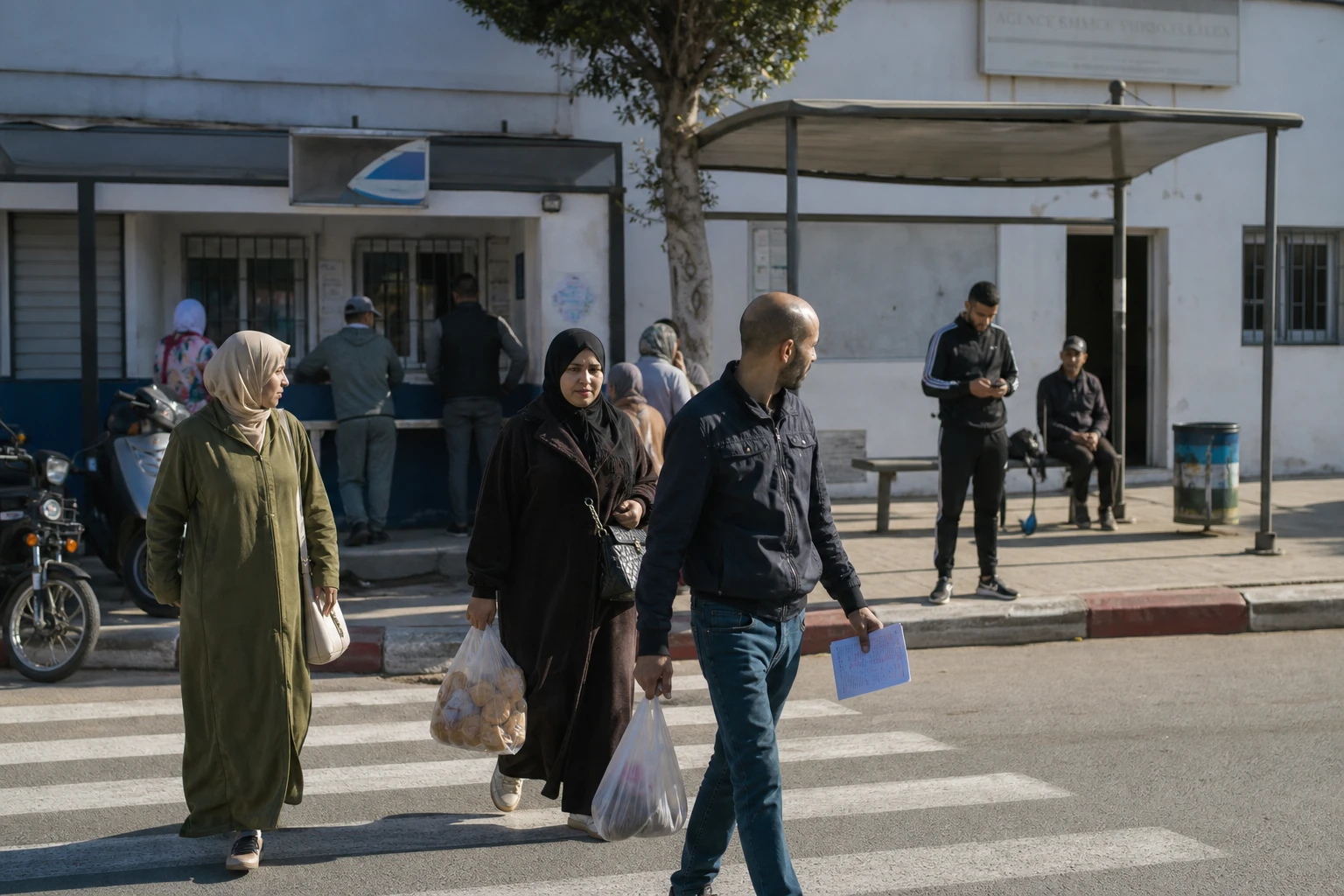
For Morocco, the episode is also a reminder of the central role played by its northern cities in regional movements. Fnideq, Tangier, Tétouan and the coastal strip near Ceuta remain pressure points where unemployment, the desire to leave, the informal economy and police surveillance converge. A crisis in Ceuta therefore has an immediate impact on the Moroccan side, among families, border municipalities and local administrations.
The implications are also European, but they directly concern North Africa. Ceuta and Melilla are two permanent points of friction between Morocco and Spain, against the backdrop of broader issues such as Western Sahara, diplomatic relations with Brussels and Mediterranean neighbourhood policy. Every migration crisis thus becomes a test of sovereignty, but also of approach: maintaining security without humiliating people, co-operating without shifting blame, and responding to the emergency without ignoring its underlying causes.
For Africa, the case is a reminder that a border between an African country and a European territory can become a continental stage. Digital movements, smuggling networks and the effects of rumours do not stop at a checkpoint. They link Fnideq, Ceuta, Rabat and Madrid, and extend to other migration routes across the Maghreb and the Sahel. In this context, the African Union, like Mediterranean partners, has an interest in viewing such a crisis as a shared governance problem, not merely a security alert.
The next steps will involve three very concrete issues: caring for unaccompanied minors, returning people who have no legal basis to stay, and the ability of the two governments to stop rumours before they turn into another wave. This is where the true strength of the Rabat-Madrid relationship will ultimately be measured.