
 Algeria
 Egypt
 Libya
 Sudan
 Tunisia
 Benin
 Burkina Faso
 Cabo Verde
 Côte d'Ivoire
 Ghana
 Guinea
 Guinea-Bissau
 Liberia
 Mali
 Mauritania
 Niger
 Nigeria
 Senegal
 Sierra Leone
 The Gambia
 Togo
 Cameroon
 Central African Republic
 Chad
 DR Congo
 Equatorial Guinea
 Gabon
 Republic of the Congo
 São Tomé and Príncipe
 Burundi
 Comoros
 Djibouti
 Eritrea
 Ethiopia
 Kenya
 Madagascar
 Malawi
 Mauritius
 Mozambique
 Rwanda
 Seychelles
 Somalia
 South Sudan
 Tanzania
 Uganda
 Angola
 Botswana
 Eswatini
 Lesotho
 Namibia
 South Africa
 Zambia
 Zimbabwe
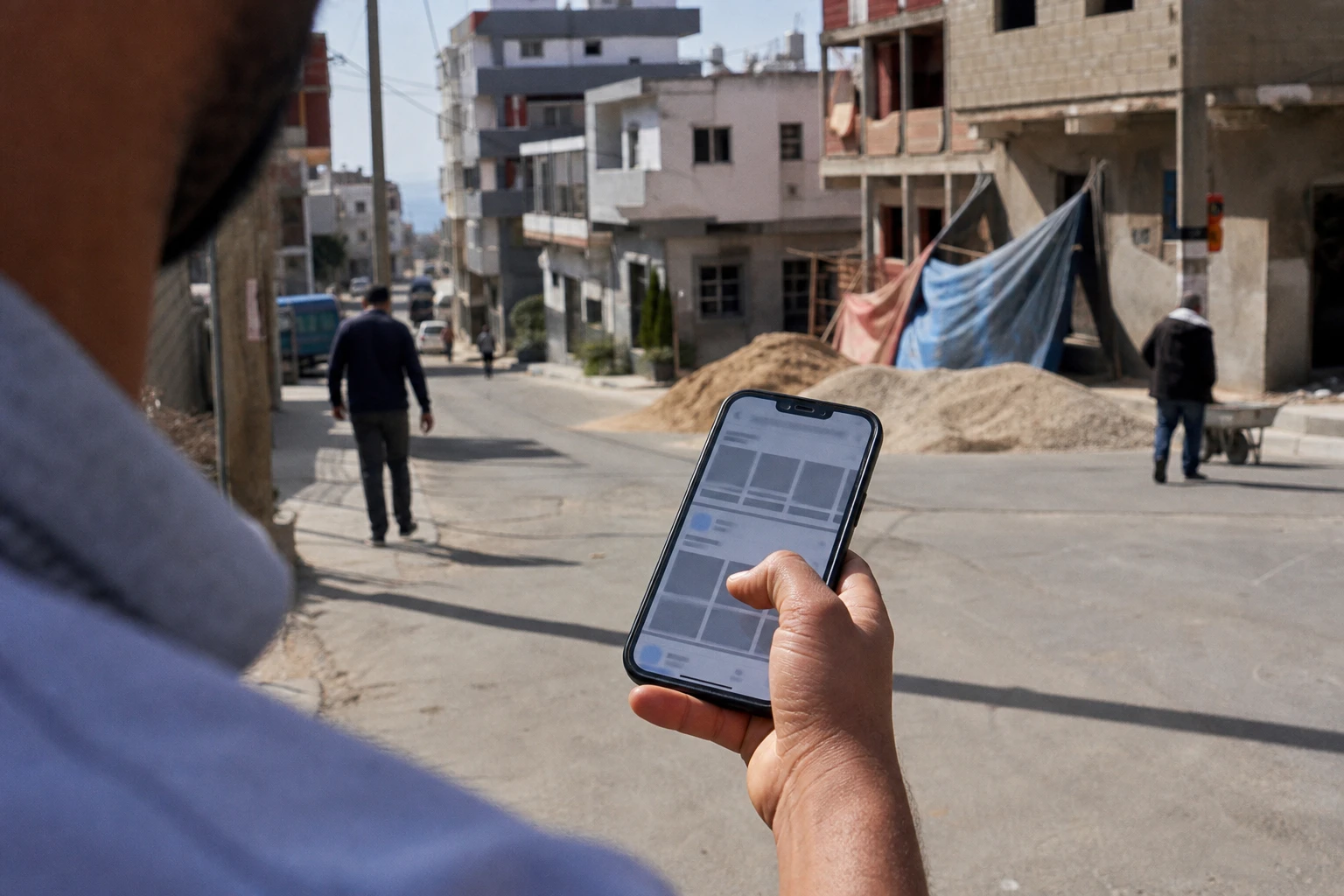
In Ceuta, the issue is not limited to crossing the border. It also concerns what happens afterwards: accommodation, the protection of minors and the fight against networks that profit from the vulnerability of migrants.
Two homes used as hiding places
Spanish police announced on 24 September 2026 that they had found 28 migrants in an irregular situation in two buildings in Ceuta, a Spanish territory on Morocco’s northern coast. Three people were arrested during the operation.
The operation was carried out in Barriada del Príncipe and the Loma Colmenar district. These areas near the border have many small buildings, extensions and unfinished constructions. This layout makes checks more difficult and can encourage the temporary use of private homes or premises not intended for residential use.
Spanish police said several people were crowded together on mattresses laid on the floor. One of the buildings, which was still under construction, had no running water, electricity, adequate ventilation or kitchen.
The second home was small and is believed to have been used to keep migrants out of sight of the authorities while they were in the city. Spanish authorities refer to them as “safe houses”, a term used in the investigation to describe places where people are temporarily hidden.
According to preliminary information provided by investigators, the occupants are believed to have paid for access to and accommodation in these spaces. In some cases, payment may also have taken the form of renovation, construction or extension work carried out in the buildings. Police estimate that this activity generated more than €10,000 between the migrants’ arrival and the operation.
Three minors placed in protective care
Three of the 28 people found were minors. After the usual checks, they were referred to the relevant care facilities in Ceuta, under the responsibility of the services tasked with protecting them.
This is significant in a territory where accommodation capacity is regularly stretched. Unaccompanied minors fall under a different protection regime from adults. Their care involves, in particular, assessing their age, access to suitable accommodation and the appointment of the authorities responsible for their guardianship.
The situation of these three minors should not be confused with that of the adults arrested or suspected of arranging their accommodation. The investigation will have to establish individual responsibility, any payments and the precise workings of the network.
Operation follows July crisis
The discovery comes after the exceptional influx recorded on 30 and 31 July 2026. According to Spanish authorities, about 72,000 people reached Ceuta from Morocco at the time, crossing by sea or around border infrastructure. Most later returned to Morocco, but the episode left several thousand people in the city for days or weeks.
The figure of 72,000 is the count cited by Spanish authorities and reported by several international media outlets. It does not necessarily represent the number of people who remained in the enclave over the long term. This distinction is essential to understanding the pressure on reception centres, social services and security forces.
The July influx was also fuelled by rumours spread on social media. Messages claimed that the border would be open or that a mass crossing would be possible on a specific date. Their origins remain disputed. Their rapid circulation, however, helped mobilise people in Morocco, particularly in the north of the country.
Calls for another crossing continued to circulate after the crisis. In response to this risk, Morocco strengthened its security measures around Ceuta and Melilla, the other Spanish autonomous city on the North African coast. Moroccan authorities said they had taken the necessary steps to prevent further mass crossings.
Rabat and Madrid face a tense border
Management of this border relies on close co-operation between Morocco and Spain, but the relationship remains sensitive. The two countries co-ordinate surveillance, returns and efforts to combat smuggling networks. At the same time, each migration crisis revives disagreements over responsibilities and the resources deployed.
The Spanish government welcomed the strengthening of Morocco’s security measures while asking Rabat to prevent new movements. Madrid has not, however, provided public evidence that Moroccan authorities organised the July influx. Caution is necessary in a case where images circulating online can quickly be interpreted as evidence without independent substantiation.
For Morocco, controlling the Fnideq area and the outskirts of Ceuta is a security concern, but also a social issue. The region sees heavy movement of workers, traders and families connected to cross-border exchanges. Restrictions and enforcement operations can therefore have a direct impact on the local economy, beyond those trying to cross the border.
For Ceuta, the impact is different. The city must absorb the immediate consequences of arrivals: emergency accommodation, care for minors, monitoring of neighbourhoods and judicial proceedings in trafficking cases. The precarious homes identified in this operation show that the pressure is not confined to public spaces. It also reaches informal housing and unfinished buildings.
The next test: preventing the exploitation of vulnerability
The operation on 24 September does not resolve the migration issue. It does, however, shed light on a less visible link in the chain: people who charge migrants for access to dangerous spaces in a city where they often have no contacts, resources or legal status.
Follow-up investigations will establish whether the two buildings formed a single network or were managed separately. The care provided to the three minors and the spread of calls on social media will also need to be monitored.
Regionally, Ceuta remains a point of contact between Morocco, Spain and the European Union. Every movement at the border has effects beyond the city: diplomatic pressure, security mobilisation, digital disinformation and economic consequences for communities in northern Morocco. A lasting response will therefore depend as much on monitoring crossings as on preventing precarity from becoming a market.



