Algeria
 Egypt
 Libya
 Morocco
 Sudan
 Tunisia
 Benin
 Burkina Faso
 Cabo Verde
 Côte d'Ivoire
 Ghana
 Guinea
 Guinea-Bissau
 Liberia
 Mali
 Mauritania
 Niger
 Nigeria
 Senegal
 Sierra Leone
 The Gambia
 Togo
 Cameroon
 Chad
 DR Congo
 Equatorial Guinea
 Gabon
 Republic of the Congo
 São Tomé and Príncipe
 Burundi
 Comoros
 Djibouti
 Eritrea
 Ethiopia
 Kenya
 Madagascar
 Malawi
 Mauritius
 Mozambique
 Rwanda
 Seychelles
 Somalia
 South Sudan
 Tanzania
 Uganda
 Angola
 Botswana
 Eswatini
 Lesotho
 Namibia
 South Africa
 Zambia
 Zimbabwe
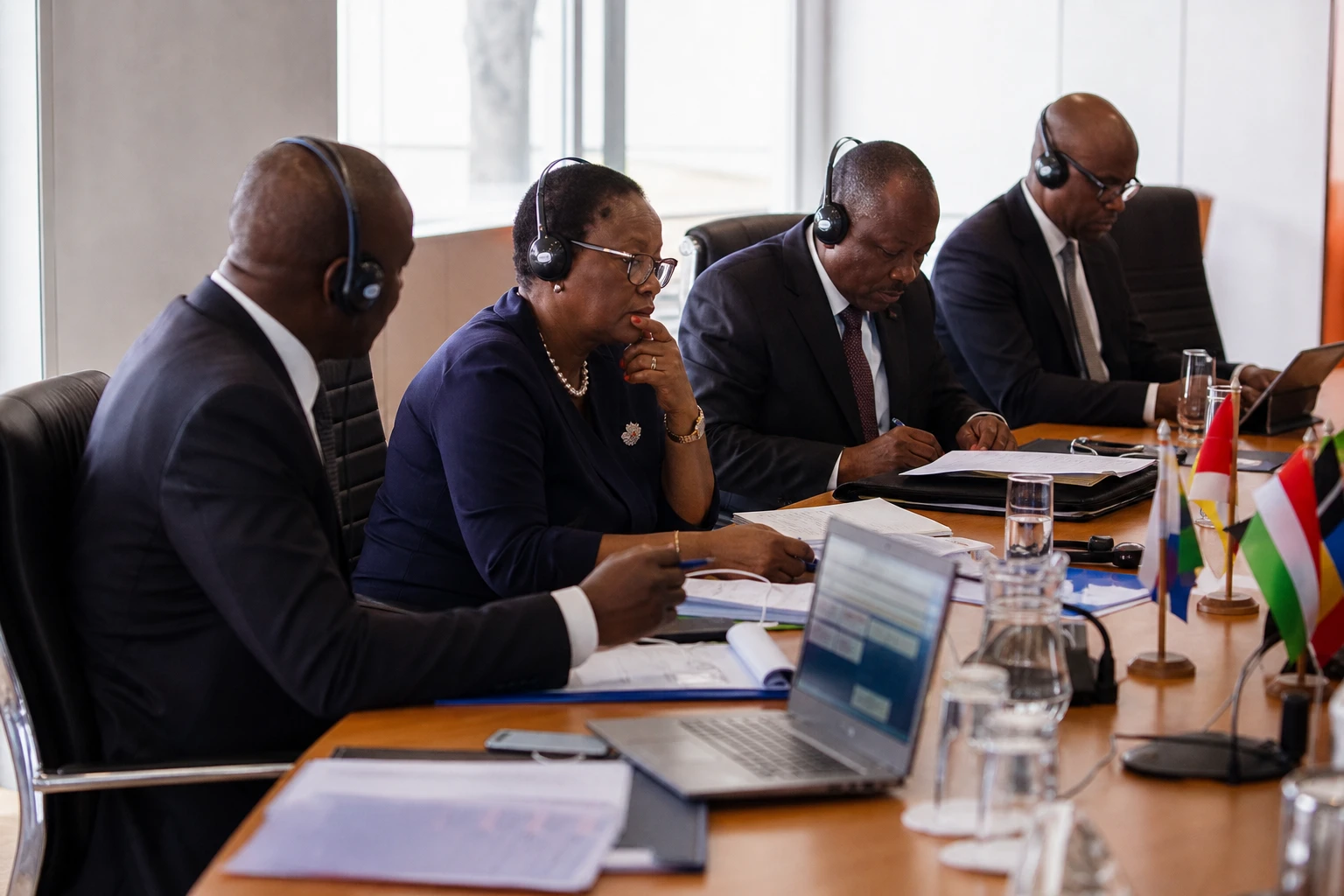
When roads become a parallel tax
In a landlocked country such as the Central African Republic, a road is more than a strip of asphalt. It carries food, medicines, the earnings of informal trade and a decisive share of the prices paid by households. When unauthorised checkpoints multiply, the cost of a journey is eventually passed on to household shopping baskets, transporters and small traders. The issue therefore goes beyond road policing: it directly affects domestic movement, supplies to cities and economic ties with Cameroon, Chad and the wider CEMAC region.
In Bangui, Central African authorities have renewed their offensive against these informal levies. The Special Joint Brigade for the Control and Monitoring of Roadblocks says it has moved from a public-awareness phase to enforcement, following several complaints from road users reporting harassment and extortion on major routes. This approach is part of a broader policy to reassert control over the roads, in a country where free movement remains both a matter of sovereignty and an economic lever.
A legal framework established in 2023, but still contested on the ground
The background is important. In June 2023, a presidential decree set the number of legal roadblocks in the Central African Republic at 93, according to several consistent sources, while an order dated 16 August 2023 established the special brigade responsible for overseeing them. The principle is simple: only authorised checkpoints may operate, under clearly defined inspection rules and fees. All others must be dismantled.
This legal clarification addresses a longstanding problem in the Central African Republic: the proliferation of makeshift checkpoints set up by members of the security forces, sometimes by administrative services, and sometimes by actors who claim to be state agents without being authorised to do so. Academic research and protection reports have already described these illegal roadblocks as sites of unauthorised charges, arbitrary detentions and restrictions on civilian movement. The issue is not new; what has changed is the level of political resolve being displayed in Bangui.
The government also has a direct budgetary interest. When a levy does not enter public coffers, the state loses revenue and, at the same time, credibility. As the Central African Republic seeks to better organise its customs revenues and modernise its inspections, the fight against illegal roadblocks dovetails with financial governance reforms and efforts to facilitate transit within the CEMAC region.
Eleven roadblocks dismantled between Bangui and several towns inland
On the ground, the announced operation targeted several routes linking Bangui to Mbaïki, Bambari, Damara and Sibut. According to the brigade’s head, eleven illegal roadblocks were dismantled and eleven people were detained. The officials concerned are said to belong to the gendarmerie, the water and forestry service, the municipality and customs. As these are allegations and the operation is ongoing, these details should be understood as the authorities’ account, not as a final judicial decision.
The choice of these routes is no accident. Bangui concentrates administrative and commercial traffic, while Mbaïki, Damara, Sibut and Bambari form important corridors for interprovincial trade. In a country where being landlocked already drives up logistics costs, each additional roadblock acts like a small parallel customs post. For transporters, this means delays. For traders, higher costs. For residents, a persistent sense that the state is there chiefly to collect money, and not always to protect them.
Residents quoted by the local press, for their part, have welcomed an operation that eases journeys and limits extortion. This popular support is understandable: in urban areas and along commercial corridors, the removal of informal roadblocks can smooth daily travel and reduce the cost of goods. But the impact will last only if the dismantled checkpoints do not reappear a few weeks later under another name or staffed by other officials.
What the operation says about the Central African state and Central Africa
The issue of illegal roadblocks exposes a familiar tension in several African states: the gap between legislation and its enforcement. The Central African Republic has established a framework. It has even created a specialised body. But experience on the ground shows that oversight remains fragile, especially where chains of command are long, resources are limited and routines of levy collection are deeply entrenched. The real test is therefore not just a one-day dismantling operation, but the ability to maintain administrative discipline over time.
This struggle also has regional significance. In CEMAC, the free movement of goods and people is a longstanding principle, but cross-border corridors are often still impeded by local practices that burden trade. For Bangui, ending illegal roadblocks means supporting domestic trade, but also improving the country’s credibility in discussions on transit, customs and the security of routes to seaports. For Central African households, it offers the prospect of a journey that is cheaper, less arbitrary and more predictable.
The next steps remain to be seen. The Central African government has already said it intends to resume or intensify its fight against illegal roadblocks, a sign that the problem is not over. What comes next will depend on consistency: internal oversight of the security forces, judicial follow-up on the detentions, and protection for road users on the most exposed routes. Only then can Bangui’s decision become more than a one-off operation: a signal that public authority is being reasserted in the Central African Republic.