Algeria
 Egypt
 Libya
 Morocco
 Sudan
 Tunisia
 Benin
 Burkina Faso
 Cabo Verde
 Côte d'Ivoire
 Ghana
 Guinea
 Guinea-Bissau
 Liberia
 Mali
 Mauritania
 Niger
 Nigeria
 Senegal
 Sierra Leone
 The Gambia
 Togo
 Central African Republic
 Chad
 DR Congo
 Equatorial Guinea
 Gabon
 Republic of the Congo
 São Tomé and Príncipe
 Burundi
 Comoros
 Djibouti
 Eritrea
 Ethiopia
 Kenya
 Madagascar
 Malawi
 Mauritius
 Mozambique
 Rwanda
 Seychelles
 Somalia
 South Sudan
 Tanzania
 Uganda
 Angola
 Botswana
 Eswatini
 Lesotho
 Namibia
 South Africa
 Zambia
 Zimbabwe
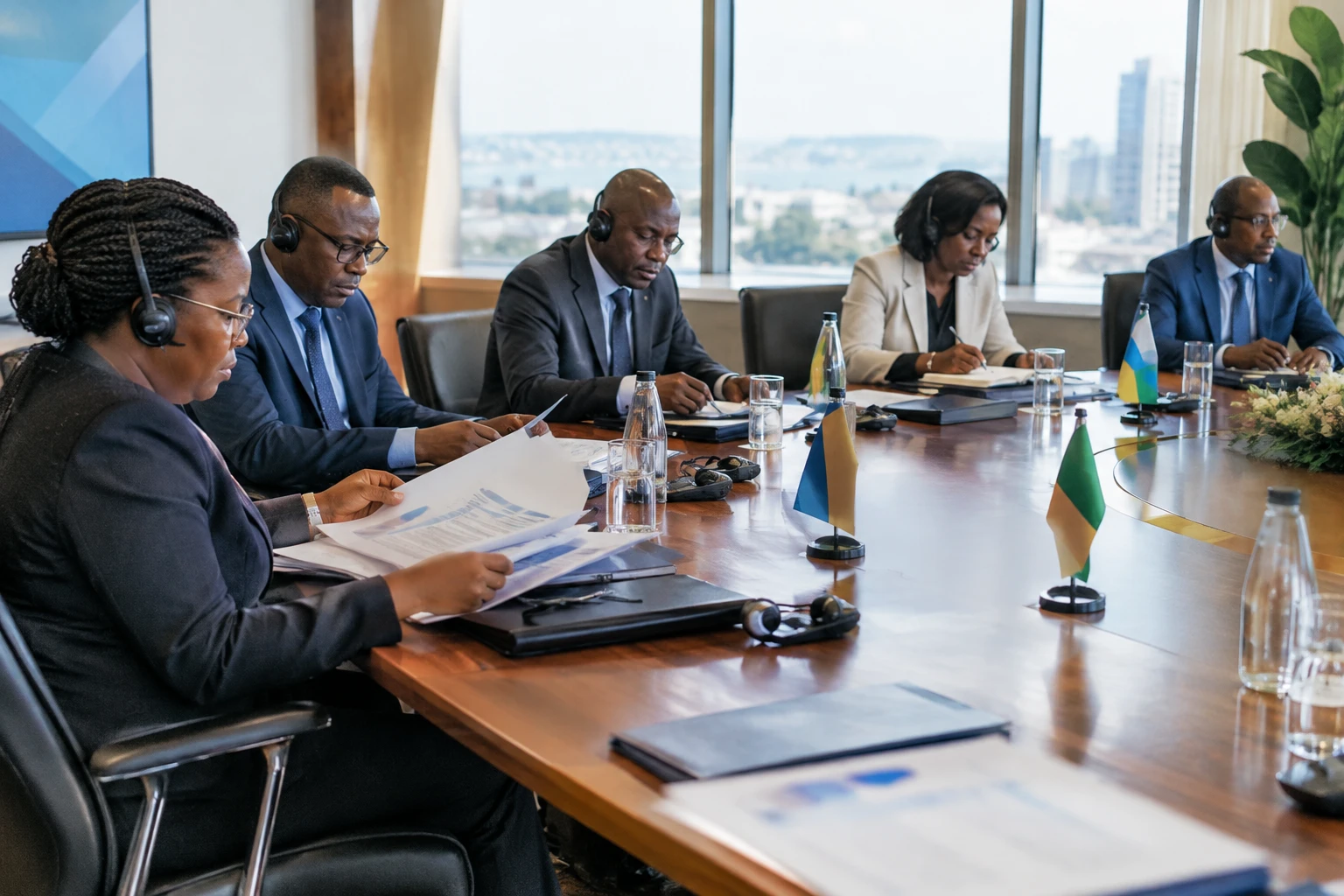
Who owns the banks that finance businesses, households and governments in Central Africa? In 2025, the answer changed: national players gained ground, but foreign groups remained in the majority among the sub-region’s institutions.
This shift comes as banks report rising profits while carrying more loans that are difficult to recover and greater commitments to governments. Shareholder nationality alone therefore does not determine who will have access to credit, or on what terms.
One shared sector, six different markets
The Economic and Monetary Community of Central Africa (CEMAC) brings together Cameroon, the Central African Republic, Congo, Gabon, Equatorial Guinea and Chad. These countries share, among other things, the CFA franc issued by the Bank of Central African States (BEAC). The Central African Banking Commission (COBAC), attached to the BEAC, supervises the region’s banks.
This regional framework does not erase national realities. The size of banks, their networks and their shareholders differ from one country to another. A merger in Brazzaville does not have the same effects as a sale in Yaoundé, even if both appear in CEMAC statistics.
Another important nuance: COBAC classifies a group based outside CEMAC as foreign, even if it comes from another African country. A Nigerian group, for example, remains outside the zone. “Foreign capital” therefore does not mean European capital alone.
National ownership gains ground, but not a regional majority
In its annual report for 2025, published on 22 October 2026, COBAC lists 54 banks in operation at the end of 2025, down from 56 a year earlier. Institutions with majority foreign capital fell from 38 to 31. They account for 57.4% of the total, compared with 67.9% at the end of 2024.
At the same time, privately owned banks with national capital rose from six to ten. State-owned institutions increased from twelve to thirteen. Banks classified as national thus account for 42.6% of the total number of institutions, up from 32.1% a year earlier.
These proportions count banks, not their economic weight. They do not show what share of deposits, assets or loans belongs to each shareholder category. Seven fewer foreign banks therefore does not automatically mean that financing for the economy has shifted to national control in the same proportions.
Sales with different implications
In Cameroon, Société Générale signed an agreement on 15 July 2025 to sell its 58.08% stake in its local subsidiary to the state. The state already held 25.6%; its stake was due to rise to 83.68% after the transaction. COBAC approved the deal in 2026. In this case, the move amounts to a takeover by a Cameroonian public shareholder.
The sale of Standard Chartered’s operations to Nigeria’s Access Bank tells a different story. The buyer is African, but based outside CEMAC, so it remains classified among foreign players in these statistics. The arrival of a pan-African group is not the same as an increase in national control in the regulatory sense.
In Congo, the merger by absorption of Société Générale Congo by BGFIBank Congo reduced the number of distinct banking entities. BGFIBank is a Gabonese group, and therefore comes from another CEMAC member state. In Equatorial Guinea, Vista took over Société Générale de Banques en Guinée équatoriale. These transactions — a public takeover, a cross-border acquisition and a merger — are contributing to the reshuffle, but they do not all change ownership in the same way.
The results of the 54 banks also point to a growing sector. According to data from the report cited by economic media in the sub-region, cumulative net profit reached CFA francs 524 billion in 2025, up 16.4%. Net banking income, a measure of revenue from banking activities, stood at CFA francs 1,723 billion, 12.5% higher than in 2024.
Strong results, risks to watch
Total assets rose by 10.3% to CFA francs 27,536 billion. Customer deposits increased by 5.9% to CFA francs 19,065 billion, while gross loans reached CFA francs 13,998 billion, up 12%.
But gross non-performing loans also rose by 10.9% to CFA francs 2,244 billion. They are equivalent to about 16% of gross loans. This ratio does not mean that all these sums are permanently lost; it does, however, indicate loans whose repayment is problematic and which may limit banks’ ability to lend more.
Exposure to governments, in the form of direct loans and government securities, reached CFA francs 10,641 billion, up 19.9% year on year. This financing supports governments’ needs. However, heavy concentration can also make banks more vulnerable to budgetary difficulties and reduce the resources available to businesses and households.
For each country’s authorities, public shareholdings strengthen the state’s role in the sector, but raise questions about governance and credit allocation. For new private groups, the challenge is to maintain services, strengthen capital and manage risks. For customers, a change of shareholder guarantees neither lower banking costs nor easier access to credit.
Regional supervision, the next area of focus
The trend extends beyond national borders: banking groups operate across African countries, while regulators must monitor institutions integrated into a common monetary market. COBAC will therefore need to look not only at who owns the banks, but also at their soundness, governance and ability to finance activity sustainably.
The next decisive indicator will be less the number of banks owned by one category or another than the actual trajectory of lending, non-performing loans and exposure to public finances. That is where the impact of this reshuffle on the economies of Cameroon, Congo, Gabon, Equatorial Guinea, the Central African Republic and Chad will be measured.