Algeria
 Egypt
 Libya
 Morocco
 Sudan
 Tunisia
 Benin
 Burkina Faso
 Cabo Verde
 Côte d'Ivoire
 Ghana
 Guinea
 Guinea-Bissau
 Liberia
 Mali
 Mauritania
 Niger
 Senegal
 Sierra Leone
 The Gambia
 Togo
 Cameroon
 Central African Republic
 Chad
 DR Congo
 Equatorial Guinea
 Gabon
 Republic of the Congo
 São Tomé and Príncipe
 Burundi
 Comoros
 Djibouti
 Eritrea
 Ethiopia
 Kenya
 Madagascar
 Malawi
 Mauritius
 Mozambique
 Rwanda
 Seychelles
 Somalia
 South Sudan
 Tanzania
 Uganda
 Angola
 Botswana
 Eswatini
 Lesotho
 Namibia
 South Africa
 Zambia
 Zimbabwe
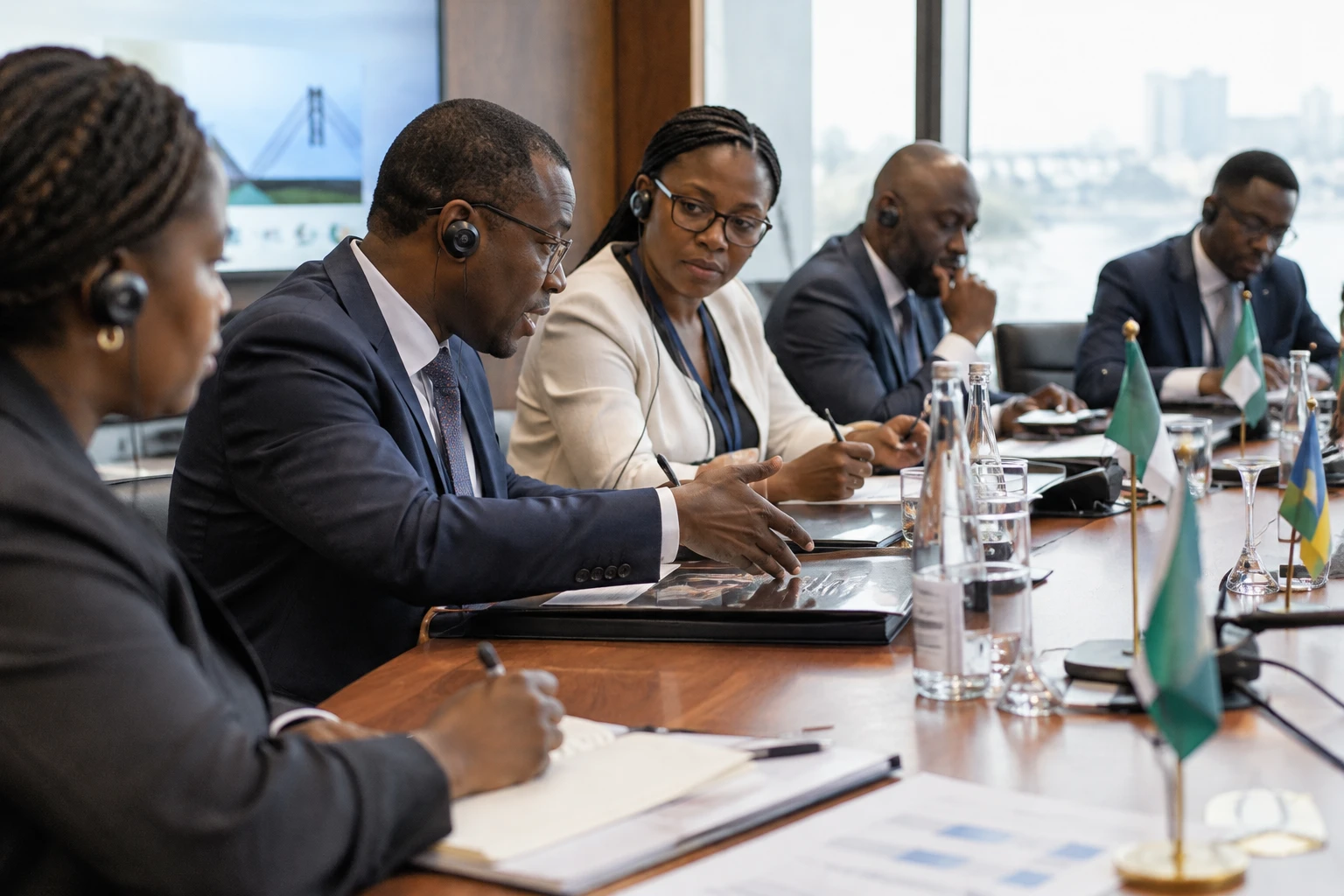
Who finances African infrastructure, and on what terms? The appointment of Olayemi Cardoso as chair of the Africa Finance Corporation (AFC) board places a Nigerian central banker at the heart of this question. It also brings closer two institutions whose missions, while complementary, are not the same.
A governance change with Nigerian implications
The AFC announced on 14 October 2026 that Cardoso had been appointed chair of its board of directors. Governor of the Central Bank of Nigeria since September 2023, he succeeds Ireti Samuel-Ogbu. She remains a member of the board, the institution said. The appointment was also reported by several Nigerian media outlets. The AFC statement on Cardoso’s appointment and Premium Times’ report confirm these details.
The change therefore concerns the AFC’s governance, not the day-to-day running of Nigeria’s central bank. Cardoso retains his position at the CBN, while the AFC board chairmanship gives him a strategic oversight role. The distinction matters: monetary decisions are the responsibility of the central bank and its monetary policy committee, whereas the board of directors guides and oversees the financing institution.
The choice has particular national significance. Nigeria is an important member of the AFC, which is headquartered in Lagos, while the federal capital is Abuja. The proximity between the two institutions is not new, however: Chukwuma Soludo, then CBN governor, was the AFC’s first board chair. This historical continuity does not mean the two bodies have the same mandate today.
From project financing to capital mobilisation
Founded in 2007, the AFC finances, develops and structures infrastructure and industrial projects. Its work includes energy, transport, telecommunications and heavy industry. Its published record shows more than $15bn invested in 36 African countries. Figures for the number of member countries vary across the institution’s pages and reporting years; it is therefore best to distinguish the number of members from the number of countries where it has invested. The AFC’s overview of its governance and investments sets out its role and its base in Lagos.
Cardoso’s role could strengthen the confidence of investors and financial partners, but its practical effect will depend on the board’s decisions and the financing actually mobilised. A development finance institution can help prepare projects, provide funds or attract other investors. It does not replace governments, which set priorities and rules, or companies responsible for building and operating infrastructure.
The AFC’s portfolio includes projects of different sizes and across different sectors. The Lobito Corridor, which is intended to improve links between Angola, the Democratic Republic of the Congo and Zambia, aims in particular to facilitate the transport of goods from the mining region to the Atlantic. In Nigeria, the institution has also helped finance activities related to industry and energy. These projects do not all produce the same effects: a new transport link may reduce journey times, but its benefits will also depend on tariffs, local producers’ access and the share of value added created on the continent.
A central bank facing domestic trade-offs
The appointment comes as Nigerian economic policy seeks to stabilise prices and financial markets. Since Cardoso took over at the CBN, the central bank has reformed the foreign exchange market and raised interest rates, before beginning to cut them as slower inflation allowed. In February 2026, its monetary policy committee lowered the benchmark rate from 27% to 26.5%. The decision signals a change in pace, not an end to the difficulties linked to the cost of living or business financing.
The fall in inflation should also be interpreted cautiously. Data published by Nigeria’s National Bureau of Statistics show annual inflation at 14.63% in September 2026, down from 15.39% in August. This decline does not mean prices have returned to their previous levels: it indicates that their annual rise is slowing. Households, particularly those spending much of their budgets on food, may therefore continue to feel considerable pressure. Businesses remain sensitive to the cost of credit and the stability of the naira. The September figures were reported by Punch and Vanguard.
Cardoso’s dual responsibility thus raises a governance question, without in itself proving that a conflict of interest exists. The CBN conducts Nigeria’s monetary policy; the AFC seeks to finance investment across Africa. Their interests may intersect in capital markets, foreign exchange risk or investment, but their mandates remain distinct. Transparency around decisions, any rules on recusal and the separation of functions will help show how this proximity is managed.
A test for African finance and ECOWAS
At the regional level, Nigeria carries weight because of the size of its economy and its role in the Economic Community of West African States (ECOWAS), which brings countries in the region together around economic co-operation. But the AFC is not an ECOWAS body: its mandate is continental. Its investments can therefore link economies beyond regional borders, provided the countries concerned co-ordinate their rules and priorities.
For African economies, the challenge goes beyond appointing a leader recognised by markets. It is about mobilising more capital without losing sight of where the funds go, the risks borne by governments and the benefits for local people and businesses. In Cardoso’s case, the next indicators will be the quality of the AFC’s governance, the actual progress of its projects and its ability to attract financing without blurring the Nigerian central bank’s own responsibilities.