Egypt
 Libya
 Morocco
 Sudan
 Tunisia
 Benin
 Burkina Faso
 Cabo Verde
 Côte d'Ivoire
 Ghana
 Guinea
 Guinea-Bissau
 Liberia
 Mali
 Mauritania
 Niger
 Nigeria
 Senegal
 Sierra Leone
 The Gambia
 Togo
 Cameroon
 Central African Republic
 Chad
 DR Congo
 Equatorial Guinea
 Gabon
 Republic of the Congo
 São Tomé and Príncipe
 Burundi
 Comoros
 Djibouti
 Eritrea
 Ethiopia
 Kenya
 Madagascar
 Malawi
 Mauritius
 Mozambique
 Rwanda
 Seychelles
 Somalia
 South Sudan
 Tanzania
 Uganda
 Angola
 Botswana
 Eswatini
 Lesotho
 Namibia
 South Africa
 Zambia
 Zimbabwe
In Ceuta, waiting soon becomes a test of endurance
In the Spanish enclave of Ceuta, the border does not stop at the fence or the sea. It continues through hours without an answer, overcrowded shelters and exhausted bodies waiting, sometimes for days, to learn their fate. For a Cameroonian who has arrived via Morocco, the promise of a departure for Europe can thus be reduced to a simple question: where to sleep tonight, and how to hold on until tomorrow?
Ceuta occupies a particular place in the continent’s migration geography. Together with Melilla, the city forms one of the few land borders between Africa and the European Union. Asylum rules differ depending on the point of entry, and applications can be lodged at the border itself, with the police or the civil guard, making the enclave a place of screening, tension and administrative waiting.
Since the major surge in arrivals in late July 2026, pressure on Ceuta has remained visible. Spanish authorities have referred to mass arrivals from Morocco, while several international media outlets have described an overwhelmed city, with reception facilities under severe strain and some of those detained being swiftly returned. The Spanish government, for its part, has presented a response based on receiving, transferring and distributing vulnerable people across the rest of the country.
A Cameroonian’s account reveals the reality behind the figures
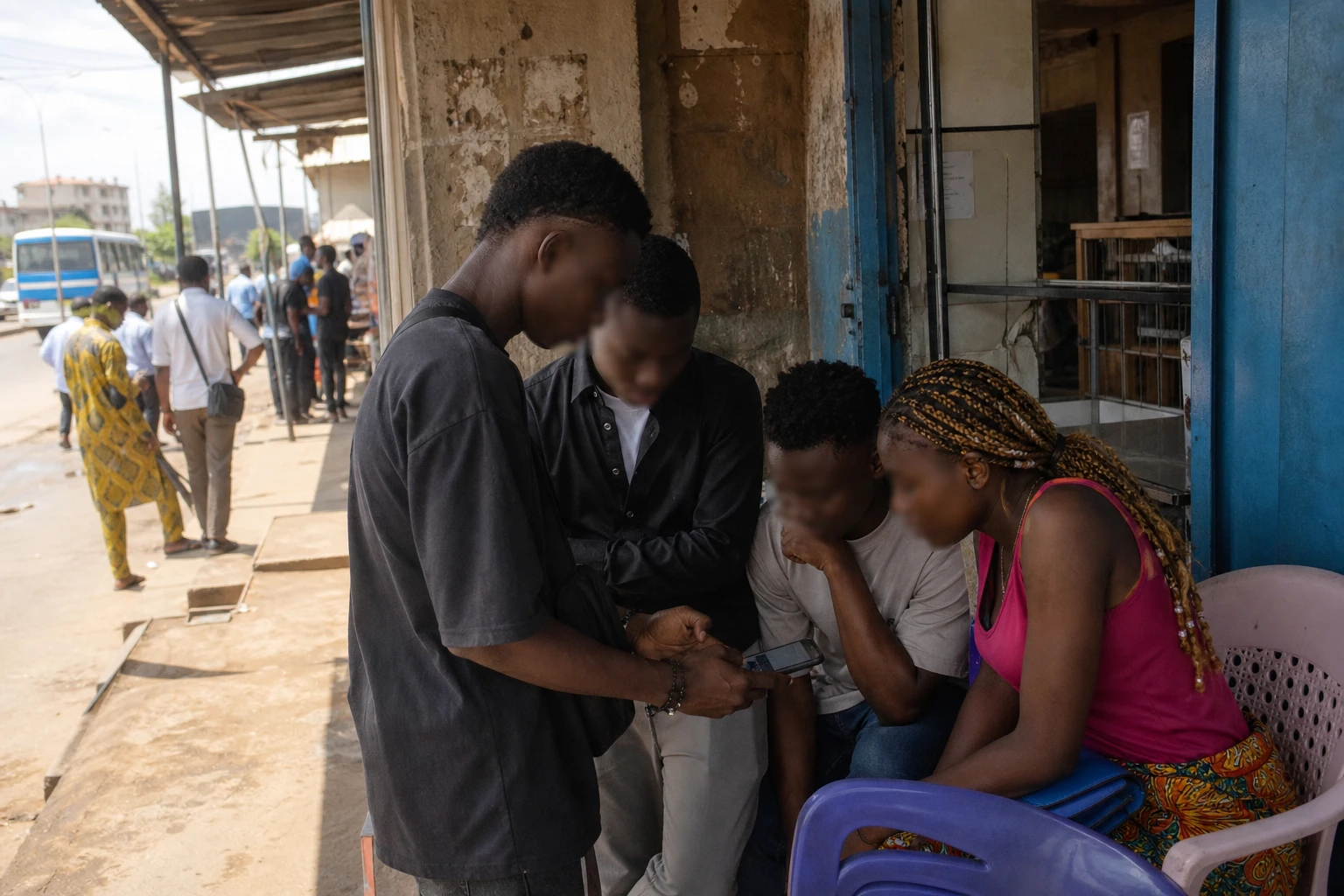
The testimony of a young Cameroonian living in Ceuta sheds light on what statistics fail to convey. He describes nights spent on cardboard, the lack of running water, electricity and regular income, and daily unsanitary conditions. He also recounts the crossing, with images of the sea, people being jostled and deaths witnessed along the way. This kind of account is not exceptional. It is a reminder that the route across the Strait of Gibraltar is not simply a passage to Europe. It is often a succession of ruptures, endurance and loss.
This young man is not alone. The International Organization for Migration says irregular routes to Spain from West and Central Africa remain active and dangerous, with departures often passing through Morocco. In its overview of Morocco, the IOM also notes the presence of migrants from Cameroon, among other African countries. In other words, Ceuta does not draw only Moroccans. It also concentrates Cameroonian, West African and Sahelian journeys, already long before people reach the coast.
Cameroon, for its part, continues to face its own vulnerabilities. The IOM’s 2025-2026 response plan highlights humanitarian and mobility needs linked to domestic and regional crises. For some young people, emigration is not an abstract choice. It becomes a survival strategy, driven by unemployment, social media, stories of success and the belief that a quick departure can change a life. The possibility of returning to Morocco, mentioned by the migrant interviewed, also illustrates the precariousness of migration plans: many move forward without a safety net, then urgently reassess their route.
A European border, but a problem faced first in Africa
The Ceuta crisis cannot be understood only in Madrid or Brussels. It is also felt in Rabat, Douala, Yaoundé and the towns people leave, where families follow the news anxiously. Morocco remains a transit and screening country for thousands of people from sub-Saharan Africa, while Spain strengthens its border measures and adjusts its asylum framework at European level. The new European Pact on Migration and Asylum has applied since 12 June 2026, adding another layer of rules to an already complex system.
In this context, living conditions in Ceuta have become a practical test of Europe’s ability to manage arrivals without undermining people’s dignity. Spain says it wants to prevent tensions from building up in landing areas and has highlighted humanitarian assistance measures. But on the ground, shelters remain under pressure and relations with some local residents are becoming strained, especially when arrivals surge suddenly. Ceuta’s residents are calling for swift responses. Those in exile, meanwhile, are first asking for a bed, a file to be processed and a tolerable wait.
The case of Cameroonians in Ceuta says something broader about African mobility. It shows an Africa connected by migration routes, transit economies and hopes of leaving. It also shows that control policies do not stop departures, but shift the risks elsewhere. As long as the underlying causes remain, enclaves such as Ceuta will continue to serve as gateways. The next point of concern is Spain’s ability to process asylum applications, relocate minors and maintain order without turning waiting into abandonment.