
 Algeria
 Egypt
 Libya
 Morocco
 Sudan
 Tunisia
 Benin
 Burkina Faso
 Cabo Verde
 Côte d'Ivoire
 Ghana
 Guinea
 Guinea-Bissau
 Liberia
 Mali
 Mauritania
 Niger
 Nigeria
 Senegal
 Sierra Leone
 The Gambia
 Togo
 Central African Republic
 Chad
 DR Congo
 Equatorial Guinea
 Gabon
 Republic of the Congo
 São Tomé and Príncipe
 Burundi
 Comoros
 Djibouti
 Eritrea
 Ethiopia
 Kenya
 Madagascar
 Malawi
 Mauritius
 Mozambique
 Rwanda
 Seychelles
 Somalia
 South Sudan
 Tanzania
 Uganda
 Angola
 Botswana
 Eswatini
 Lesotho
 Namibia
 South Africa
 Zambia
 Zimbabwe
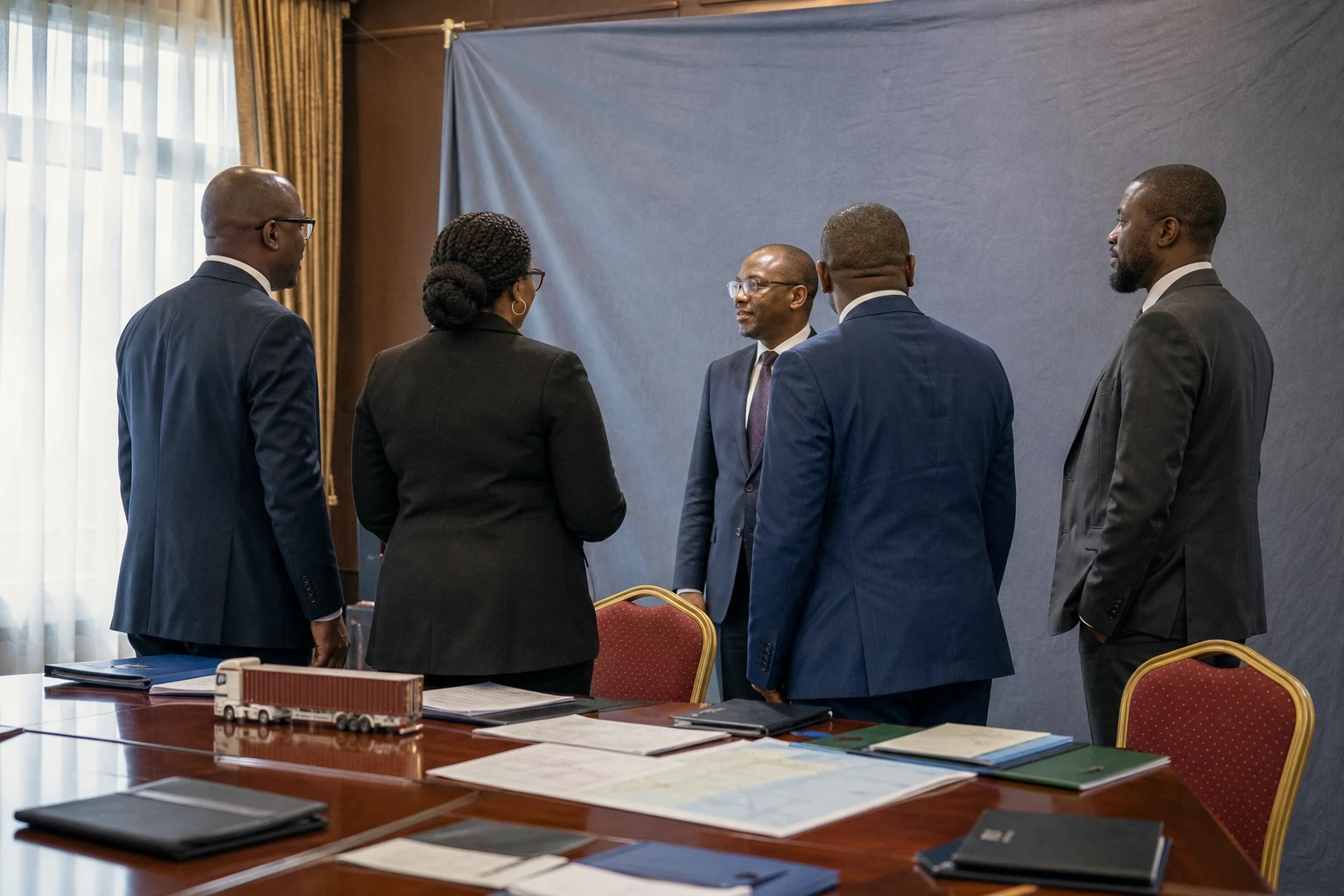
In Douala, a lorry carrying food or fuel transports more than just goods. It carries part of the Central African Republic’s supplies. When the road deteriorates, delays are felt as far away as the markets of Bangui and the towns along the route.
Cameroon has just reached a financial milestone in efforts to secure this regional link. A decree signed on 2 October 2026 authorises the signing of a €347.5 million credit agreement, equivalent to around 228 billion CFA francs, with the International Bank for Reconstruction and Development (IBRD), an institution of the World Bank Group.
A key route for the Central African Republic’s trade
The Douala-Bangui corridor links Cameroon’s main commercial port with the Central African capital. Stretching more than 1,400 kilometres, it is the Central African Republic’s main maritime gateway, serving a landlocked country in Central Africa.
The World Bank estimates that more than 80% of the Central African Republic’s foreign trade passes along this route. This dependence gives the corridor a significance that extends well beyond the two countries. It also affects transport operators, wholesalers, agricultural producers, retailers and households that rely on regular deliveries.
In its programme approved in June 2026, the World Bank reports that transport costs can reach $270 per tonne. It also cites journey times of nine to 12 days under normal conditions. On the Cameroonian side, 38 checkpoints have been recorded, 17 of them associated with informal payments, according to the project assessment. These constraints add to the difficulties caused by the condition of the roads.
The Cameroonian presidential decree of 2 October 2026 authorises the signing of the financing agreement. It does not mean that funds will be disbursed immediately or that work will automatically begin. The Cameroonian government must still sign the agreement, while the project must meet the conditions for it to take effect and for contracts to be awarded.
Targeted works between Douala, Yaoundé and Bangui
The financing is part of a first regional phase worth $525 million. The overall corridor modernisation programme is valued at $1.12 billion. It involves Cameroon, the Central African Republic and the Economic and Monetary Community of Central Africa (CEMAC), the organisation that coordinates, among other things, the economic and monetary policies of six Central African countries.
On the Cameroonian side, works are planned on key sections of the route. The project document prepared with the World Bank refers in particular to the Douala-Yaoundé and Yaoundé-Bertoua sections. The first phase thus targets 216 kilometres between Douala and Yaoundé, as well as 339 kilometres between Yaoundé and Bertoua.
In the Central African Republic, around 80 kilometres between Baoro and Bossemptélé are targeted for more extensive rehabilitation. Other sections between Bossemptélé and Bangui are to undergo spot repairs. The aim is to limit traffic disruptions while the main works are carried out.
The damage is not caused by heavy traffic alone. Heavy rains, floods, erosion and inadequate drainage systems weaken roads and structures. The project therefore also includes improving water drainage, enhancing road safety and organising maintenance of the rehabilitated sections.
The project preparation document says the issue is not only reliable transport but also growth along the corridor. Agricultural roads are intended to make it easier to transport harvests to markets. The dry port at Béloko, on the border, is also set to benefit from logistics improvements.
The road alone will not be enough
A resurfaced road can reduce breakdowns and delays. It will not automatically eliminate all additional costs. Customs procedures, repeated checks, informal payments and security problems may continue to slow convoys.
The allocation of cargo between Cameroonian and Central African transport operators is another sensitive issue. Quota systems and rotating allocations can limit competition. If so, savings from the roadworks would not necessarily be fully passed on to the rates paid by traders.
Maintenance will therefore be as important as the initial financing. Without a regular budget, the repairs risk losing their impact after a few rainy seasons. The Central African project links some disbursements to reform of the Road Maintenance Fund and a multi-year commitment covering at least three years.
For residents of rural areas, the stakes are tangible. A more reliable connection can make it easier to sell agricultural produce and access inputs. For urban households, it can reduce supply disruptions. However, the impact on prices will also depend on competition between transport operators, the functioning of border posts and security along the route.
A multi-route strategy to end isolation
Bangui is not relying solely on the Cameroonian route. The Central African Republic is also developing the Pointe-Noire-Brazzaville-Bangui-N’Djamena multimodal corridor, backed by the African Development Bank. The project combines roads, river links and logistics facilities to open another route to the sea via the Republic of the Congo.
On this corridor, works on the Bossarangba-Mbaïki section and urban roads in Mbaïki were 98% complete as of 31 August 2026, according to the African Development Bank. The project also includes a 221-kilometre road between Gouga, Mbaïki and Bangui, as well as the construction of a river port at Mongoumba.
This diversification will not immediately diminish Douala’s role. It could, however, strengthen the Central African Republic’s bargaining power and limit its dependence on a single route. For CEMAC and the Economic Community of Central African States (ECCAS), the challenge is also to improve trade between neighbouring countries, which is still hampered by infrastructure and logistics costs.
The next stage will be decisive. It will involve the formal signing of the Cameroonian agreement, the financing taking effect and contracts being awarded. Subsequent monitoring will need to measure journey times, actual transport costs, the flow of traffic at borders and the durability of the infrastructure. In the Central African project, the stated goal is to reduce the journey between Baoro and Bangui from ten to eight hours by June 2032. The corridor’s success will therefore be judged less by the loan announcement than by its everyday impact on roads, businesses and markets in both countries.



