Algeria
 Egypt
 Libya
 Morocco
 Sudan
 Tunisia
 Benin
 Burkina Faso
 Cabo Verde
 Côte d'Ivoire
 Ghana
 Guinea
 Guinea-Bissau
 Liberia
 Mali
 Mauritania
 Niger
 Nigeria
 Senegal
 Sierra Leone
 The Gambia
 Togo
 Cameroon
 Central African Republic
 Chad
 DR Congo
 Equatorial Guinea
 Gabon
 Republic of the Congo
 São Tomé and Príncipe
 Burundi
 Comoros
 Djibouti
 Eritrea
 Ethiopia
 Kenya
 Madagascar
 Malawi
 Mauritius
 Rwanda
 Seychelles
 Somalia
 South Sudan
 Tanzania
 Uganda
 Angola
 Botswana
 Eswatini
 Lesotho
 Namibia
 South Africa
 Zambia
 Zimbabwe
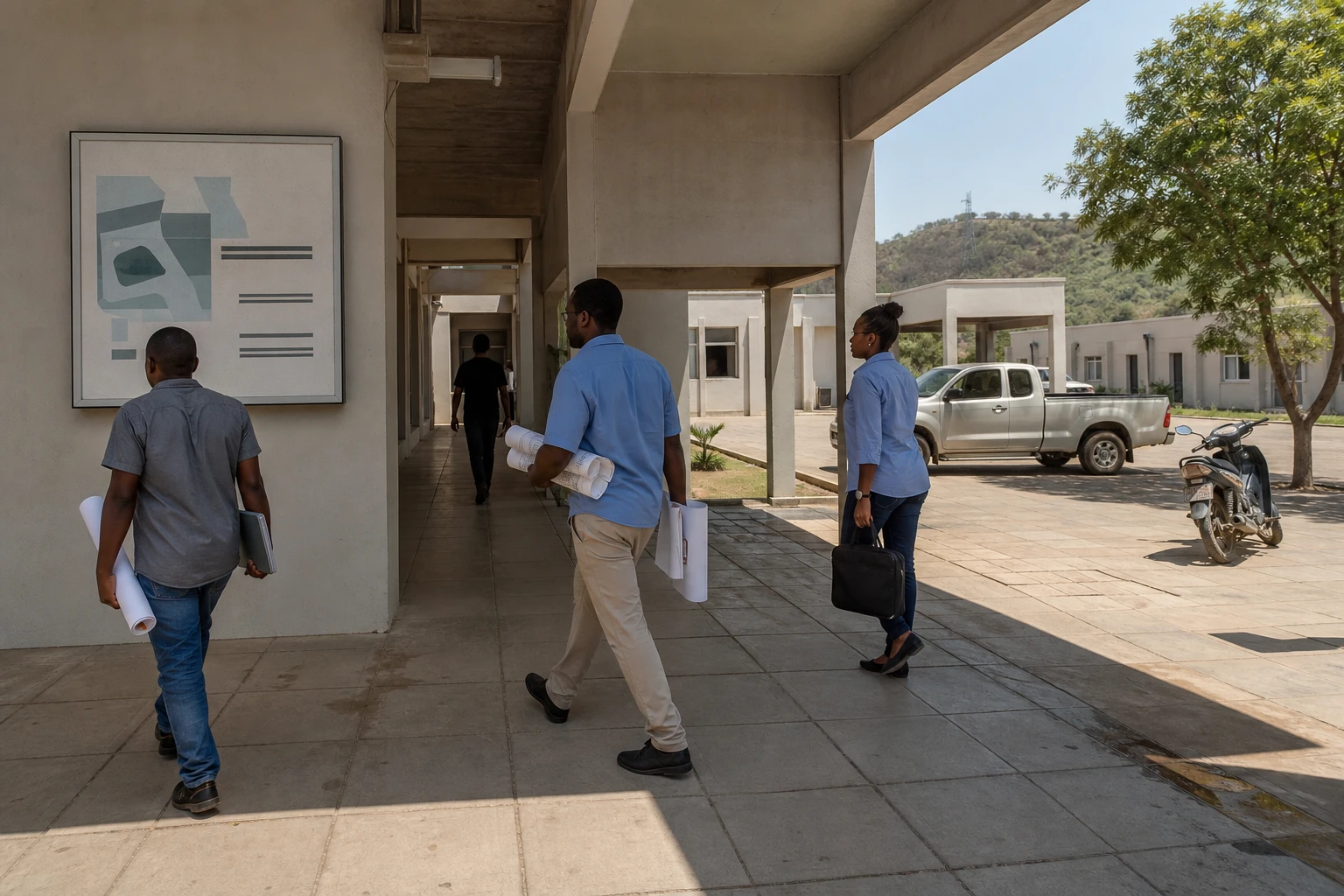
At Cahora Bassa, modernisation is about more than turbines
In Mozambique, a dam does more than generate megawatts. It also brings together different uses, rights of way, cultivated land, fishing and activities often established without a shared map. This is precisely what HCB now wants to document clearly at the Cahora Bassa site, ahead of a major upgrade project.
The issue goes beyond technology. In a country where land tenure remains sensitive, managing a major hydroelectric facility involves energy, communities along the river and the state, which remains the owner of the land. Around dams and reservoirs, Mozambican law also provides for a 250-metre protection zone, where ordinary land rights cannot be acquired.
A land survey to map the concession in detail
Hidroeléctrica de Cahora Bassa has issued a call for expressions of interest to map all human and economic activities within its concession area, which covers 2,665 km². The selected contractor will have to identify users, record ongoing activities, locate physical occupations, inventory infrastructure and document land titles already granted.
The stakes are concrete. Within this area, uses already overlap among artisanal fishers, semi-industrial operators, farmers and gold panners. HCB therefore wants, for the first time, a complete picture of who occupies the concession and on what legal basis. The exercise should also help prevent conflicts over land use and support integrated management of the site.
The initiative comes at a pivotal moment. HCB has operated Mozambique’s largest dam since the late 1970s and manages a strategic asset for the country and southern Africa. Its installed capacity is 2,075 MW. The Cahora Bassa reservoir remains one of the continent’s major hydroelectric complexes, and the company says it also supplies partners in the SADC region, the Southern African Development Community.
A ten-year project that means looking beyond concrete
The land survey is not a standalone project. It accompanies the CAPEX Vital programme, a ten-year investment plan to rehabilitate and modernise HCB’s electricity generation and transmission infrastructure. The AFD has committed a non-sovereign concessional loan of €100 million over 15 years, while the European Union is providing a delegated grant of €22.1 million.
In its project note, the AFD says the programme should also extend the life of the dam and its substation by at least 25 years, while reducing forced outages and maintenance costs. In other words, modernisation is not limited to replacing ageing equipment. It requires securing the facility’s social and land context, or local tensions could undermine the expected technical gains.
The overall cost cited for modernisation is €1.2 billion over ten years. This is consistent with the demands of a major, ageing dam, whose power lines, substations, water management systems and training capacity all need upgrading at the same time. HCB also says the programme includes refurbishing the power station and Songo substation, as well as systems to improve reservoir management.
What this means for local communities, authorities and the energy sector
For communities along the river, the survey could clarify an essential point: which activities are tolerated, which are covered by a formal right, and which may lead to compensation or relocation. In Mozambique, land belongs to the state, but usage rights can be granted through land-use titles. In an area such as Cahora Bassa, this distinction between public ownership and allocated use is crucial to avoiding grey areas.
For HCB, the benefits are also strategic. A complete map can help reduce conflicts, improve investment planning and document social obligations around a site that combines electricity generation, local economic activity and transmission infrastructure. This matters in a context where security of supply is becoming a regional concern, as southern Africa seeks more reliable, lower-carbon electricity.
For the Mozambican state, the exercise is a reminder that a major dam is more than a power station. It is also a territory to manage, with rules on compensation, protection and consultation. The new land policy adopted by the government in 2022 had already set out the aim of ensuring access to, use of and ownership of land within a clearer framework for communities and investors. Cahora Bassa is becoming a full-scale test of that ambition.
A useful signal for southern Africa
The issue extends beyond Mozambique. Across the SADC, ageing electricity infrastructure and growing demand are prompting several states to extend the life of strategic assets while limiting local tensions. Cahora Bassa illustrates this shift: modernising a major dam now means counting people, land and land uses as well as turbines.
What happens next will depend less on a press release than on HCB’s ability to produce a robust map and translate its findings into clear management rules. Across a 2,665 km² site, detailed land information becomes a tool for stability, not merely an administrative exercise.