Algeria
 Egypt
 Libya
 Morocco
 Sudan
 Tunisia
 Benin
 Burkina Faso
 Cabo Verde
 Côte d'Ivoire
 Ghana
 Guinea
 Guinea-Bissau
 Liberia
 Mali
 Mauritania
 Niger
 Nigeria
 Senegal
 Sierra Leone
 The Gambia
 Togo
 Cameroon
 Central African Republic
 Chad
 DR Congo
 Equatorial Guinea
 Gabon
 Republic of the Congo
 São Tomé and Príncipe
 Burundi
 Comoros
 Djibouti
 Eritrea
 Ethiopia
 Kenya
 Madagascar
 Malawi
 Mauritius
 Mozambique
 Rwanda
 Seychelles
 Somalia
 South Sudan
 Tanzania
 Uganda
 Angola
 Botswana
 Eswatini
 Lesotho
 Namibia
 South Africa
 Zambia
 Zimbabwe
African football faces a decision that goes beyond the pitch
Whenever a reform affects revenues in world football, the same question returns in Africa: who really funds development, and on what terms? Behind announcements about the growth of the game lie very concrete choices for national federations, local leagues, training centres and women’s and men’s competitions. The debate over FIFA’s proposed new commercial structure once again places CAF at the centre of the game.
The Confederation of African Football brings together 54 member associations, the largest continental bloc within FIFA, which has 211 associations worldwide. This gives Africa considerable institutional weight, even if that does not automatically translate into political or financial influence. In a landscape where disparities between well-funded and fragile federations remain wide, every reform of global governance is also a question of redistribution.
CAF begins its review as reservations grow elsewhere
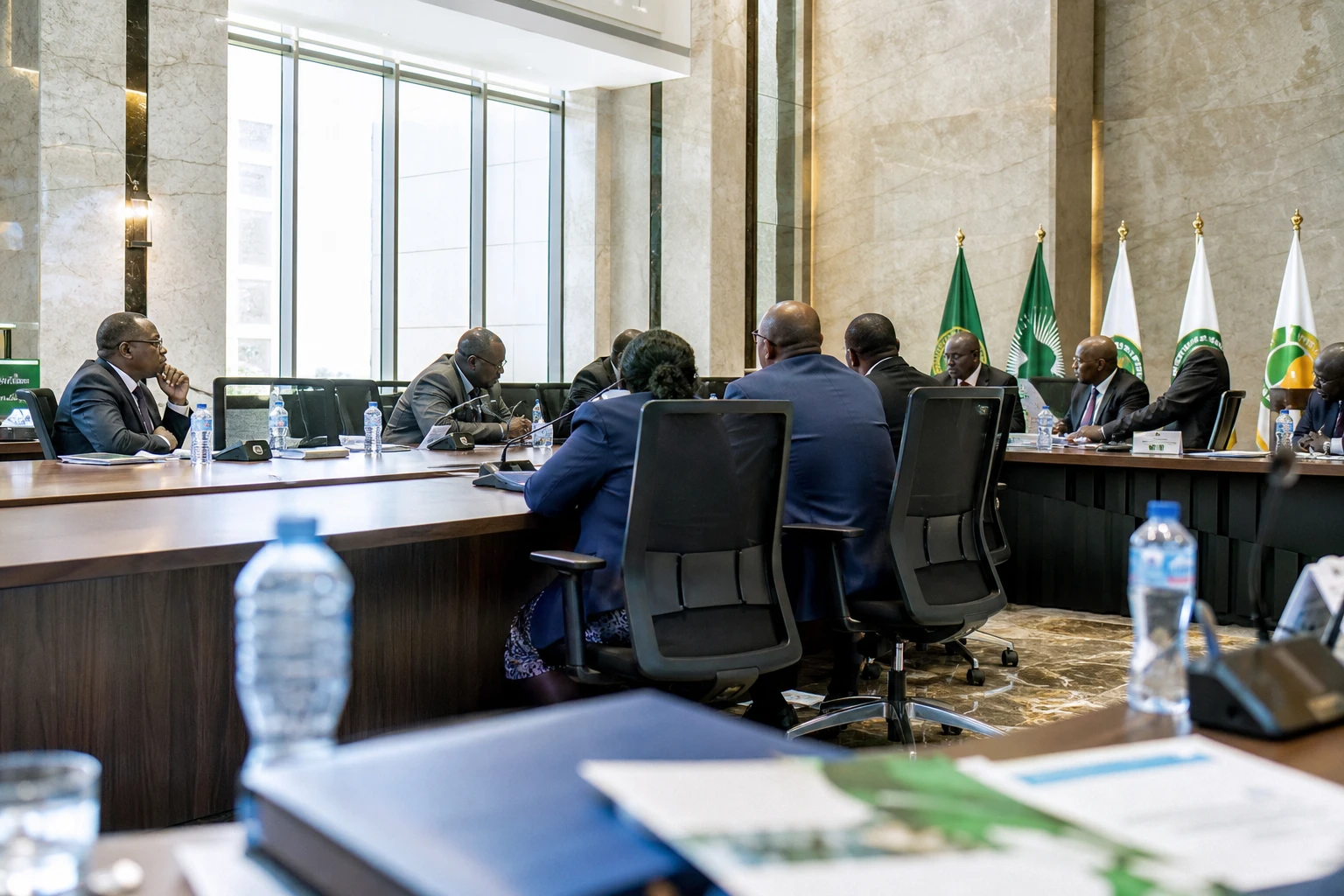
CAF said on 29 July 2026 that it had received official correspondence from FIFA concerning “FIFA Forward Enterprise”, a proposal currently being put to the world governing body’s member associations for consultation. CAF president Patrice Motsepe is due to convene his executive committee the following week to examine and assess the proposal, while the 54 African federations have been invited to review it under the procedures in force.
According to information made public by international media and material released by FIFA, the project aims to create a commercial entity, presented as a wholly owned subsidiary of the world governing body, with the aim of increasing resources for football development. FIFA already presents its Forward programme as a means of providing financial and logistical support to member associations and confederations, and notes that its “3.0” version was launched in January 2023.
The consultation is taking place amid tensions. UEFA has reacted strongly to the prospect of a large-scale commercial structure, denouncing what it sees as an overly top-down approach and a lack of transparency. The European body is instead calling for genuine consultation with confederations and other stakeholders in the game, in keeping with the consultations it has advocated for several years on the football calendar and governance.
CONCACAF has also voiced reservations, saying it was not consulted beforehand and learnt of the project through the press. This reaction matters because it shows that the debate is not limited to a stand-off between Europe and FIFA. Confederations in Asia, Africa, North America and elsewhere all have an interest in knowing whether the future structure will genuinely strengthen development or further concentrate commercial levers at the top.
What Africa could gain, and what it needs to watch
For African federations, the stakes are not theoretical. Many rely heavily on FIFA solidarity mechanisms to fund infrastructure, national teams, youth competitions and women’s projects. FIFA says it invested more than $1 billion in African football through Forward between 2016 and September 2025, a figure that illustrates the importance of the programme to the continent. If a new entity is to raise capital or redistribute revenues, the central question is simple: what share will go to the federations, and according to what criteria?
The African context makes this question all the more sensitive. In 2026, CAF embarked on a series of reforms to its statutes, regulations and governance, with an emphasis on confidence in refereeing, VAR and judicial bodies. At the same time, the organisation is working with its 54 member associations on financial governance, a sign that the FIFA proposal comes at a time when demands for institutional clarity are already strong within African football itself.
Patrice Motsepe’s role will therefore be watched on several fronts. First by the federations, which want to know whether CAF will defend a common position or take a case-by-case approach. Then by the other confederations, because Africa can shift the balance if it takes a firm line on transparency, guarantees of redistribution and the rights of associations. And finally by African football’s own stakeholders—clubs, leagues, women players, men players, referees and supporters—for whom a reform only makes sense if it genuinely improves access to resources, not merely the accounting balances at the top.
The timing is all the more important because the continent is preparing for several major events. CAF has already confirmed the expansion of its competitions by 2027, with the Africa Cup of Nations to be held in Kenya, Tanzania and Uganda. In this landscape, a global financial reform could either strengthen the foundations or distract from structural priorities: pitches, training, administration, women’s competitions and the professionalisation of national leagues.
A governance battle with effects beyond football
The “FIFA Forward Enterprise” proposal revives a fundamental debate: how can world football be funded without reducing federations to passive beneficiaries of a model decided elsewhere? For Africa, the answer will matter far beyond official statements. It will affect the role of federations in decision-making, the ability of regions to influence the distribution of wealth, and the way world football finally recognises that its balance also depends on countries where the sports economy is still developing.
The immediate next steps will be the consultations, followed by meetings of continental executive committees and national federations. That is when it will become clear whether CAF intends merely to take part in the debate or to influence its rules. In a system where each confederation defends its interests, Africa has a genuine lever this time: its size, its need for funding and its central role in the living base of world football.