Algeria
 Egypt
 Libya
 Morocco
 Sudan
 Tunisia
 Benin
 Burkina Faso
 Côte d'Ivoire
 Ghana
 Guinea
 Guinea-Bissau
 Liberia
 Mali
 Mauritania
 Niger
 Nigeria
 Senegal
 Sierra Leone
 The Gambia
 Togo
 Cameroon
 Central African Republic
 Chad
 DR Congo
 Equatorial Guinea
 Gabon
 Republic of the Congo
 São Tomé and Príncipe
 Burundi
 Comoros
 Djibouti
 Eritrea
 Ethiopia
 Kenya
 Madagascar
 Malawi
 Mauritius
 Mozambique
 Rwanda
 Seychelles
 Somalia
 South Sudan
 Tanzania
 Uganda
 Angola
 Botswana
 Eswatini
 Lesotho
 Namibia
 South Africa
 Zambia
 Zimbabwe

Continuity is in the making in Praia, but the election will be about more than the record
In Cabo Verde, a candidacy is never just a matter of an individual. It quickly becomes a test of stability for an archipelago that has built its reputation on strong institutions, regular changes of government and an economy highly open to the outside world. In this context, José Maria Neves’s announcement that he will seek a second term puts a simple question at the centre of the debate: how can the recovery be sustained without allowing vulnerabilities to regain the upper hand?
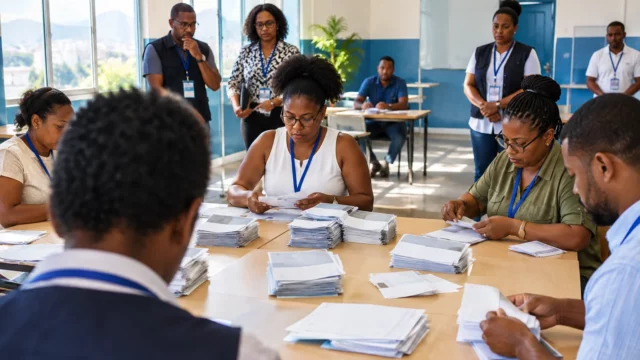
The timetable adds weight to this moment. The presidential election is set for 15 November 2026, and the campaign opens in a member country of ECOWAS — the Economic Community of West African States — even as the archipelago follows a distinctly different political and economic path from the rest of the region. In Praia, the Cabo Verdean capital, electoral contests rarely turn on abrupt breaks. They are more often about the ability to protect an already fragile balance.
A re-election bid announced in a country that has regained its footing
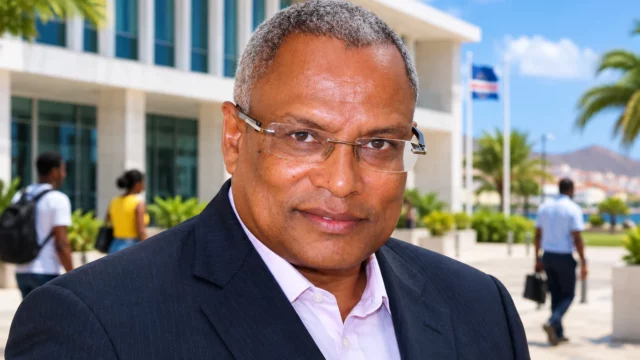
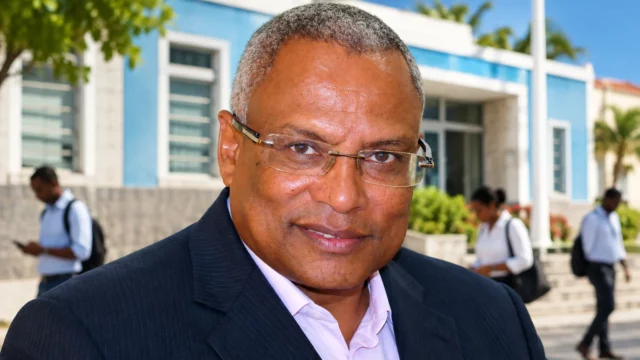
José Maria Neves, president of the Republic of Cabo Verde since 2021, announced on 14 September 2026 that he would seek another term. The head of state said he wanted to put his experience “at the service of the future”, a formulation that points to continuity rather than a bid to reclaim power. The announcement comes as the country is still emerging from the economic shocks caused by the pandemic, but also at a time when institutional stability remains a major political asset.
The decision comes at a clearly defined point in the electoral cycle. November’s vote will choose the next president in a system where the head of state serves as an institutional arbiter, while the government sets economic policy. The incumbent therefore does not have direct executive authority over budgetary decisions, but does wield real influence over the tone of public debate, political cohesion and how reforms are viewed.
The announcement also has partisan significance. José Maria Neves, a long-standing figure in PAICV, the African Party for the Independence of Cabo Verde, enjoys political backing that brings relations between the executive, political parties and a public attentive to stability back into focus. In a country where electoral competition remains governed by clear rules, his bid chiefly offers a chance to assess what has been achieved since 2021 — and what remains to be done.
Recovery figures are strong, but they do not tell the whole story
Cabo Verde has staged a marked economic rebound. The World Bank says real gross domestic product grew by 6.3% in 2025, after strong growth in 2024. It also notes that the country recorded its first overall fiscal surplus since 2007 in 2025, amounting to 1% of GDP, while public debt fell to 100.7% of GDP, down from a much higher level at the start of the decade.
The change in macroeconomic status is also significant. Cabo Verde moved into the World Bank’s upper-middle-income category in July 2025. This shift matters because it changes how lenders, investors and international partners view the country. It does not remove its vulnerabilities, but it confirms an upward trajectory that few African island economies have been able to sustain so consistently.
Tourism remains the engine of this recovery. The World Bank notes that it accounts for about 25% of GDP and a far larger share when its indirect effects on the rest of the economy are included. This explains the speed of the rebound, but also the dependence of Cabo Verde’s economic model on external demand, air links and global economic conditions.
The labour market has also regained some breathing room. Unemployment fell to 6.2% in 2025, while poverty declined, supported by the recovery in services and remittances from the diaspora. Here too, the figures should be read with caution: Cabo Verde benefits from a powerful migration network that cushions crises, but also leaves the economy exposed to the financial health of households living abroad.
Vulnerabilities remain, especially in an archipelago heavily reliant on its tourist islands
The real debate over a second term will therefore not be about whether there has been a rebound, but about its quality. On Sal and Boa Vista, where tourism is particularly concentrated, prosperity is more visible than elsewhere. But this concentration leaves the country exposed to a shock in visitor numbers, pressure on air transport and the ability of infrastructure to keep pace. The World Bank recommends diversifying tourism hubs from one island to another to distribute income and jobs more evenly.
State-owned enterprises are another point of concern. Support for some companies, including the national airline, continues to weigh on public finances and the credibility of the debt-reduction path. The World Bank notes that debt servicing still absorbs a significant share of revenues, limiting the scope for investment in water, local production, inter-island transport and climate adaptation.
Climate, finally, is no side issue in Cabo Verde. In a semi-arid archipelago, droughts, erratic rainfall and pressure on water resources directly affect agriculture, food prices and the security of rural incomes. The presidential debate cannot therefore be confined to average growth. It must also address the resilience of less visible islands, which depend less on tourism and more on social safety nets, family remittances and basic public services.
What Cabo Verde is signalling to the rest of West Africa
The regional significance of this moment extends beyond the archipelago. In an ECOWAS often marked by institutional ruptures and military-led transitions, Cabo Verde continues to offer a different image of West Africa: an island state where changes of government, electoral competition and predictable rules remain possible. This distinctiveness does not erase budgetary constraints or external dependencies, but it is a reminder that a stable trajectory can still deliver measurable results.
For José Maria Neves, the challenge in the November 2026 election will be to turn a favourable macroeconomic record into a clear political programme. For Cabo Verdeans in Praia and on the other islands, the question is more practical: can the current recovery become a less vulnerable, more evenly distributed model, with less dependence on a single sector? The credibility of the next institutional cycle, far beyond the president himself, will rest on the answer.