Algeria
 Egypt
 Libya
 Morocco
 Sudan
 Tunisia
 Benin
 Cabo Verde
 Côte d'Ivoire
 Ghana
 Guinea
 Guinea-Bissau
 Liberia
 Mali
 Mauritania
 Niger
 Nigeria
 Senegal
 Sierra Leone
 The Gambia
 Togo
 Cameroon
 Central African Republic
 Chad
 DR Congo
 Equatorial Guinea
 Gabon
 Republic of the Congo
 São Tomé and Príncipe
 Burundi
 Comoros
 Djibouti
 Eritrea
 Ethiopia
 Kenya
 Madagascar
 Malawi
 Mauritius
 Mozambique
 Rwanda
 Seychelles
 Somalia
 South Sudan
 Tanzania
 Uganda
 Angola
 Botswana
 Eswatini
 Lesotho
 Namibia
 South Africa
 Zambia
 Zimbabwe
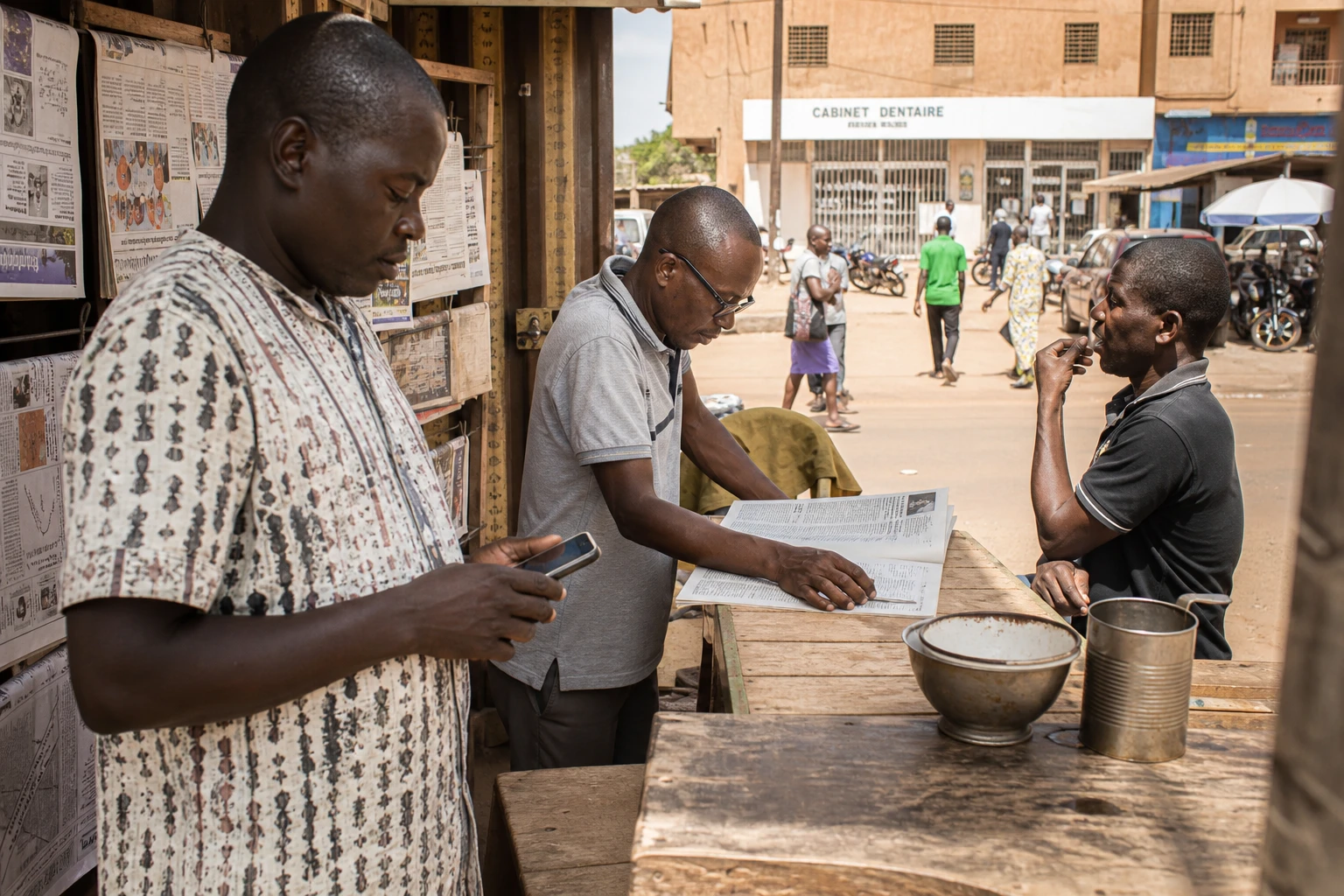
A familiar face from the transition returns to Burkina Faso’s debate
In Burkina Faso, political silences never really last. They are often broken when war, governance and sovereignty once again meet in the same public arena.
It is against this backdrop that Yacouba Isaac Zida has spoken out again after several years away from public view. The former head of the 2014-2015 transition, who had remained on the sidelines of national debate, gave an interview in September 2026 in which he offered a critical assessment of the course pursued by the government of Captain Ibrahim Traoré. The interview was published on his own website and picked up by several Burkinabè and African media outlets, confirming that this was not a social media rumour but a deliberate political statement.
The timing is sensitive. Burkina Faso remains mired in a deep security crisis, while the government in Ouagadougou is pursuing a long-term military and political response. At the same time, the country left ECOWAS on 29 January 2025, alongside Mali and Niger, and is now more firmly aligned with the Alliance of Sahel States, established by the three Sahelian regimes to demonstrate autonomous co-operation.
What Zida says, and what it reveals
In the interview, Yacouba Isaac Zida does not deny the efforts of Burkina Faso’s forces. He praises their growing strength but rejects reducing the crisis to a strictly military logic. He calls for the political, social, community and diplomatic levers to be mobilised simultaneously. His message is clear: the fight against armed groups cannot rely on weapons alone. This idea extends a line often advanced by researchers and people working on the ground in the Sahel, who stress that intelligence, the flow of local information and relations with communities matter as much as the balance of force.
On Russia’s presence in the Sahel, the former transitional leader offers a phrase designed to make an impression: sovereignty does not mean choosing one dependency over another. Instead, he argues for a state capable of depending on no one. The words resonate in a country where official discourse now links sovereignty with national redeployment and the diversification of partnerships, particularly since the break with France and the regional realignment around the AES.
Zida’s return to public life also has an institutional dimension. He does not merely express reservations about the security strategy. He recalls that no civilian should be deprived of their liberty outside legal procedures, an observation implicitly aimed at the growing number of abductions denounced in Burkinabè debate. This is no trivial point. It touches on the boundary between a war waged in the name of the state and the rule of law that the authorities say they want to uphold.
On the case of Paul-Henri Sandaogo Damiba, the former transitional president ousted in September 2022 and extradited from Togo to Burkina Faso in January 2026, Zida adopts a lawyerly caution: it is for the courts to establish the facts on the basis of evidence and due process. This formulation matters, as it distances him from summary political trials while leaving the door open to Burkina Faso’s justice system. Damiba’s extradition was confirmed by the Togolese government, Ouagadougou and the Burkina Information Agency.
A debate that goes beyond Zida himself
The former lieutenant-colonel’s intervention has unsettled some regime supporters. Smear campaigns have circulated on social media, recalling his dismissal from the army for desertion. Such attacks reflect a political reality in Burkina Faso: legitimacy is contested as much in the battle of narratives as in formal institutions. Anyone who speaks too early, too loudly or at the wrong moment quickly becomes a target.
But the substance of the debate goes beyond Zida alone. Since Ibrahim Traoré came to power in September 2022, the Burkinabè government has hardened its rhetoric, strengthened the central role of the army and embarked on new forms of Sahelian co-operation. The authorities present the growing strength of combat forces as a sign that they are regaining control. They also point to progress in improving security, citing administrative reports and the president’s repeated visits to meet people and forces on the ground.
Even so, the fundamental question remains. Can Burkina Faso durably restore the authority of the state without reconciling security, justice and public trust? This is where Zida’s words carry political weight. Implicitly, he reminds the country that a military victory is not enough to resolve a crisis of legitimacy. In a country where the capital, Ouagadougou, remains the centre of decision-making, while vast rural areas still face the pressure of insecurity, the equation remains incomplete.
What this statement says about West Africa
At the regional level, this episode confirms the political realignment under way in West Africa. Burkina Faso’s effective withdrawal from ECOWAS in January 2025 opened a new phase. It reduced the influence of the West African organisation and strengthened the logic of a Sahelian bloc around the AES. Burkina Faso is therefore no longer writing only its own internal crisis. It is part of a regional reconfiguration, with consequences for the movement of people, judicial co-operation mechanisms, diplomatic relations and security arrangements.
Zida’s intervention is also part of this battle for position. He is not proposing a return to the past. He is raising a broader question that many Sahelian states face at the same time: how can sovereignty be rebuilt without closing civic space, and how can insecurity be fought without establishing a permanent state of exception? Burkina Faso, already embroiled in a long war and a political transition without a fully settled electoral timetable, remains at the forefront of this continental question.
What must now be watched is not only the next statement from a former leader. It is the Burkinabè government’s ability to turn its reported military gains into lasting stability, in a Sahelian region where every public statement, extradition and diplomatic realignment carries weight far beyond national borders.