Algeria
 Egypt
 Libya
 Morocco
 Sudan
 Tunisia
 Benin
 Cabo Verde
 Côte d'Ivoire
 Ghana
 Guinea
 Guinea-Bissau
 Liberia
 Mali
 Mauritania
 Niger
 Nigeria
 Senegal
 Sierra Leone
 The Gambia
 Togo
 Cameroon
 Central African Republic
 Chad
 DR Congo
 Equatorial Guinea
 Gabon
 Republic of the Congo
 São Tomé and Príncipe
 Burundi
 Comoros
 Djibouti
 Eritrea
 Ethiopia
 Kenya
 Madagascar
 Malawi
 Mauritius
 Mozambique
 Rwanda
 Seychelles
 Somalia
 South Sudan
 Tanzania
 Uganda
 Angola
 Botswana
 Eswatini
 Lesotho
 Namibia
 South Africa
 Zambia
 Zimbabwe
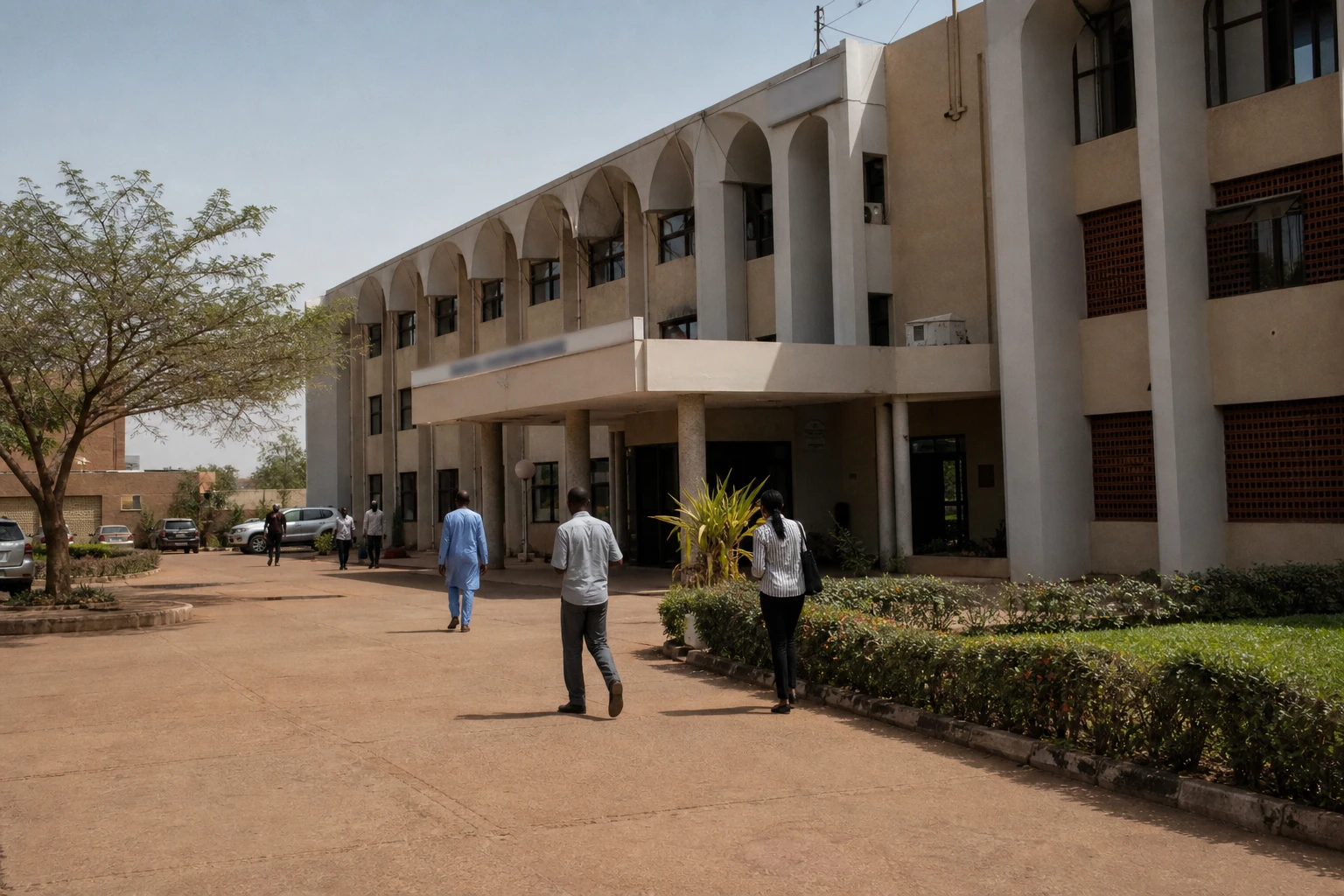
In Ouagadougou, the debate on development is no longer limited to the volume of funding available. It now centres on whether that funding can support a more productive economy, create jobs and strengthen Burkina Faso’s autonomy in an unstable regional environment.
It is in this context that Burkina Faso and the World Bank Group launched a new Country Partnership Framework on Friday 2 October 2026, covering the period 2026-2031. The document aligns the institution’s support with the priorities of the 2026-2030 National Development Plan, known as RELANCE.
A partnership refocused on three priorities
The new framework sets out three main objectives. The first concerns health and education. It aims to improve access to essential social services and strengthen human capital — the skills, health and knowledge that enable a population to participate fully in economic activity.
This choice responds to a longstanding challenge. Security tensions have disrupted the continuity of public services in several parts of the country. The consequences affect pupils, families, health workers and local authorities, which must maintain services despite limited resources.
The second priority is electricity. For households, the issues include lighting, preserving products and access to digital equipment. For businesses, electricity directly affects production costs, the processing of raw materials and the ability to operate consistently.
The World Bank says access to electricity stood at about 34% of Burkina Faso’s population in 2024, compared with an average of 55% in sub-Saharan Africa. These figures show the scale of the gap to be closed, but also the potential size of the market for solar solutions, mini-grids and national infrastructure.
The third objective is agriculture. Burkina Faso aims to increase yields, improve food security and make agricultural production a driver of economic transformation. The challenge extends beyond the availability of harvests. It includes storage, local processing, access to inputs, financing and marketing.
The RELANCE plan as a national guide
The partnership with the World Bank is part of the 2026-2030 National Development Plan. Adopted at the beginning of 2026, the framework identifies economic sovereignty and endogenous development as priorities for public policy.
The government document emphasises productive recovery, industrialisation, the development of national resources and the strengthening of infrastructure. It also takes account of forced population displacement, recovery needs and constraints linked to the security situation.
This approach explains Ouagadougou’s desire for cooperation more firmly focused on tangible results. The Minister Delegate for the Budget, Fatoumata Bako/Traoré, summed up this approach, saying that cooperation should support national ambition without replacing it.
Ousmane Diagana, the World Bank’s Vice-President for Western and Central Africa, said the new framework should help turn Burkina Faso’s resilience into opportunities for jobs and development. The World Bank describes the framework as support for job creation, social services, electricity and agricultural productivity.
Electricity, an immediate test of transformation
The electricity sector is likely to provide an early test of this new cooperation. In September 2026, the Burkinabè authorities announced a project worth 104 billion CFA francs. It is intended to strengthen the operational capacity of the National Electricity Company of Burkina Faso, SONABEL, and that of the Faso Vêenem Agency.
This public agency was created to help expand access to electricity. Its stated aim is to support a more available supply, better suited to the needs of households, public services and production units.
Success, however, will depend on more than investment. It will also rely on equipment maintenance, the security of power lines, users’ ability to pay and the provision of services to areas far from major urban centres.
In Ouagadougou and the main cities, improved electricity supply could support workshops, shops and small industries. In rural areas, the priorities will be different. They will include irrigation, preserving agricultural products, health centres and schools.
Cooperation faces security risks
The security situation remains the programme’s main source of fragility. It affects travel, economic activity and access to social services. It can also raise project costs and make monitoring more difficult in regions far from the capital.
For displaced people or those who have returned to their communities, priorities will often be immediate: finding a school, a health centre, a source of water and a means of livelihood. For businesses, the questions will be continuity of operations and the protection of investment.
The 2026 national budget therefore lists defence, education, health and rural development among its priority sectors. This combination shows that security and development are being treated as interconnected issues. It also means results must be measured beyond financial announcements.
The World Bank says the previous framework, extended until 2025, delivered results in education, health, energy and agriculture. The new arrangement will now have to show that these gains can be consolidated in a more demanding context.
A signal watched across West Africa
The partnership’s timetable comes as Burkina Faso pursues a distinct political and economic course within West Africa. The country is part of the Confederation of Sahel States with Mali and Niger, while its relations with the Economic Community of West African States, a regional organisation responsible in particular for economic integration, remain shaped by recent realignments.
This situation gives the 2026-2031 framework significance beyond the relationship between Ouagadougou and the World Bank. It raises the question of how the pursuit of economic sovereignty, the mobilisation of external funding and the integration of regional markets can be reconciled.
The next challenge will therefore be implementation. The effective allocation of resources, progress on electricity projects, the continuity of social services and agricultural results will all need to be monitored. For the people of Burkina Faso, the partnership’s credibility will be measured less by its three priorities than by its visible effects in schools, health centres, farms and businesses.