Algeria
 Egypt
 Libya
 Morocco
 Sudan
 Tunisia
 Benin
 Cabo Verde
 Côte d'Ivoire
 Ghana
 Guinea
 Guinea-Bissau
 Liberia
 Mali
 Mauritania
 Niger
 Nigeria
 Senegal
 Sierra Leone
 The Gambia
 Togo
 Cameroon
 Central African Republic
 Chad
 DR Congo
 Equatorial Guinea
 Gabon
 Republic of the Congo
 São Tomé and Príncipe
 Burundi
 Comoros
 Djibouti
 Eritrea
 Ethiopia
 Kenya
 Madagascar
 Malawi
 Mauritius
 Mozambique
 Rwanda
 Seychelles
 Somalia
 South Sudan
 Tanzania
 Uganda
 Angola
 Botswana
 Eswatini
 Lesotho
 Namibia
 South Africa
 Zambia
 Zimbabwe
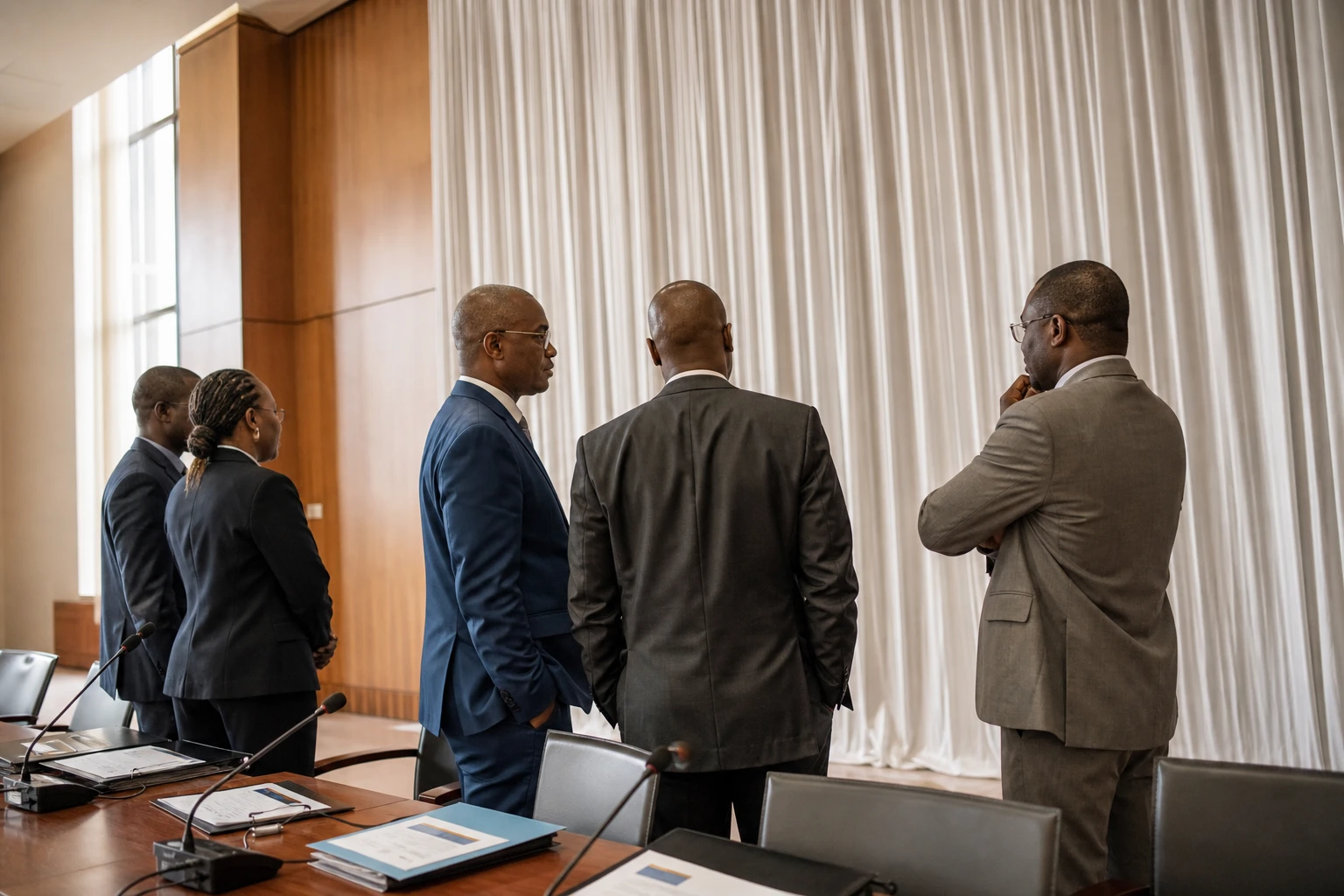
In Ouagadougou, the question is no longer simply who leads Burkina Faso. It now concerns the shape of power after a military transition has become long-lasting, as insecurity remains the main test of the promise made to the population.
Captain Ibrahim Traoré took power on 30 September 2022, after overthrowing Lieutenant-Colonel Paul-Henri Sandaogo Damiba. Four years later, his authority has been consolidated. But the timetable for a return to constitutional order remains largely open.
A transition extended beyond its original timetable
Initially, the transition was supposed to lead Burkina Faso to a presidential election in July 2024. This scenario was abandoned at the national meetings held in Ouagadougou on 25 and 26 May 2024.
The new Transition Charter set a further five-year period from 2 July 2024. It also changed the head of state’s status, making him President of Faso. The text also allows the president, the prime minister and the president of the Transitional Legislative Assembly to take part in future elections.
This revision therefore shifted the centre of gravity of the process. The priority is no longer an imminent election date. It is now linked to the conduct of the war, the reorganisation of the state and the definition of a new institutional framework.
The Presidency of Faso confirms the five-year extension and the change in Ibrahim Traoré’s status. The government presents this decision as a response to security constraints and the need to continue reforms.
Security remains the main test
Since 2015, Burkina Faso has faced armed groups linked to al-Qaeda and Islamic State in the Sahel. Attacks have mainly hit the Sahel, North, East and Boucle du Mouhoun regions. They disrupt travel, agriculture, access to public services and the functioning of markets.
Ibrahim Traoré’s government has made the recapture of territory its central argument. It has increased recruitment of the Volunteers for the Defence of the Homeland, developed auxiliary forces and redirected military partnerships. This strategy is accompanied by a discourse of sovereignty that rejects dependence on Western partners.
The authorities say several areas have been retaken and that people can gradually return to their communities. However, the available information remains difficult to verify in the areas most exposed to violence. Independent sources have also documented the persistence of attacks on civilians and the risks associated with operations by security forces and their auxiliaries.
The record therefore cannot be summed up in a single interpretation. In the major cities, including Ouagadougou, part of the population supports the idea of taking back control nationally. In rural areas, expectations are more concrete: being able to travel, farm, sell crops and send children to school.
Sovereignty asserted on several fronts
The Burkinabè government is not limiting its strategy to security. It is also seeking to reduce external influence over the economy, diplomacy and military choices. The opening of the country’s first gold refinery, announced in September 2026, is part of this drive to process resources locally.
Burkina Faso remains one of the continent’s major gold producers. Yet much of the added value has until now escaped the country, since the ore was mainly exported after extraction. The refining project is intended to enable the state to exercise greater control over production, certification and marketing.
This approach responds to a long-standing expectation: to generate more revenue from national resources. It nevertheless presents challenges. Traceability of gold, the fight against fraud, worker protection and revenue transparency will be crucial in measuring its real impact.
The same logic is apparent in relations with Mali and Niger. The three countries have created the Alliance of Sahel States, a political and security partnership born of their shared opposition to sanctions and pressure from the Economic Community of West African States, ECOWAS.
Break with ECOWAS reshapes West Africa
Burkina Faso, Mali and Niger officially left ECOWAS on 29 January 2025. The regional organisation, established to facilitate trade, free movement and political cooperation in West Africa, had demanded a swift return to civilian rule after the coups.
The withdrawal has strengthened the political autonomy asserted by the Alliance of Sahel States’ authorities. It nevertheless opens a period of uncertainty for traders, transport operators, migrant workers and businesses that depend on regional corridors.
The borders have not disappeared, but shared mechanisms have become more complex. For informal economies, which are widespread between Burkina Faso, Mali, Niger, Ghana, Côte d’Ivoire and Togo, the costs and delays involved in movement may matter more than official statements.
ECOWAS confirmed the effective date of the withdrawal, while announcing transitional arrangements intended to limit disruption for the population. The political significance of the break remains considerable: West Africa is now traversed by two visions of integration.
A narrower political space
The extension of the transition has also reduced the scope for conventional political competition. The authorities justify restrictions by citing the war and the need to preserve national cohesion. Human rights organisations and several civic groups, meanwhile, denounce a shrinking public space and greater difficulties in criticising the conduct of those in power.
This tension directly affects the media, political parties, trade unions and associations. It also touches ordinary citizens, who may hesitate to speak publicly about military operations, forced displacement or the management of resources.
The debate is therefore not limited to a choice between support for and rejection of the regime. It concerns the safeguards that will govern state action during the extended period. The central question will be whether the stability being sought is accompanied by credible mechanisms of oversight and accountability.
The next test will be institutional
In September 2026, Ibrahim Traoré remains Burkina Faso’s principal decision-maker. His power rests on the army, a discourse of sovereignty and visible popular mobilisation in the capital. But his legitimacy will also depend on results achieved beyond Ouagadougou.
The next phase of the transition will be judged on three fronts: security developments in the regions, the ability to preserve economic activity and the clarity of the political timetable. The question will not only be when elections will take place. The rules of the vote, the conditions for participation and the institutions that emerge from it will also need to be examined.
At regional level, Burkina Faso is part of a lasting reshaping of West Africa. Along with Mali and Niger, it is advocating Sahelian integration distinct from ECOWAS. The outcome of this experiment will affect relations between military governments, regional organisations and populations.
For the people of Burkina Faso, the issue remains primarily national: turning the promise of sovereignty into everyday security, accessible public services and institutions capable of being held to account. It is on this ground, more than in speeches, that the trajectory opened on 30 September 2022 will be measured.