Algeria
 Egypt
 Libya
 Morocco
 Sudan
 Tunisia
 Benin
 Cabo Verde
 Côte d'Ivoire
 Ghana
 Guinea
 Guinea-Bissau
 Liberia
 Mali
 Mauritania
 Niger
 Nigeria
 Senegal
 Sierra Leone
 The Gambia
 Togo
 Cameroon
 Central African Republic
 Chad
 DR Congo
 Equatorial Guinea
 Gabon
 Republic of the Congo
 São Tomé and Príncipe
 Burundi
 Comoros
 Djibouti
 Eritrea
 Ethiopia
 Kenya
 Madagascar
 Malawi
 Mauritius
 Mozambique
 Rwanda
 Seychelles
 Somalia
 South Sudan
 Tanzania
 Uganda
 Angola
 Botswana
 Eswatini
 Lesotho
 Namibia
 South Africa
 Zambia
 Zimbabwe
A new pool of civilians for a state in transition
In Ouagadougou, the aim is no longer simply to recruit. It is now to prepare, on a large scale, women and men capable of stepping in before a crisis escalates. Burkina Faso wants to build a civic reserve that goes beyond security alone, in a country still facing intense military, administrative and social pressure.
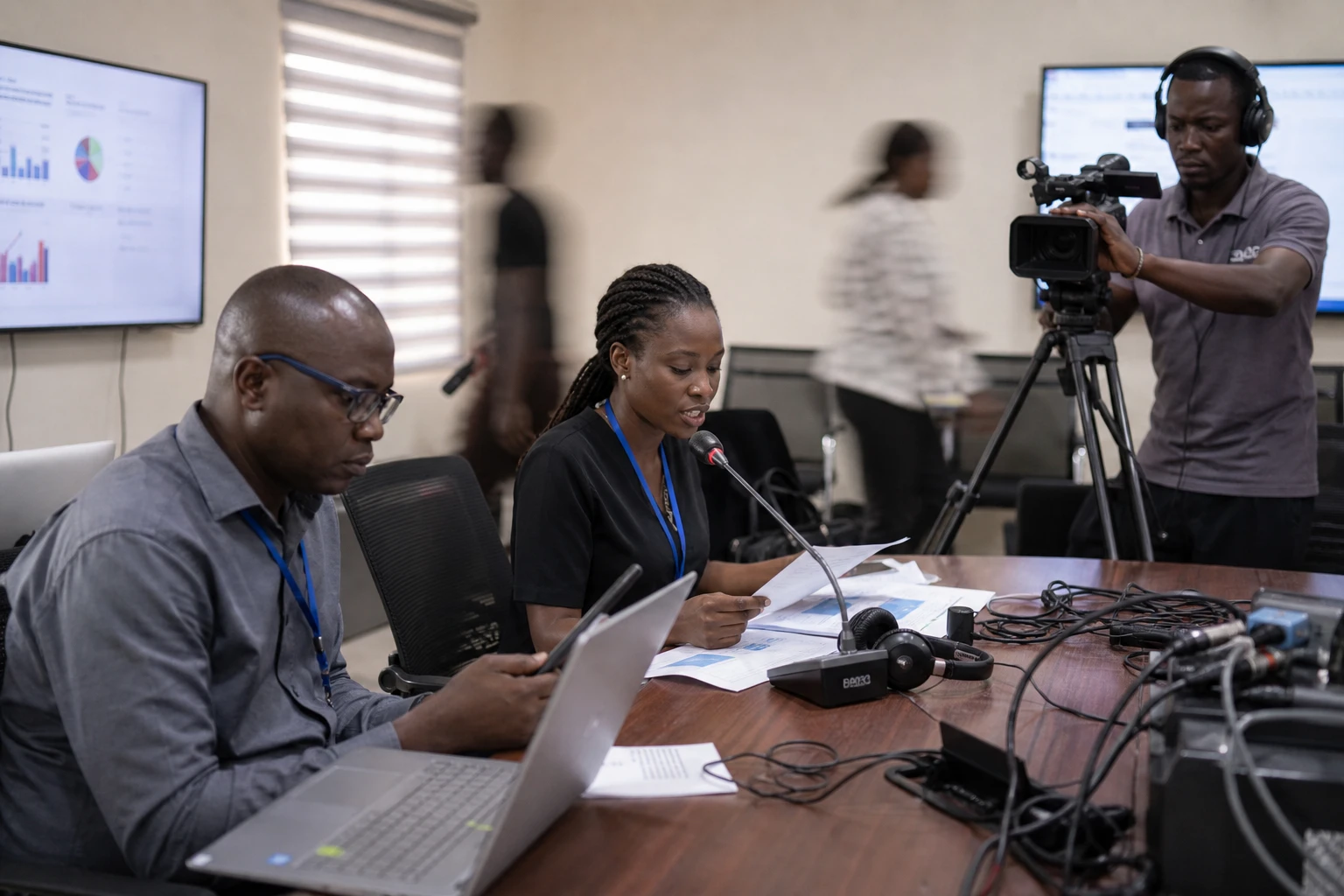
On 18 September 2026, the Public Interest Group – National Volunteer Programme in Burkina Faso presented the National Reserve Volunteers, or VNRs, as well as a Senior Volunteering scheme for retired professionals. The programme aims to recruit one million volunteers over five years, or 200,000 registrations a year, with applications set to open on 25 September 2026 via a dedicated platform.
The stated rationale is clear: to have a pool ready to mobilise for disaster response, healthcare support, environmental protection and assistance with restoring public services in areas retaken from armed groups. The director-general of the GIP-PNVB also stressed one point: these volunteers are not intended to fight.
Building on an already extensive mobilisation framework
This latest step has not come out of nowhere. For several years, Burkina Faso’s authorities have been adding instruments for mobilisation. The Volunteers for the Defence of the Homeland, created by Law No. 028-2022/ALT of 17 December 2022, support the Defence and Security Forces. In April 2026, the government also put forward a military reserve project providing for 100,000 reservists to be trained and recruited by the end of 2026.
This layered approach sets out a national resilience strategy: first an armed layer, then a military reserve, followed by a third, civilian and non-combatant layer focused on state continuity. This framework is also supported by a dedicated public fund, the Patriotic Support Fund, whose resources had reached 162.388 billion CFA francs by 28 June 2026, against an annual target of 200 billion. The fund is used in particular to cover needs related to the VDP and forces deployed in the field.
The political message is therefore clear: civic mobilisation is no longer presented as a temporary supplement, but as a lasting component of public action. In Burkina Faso’s context, this approach responds to a real need for administrative presence, local emergency response and reconstruction, especially in areas where the state is returning in stages.
The programme also draws on historical language openly invoked by the current authorities. References to Thomas Sankara and the Democratic and Popular Revolution point to a simple idea: the state can achieve more change when it involves citizens in collective work. But the analogy has its limits. The years 1983–1987 belong to a specific political moment, whereas Burkina Faso in 2026 is facing asymmetric warfare, strained public finances and an administration being reconfigured in an emergency.
The real challenges: funding, training and local coordination
The first challenge is financial. Even without weapons or military pay, one million civilian reservists would entail costs for training, equipment, transport, supervision and medical cover, as well as compensation depending on the arrangements adopted. Yet public finances are already absorbing the costs of the war effort and reconstruction priorities. The country has indeed mobilised substantial resources, but scaling up such a programme will require careful planning, region by region.
The second challenge is training. Preparing 200,000 volunteers a year is not simply a matter of launching a registration drive. It requires trainers, sites, standardised modules and clear standards. Otherwise, volunteering risks becoming a major promise that is operational to varying degrees. The GIP-PNVB says it wants to structure this expansion, while applications will be allocated according to regional quotas.
The third challenge is administrative. In localities that have recently been secured or partly restored, the arrival of volunteers must be coordinated with that of teachers, healthcare workers, municipal staff and technical services. Otherwise, duplication, grey areas and local tensions could quickly undermine the intended impact. The real test, then, will not simply be recruitment, but the ability to restart public services in a coordinated way.
This matters all the more because Burkina Faso is already relying on other forms of civic mobilisation. In 2026, recruitment linked to public bodies, patriotic immersion programmes and training for VDP officers have shown that the state is seeking to bring administration, defence and civic participation closer together. The new volunteering scheme follows the same approach, but with a more social and local focus.
At regional level, the initiative resonates with changes across the AES area, where young people, volunteering and sovereignty are increasingly presented as levers for internal stability. The first Confederal Forum on Youth and Volunteering, held in Ouagadougou in late August 2026, confirmed that the issue extends beyond Burkina Faso alone. The country is thus seeking to turn a security constraint into a doctrine for organising society. The coming months will show whether applications opening on 25 September and the first training courses can move the programme from symbol to real capacity.