Algeria
 Egypt
 Libya
 Morocco
 Sudan
 Tunisia
 Benin
 Cabo Verde
 Côte d'Ivoire
 Ghana
 Guinea
 Guinea-Bissau
 Liberia
 Mali
 Mauritania
 Niger
 Nigeria
 Senegal
 Sierra Leone
 The Gambia
 Togo
 Cameroon
 Central African Republic
 Chad
 DR Congo
 Equatorial Guinea
 Gabon
 Republic of the Congo
 São Tomé and Príncipe
 Burundi
 Comoros
 Djibouti
 Eritrea
 Ethiopia
 Kenya
 Madagascar
 Malawi
 Mauritius
 Mozambique
 Rwanda
 Seychelles
 Somalia
 South Sudan
 Tanzania
 Uganda
 Angola
 Botswana
 Eswatini
 Lesotho
 Namibia
 South Africa
 Zambia
 Zimbabwe
In Ouagadougou, the dispute is about more than a bill
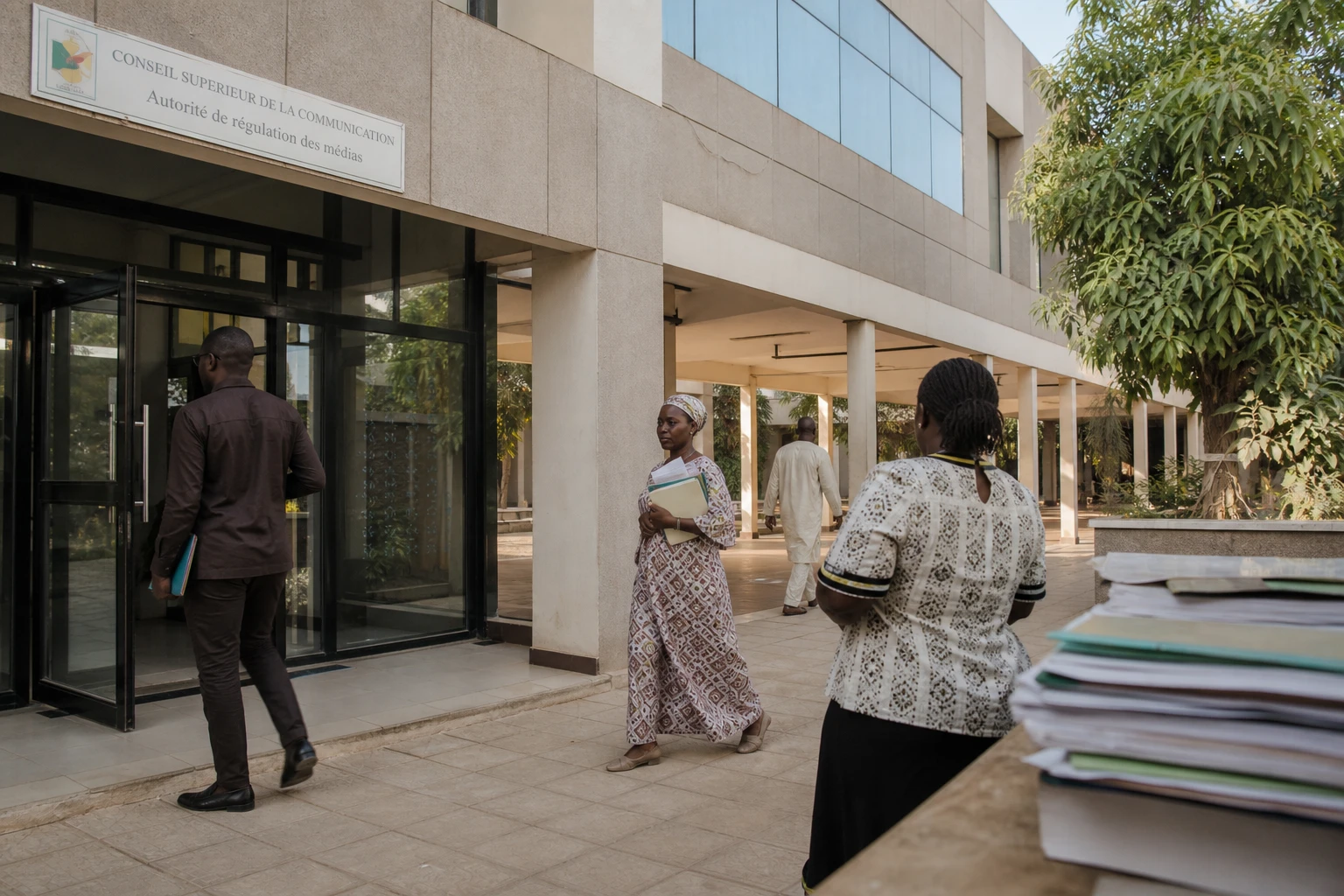
In Burkina Faso, a pay-TV channel and a regulator are fighting over far more than a penalty. Behind the fine imposed on Canal+ International lies access to Burkina Faso’s public channels, and therefore subscribers’ right to receive public-service information without an additional technical hurdle when their subscription expires.
The case also touches on a strong sense of sovereignty in Ouagadougou in recent months: the Burkinabe state wants to regain control over content, broadcasting rules and the place of public media in the audiovisual landscape. This approach is part of a broader sequence marked by the central role of the Superior Council of Communication, the CSC, and the growing prominence of media tools linked to the Alliance of Sahel States, the AES, which brings together Burkina Faso, Mali and Niger.
What the CSC accuses Canal+ of
On 28 July 2026, the CSC announced a new fine of 200 million CFA francs against Canal+ International. The institution says the operator failed to implement a decision taken on 12 June 2026 and was given 30 days to comply, to no avail. The core of the dispute is straightforward: the channels of Radiodiffusion Télévision du Burkina, the RTB, must be available free-to-air to subscribers living in Burkina Faso, without any additional procedure such as sending an SMS to reactivate free access.
The first penalty dates back to 12 June 2026. According to AIB, the CSC then fined Canal+ International 50 million CFA francs for breaching an agreement signed on 14 February 2025. The regulator said the obligation to broadcast national public channels free-to-air did not depend on any action by the subscriber or on an active subscription, but on a clear contractual commitment between the parties.
The CSC says it found, after the deadline expired, that the obstacle had not been removed. It has therefore stepped up its response. The increase from 50 to 200 million CFA francs carries a clear symbolic significance: the regulator wants to show that a decision issued in Ouagadougou must have real effects on the ground, not merely prompt a promise to comply.
A technical matter, but with political and economic stakes
In a country where the RTB remains the public broadcasting company, access to national channels is not merely a commercial dispute. It concerns public service, the circulation of official messages and the place given to national programmes in households with pay-TV. The RTB itself says it carries out Burkina Faso’s public broadcasting mission, with news bulletins, programmes and regional broadcasts followed across the country.
The dispute also highlights the economic power of pay-TV operators. Canal+ is firmly established in Africa and claims to be present in more than 25 countries, with a subscriber base that exceeded 26.9 million in 2024 across the group. In its reports, the company also notes that Africa remains one of its main growth drivers and that it is developing distribution partnerships there. In Burkina Faso, this weight gives the case a particular dimension: the regulator is penalising a highly visible private operator, while also knowing that hundreds of thousands of users rely on its network to receive content, including public channels.
The CSC’s decision to maintain the pressure comes as Burkinabe authorities issue a growing number of signals that they want to regain control of the media space. As early as September 2024, the regulator had authorised Canal+ Burkina to take action against certain unauthorised uses of its channels. In 2025, it also tightened the rules governing agreements and the renewal of licences for audiovisual media. The message is consistent: the audiovisual market remains open, but it is subject to stricter regulation.
For Burkinabe subscribers, the stakes are very practical. They pay for a private package but expect to retain access to the country’s public channels without taking any additional steps, even when their subscription expires. For Canal+, the cost of technical and commercial compliance adds to the risk of reputational damage. For the state, by contrast, the case serves a clear political line: the RTB must remain visible, accessible and a priority in the national audiovisual landscape.
A signal being watched beyond Burkina Faso
The case therefore goes beyond Burkina Faso alone. In West Africa, several states are seeking tighter control over the distribution of audiovisual content, sector taxation and the protection of public channels. Burkina Faso is part of a broader trend: regulators want major international operators to comply with local agreements rather than impose their own technical procedures.
The case also says something about the country’s current political moment. In Ouagadougou, the transitional authorities have made sovereignty a guiding principle across the board, from security to communications. The media sector is no exception. When the CSC imposes a penalty, it is not merely resolving a dispute between a regulator and an operator: it is drawing a boundary between the logic of subscriptions and the public-service mission.
The next steps will unfold on two fronts. First, Canal+ International’s ability to comply quickly with the Burkinabe decision. Second, the CSC’s stance: it has already warned that more severe sanctions could follow. In a West African media landscape where subscriptions, public channels and regulators do not always coexist easily, the Burkina Faso case could set a precedent well beyond Ouagadougou.