
 Algeria
 Egypt
 Libya
 Morocco
 Sudan
 Tunisia
 Benin
 Burkina Faso
 Cabo Verde
 Côte d'Ivoire
 Ghana
 Guinea
 Guinea-Bissau
 Liberia
 Mali
 Mauritania
 Niger
 Nigeria
 Senegal
 Sierra Leone
 The Gambia
 Togo
 Cameroon
 Central African Republic
 Chad
 Equatorial Guinea
 Gabon
 Republic of the Congo
 São Tomé and Príncipe
 Burundi
 Comoros
 Djibouti
 Eritrea
 Ethiopia
 Kenya
 Madagascar
 Malawi
 Mauritius
 Mozambique
 Rwanda
 Seychelles
 Somalia
 South Sudan
 Tanzania
 Uganda
 Angola
 Botswana
 Eswatini
 Lesotho
 Namibia
 South Africa
 Zambia
 Zimbabwe
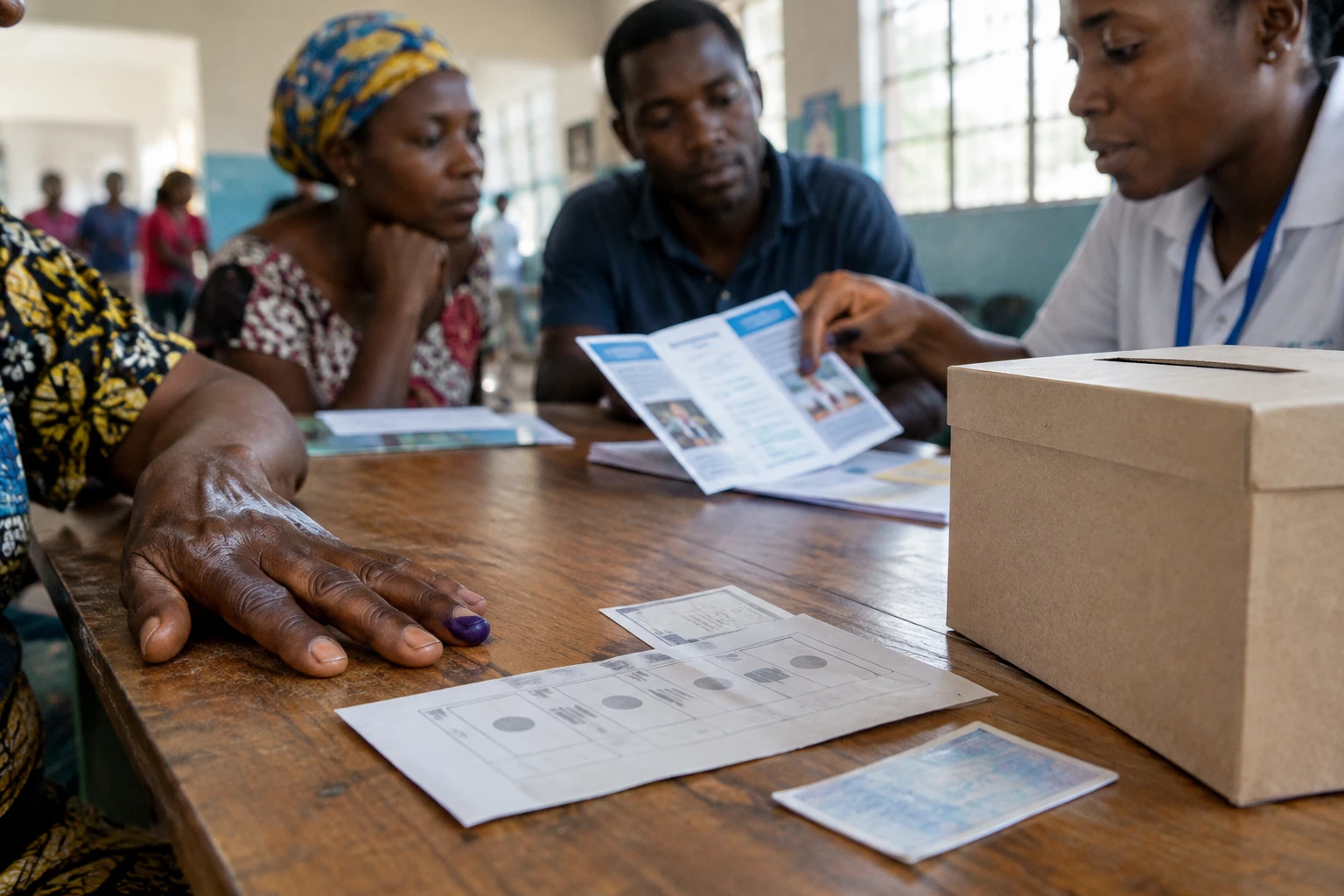
In Kinshasa and in the affected areas of the east, the question is no longer simply whether a vaccine against Bundibugyo Ebola can be developed. It is also necessary to determine what it can protect against, how quickly, and with what level of community trust.
As of 13 October 2026, Congolese authorities reported 9,066 confirmed cases and 4,381 deaths. These figures convey the scale of a major epidemic, but do not by themselves show who has access to care or how many people have yet to be identified. There is still no vaccine specifically licensed against the Bundibugyo virus.
A different strain, with tools still under study
The Democratic Republic of the Congo has already faced several Ebola outbreaks, caused mainly by the Zaire strain. Ervebo, authorised against this strain, has contributed to responses to previous outbreaks. But Bundibugyo is a distinct virus. It cannot therefore be assumed that a vaccine effective against Zaire also protects against it.
The current epidemic began in the east of the country and affects several provinces. It is unfolding in a region where people cross borders and health systems must coordinate surveillance, testing and care. The World Health Organization declared a public health emergency of international concern on 17 May 2026, after cases were reported in the Democratic Republic of the Congo and Uganda. Uganda subsequently declared its outbreak over. Regional surveillance remains essential nonetheless.
The response is not limited to vaccination. Isolating sick people, tracing contacts, preventing infections in healthcare centres and providing early care remain necessary. In July, the DRC’s National Institute of Biomedical Research, the WHO, the University of Oxford and partners launched the PARTNERS trial to assess potential treatments. This is separate from the vaccine trials, but addresses the same lack of tools specific to Bundibugyo.
Two candidates advance, with no evidence of efficacy yet
The Oxford candidate, developed with the Serum Institute of India, began a phase 1 trial in July. This first stage primarily checks the product’s safety and the immune response in a limited number of volunteers. It does not yet demonstrate that it prevents the disease.
Moderna is, for its part, assessing an mRNA vaccine. Health Canada authorised its phase 1 trial on 30 July, and the first injections began in August. The two projects are based on different technologies. At this stage, the available data do not allow one candidate to be judged superior to the other.
Phase 1 results should guide the next steps in the research. If safety and the immune response are deemed sufficient, larger trials will be able to measure efficacy. Their timetable will depend on the data and regulatory approvals. It would therefore be premature to present general availability in the first half of 2027 as a certainty.
These steps may seem slow as the epidemic spreads. Yet they help distinguish a biological signal from real protection. A vaccine can stimulate antibodies without having yet demonstrated that it reduces infections or severe cases. Transparency about this distinction is important for public trust.
Ervebo: a possibility to test, not proven protection
At the request of the Congolese authorities, 70,000 doses of Ervebo were mobilised in August. They do not amount to a response already validated against Bundibugyo. Some are to be used to study whether the vaccine against Zaire Ebola offers cross-protection — protection against a related but different virus.
Laboratory results, animal studies and observations have lent weight to this hypothesis. They are no substitute for clinical evaluation in humans. The Tumaini protocol, announced by the Coalition for Epidemic Preparedness Innovations on 13 October, is to assess Ervebo in particular and could subsequently include specific candidates. Its launch remains subject to the necessary authorisations.
The distinction matters to the people concerned. Healthcare workers, who are exposed on the front line, may take part in protocols assessing safety and potential protection. But it is important to explain clearly what is known, what is being tested and what remains uncertain. Presenting Ervebo as a vaccine proven against Bundibugyo could mislead the public.
Trust is built closest to communities
The availability of doses does not guarantee that they will be accepted. In urban neighbourhoods and remote communities alike, people need clear information and answers to their questions. Health workers are essential, but they cannot shoulder this relationship alone. Religious leaders, teachers, associations and locally respected figures can help facilitate direct exchanges.
This approach is not about persuading people at all costs. It means listening to concerns, acknowledging uncertainty and making research rules clear. Lost trust is difficult to restore, especially when vaccination offered against one strain does not necessarily protect against another.
International partners have announced funding and doses to support trials and the response. But the conduct of protocols, community information and the organisation of care must involve Congolese institutions and local actors. The benefits of research will not be measured only by the number of doses produced: they will also depend on equitable access and the country’s ability to prepare for future outbreaks.
A Congolese challenge with regional consequences
The immediate priority remains to reduce transmission and improve case detection. Vaccines under development will replace neither surveillance nor care, and their results may come after the peak of this outbreak. They could nevertheless provide tools for future outbreaks, in the DRC and other countries at risk.
The next milestone will be the implementation of Tumaini and the publication of phase 1 trial data. For African health authorities, the challenge extends beyond the emergency: strengthening clinical research capacity, production and supply chains on the continent. This epidemic is a reminder that lasting preparedness depends as much on institutions and healthcare workers as on vaccines themselves.



