Algeria
 Egypt
 Libya
 Morocco
 Sudan
 Tunisia
 Burkina Faso
 Cabo Verde
 Côte d'Ivoire
 Ghana
 Guinea
 Guinea-Bissau
 Liberia
 Mali
 Mauritania
 Niger
 Nigeria
 Senegal
 Sierra Leone
 The Gambia
 Togo
 Cameroon
 Central African Republic
 Chad
 DR Congo
 Equatorial Guinea
 Gabon
 Republic of the Congo
 São Tomé and Príncipe
 Burundi
 Comoros
 Djibouti
 Eritrea
 Ethiopia
 Kenya
 Madagascar
 Malawi
 Mauritius
 Mozambique
 Rwanda
 Seychelles
 Somalia
 South Sudan
 Tanzania
 Uganda
 Angola
 Botswana
 Eswatini
 Lesotho
 Namibia
 South Africa
 Zambia
 Zimbabwe
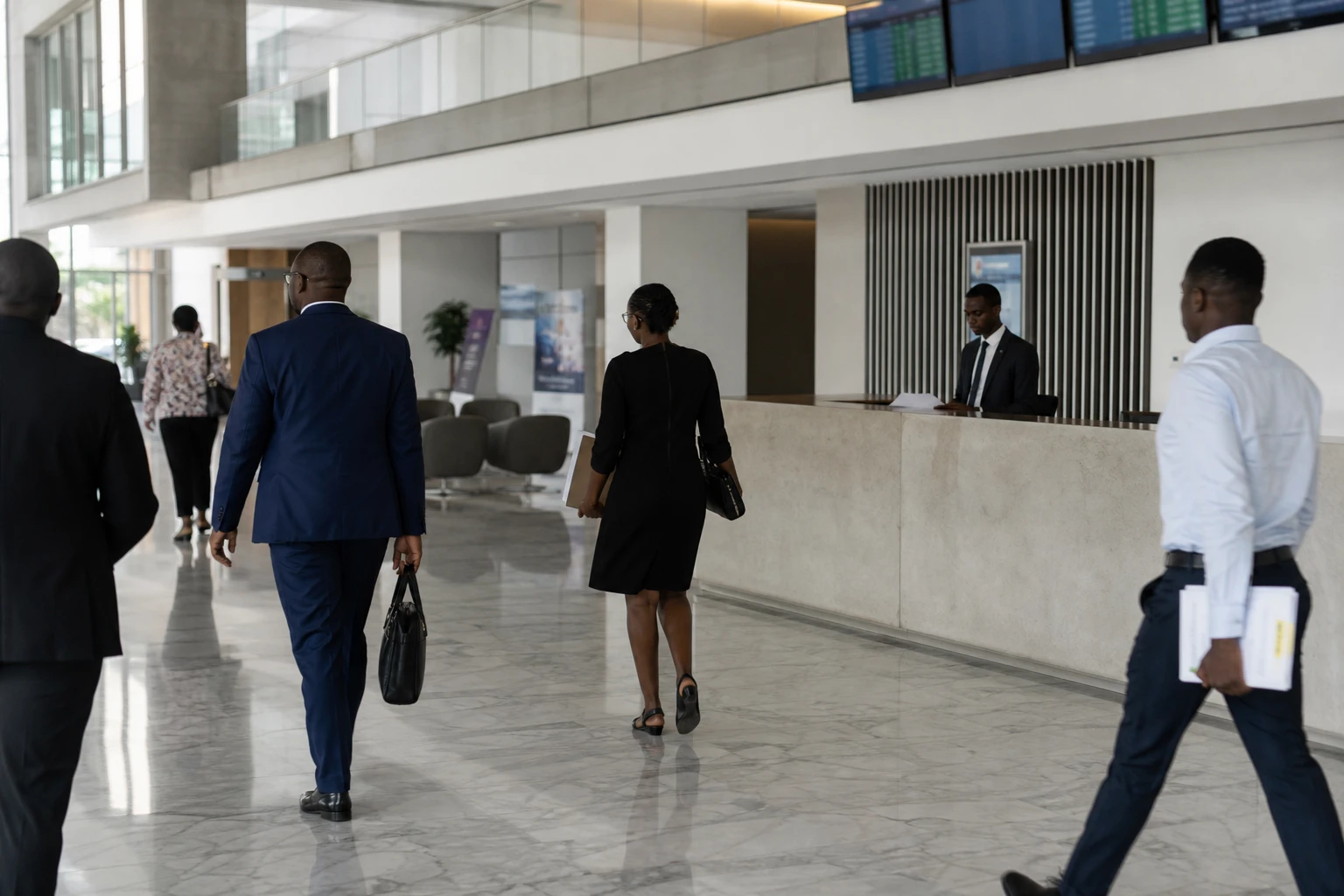
A stock exchange designed for eight economies
In Abidjan, the BRVM is more than just a trading floor. It is one of the few financial markets shared by several states, with a single currency and common rules. For households that focus mainly on shares, the picture may seem modest. For public treasuries, however, the exchange has become central. The BRVM is shared by the eight WAEMU countries — Benin, Burkina Faso, Côte d’Ivoire, Guinea-Bissau, Mali, Niger, Senegal and Togo — and remains one of the exceptions in Africa’s financial landscape.
This structure matters. It allows states to raise funds within a regional framework rather than relying solely on external markets that are more demanding, more expensive or less accessible. The system also relies on UMOA-Titres, the regional agency responsible for organising public securities issues across the Union. In other words, the BRVM does not move solely to the rhythm of listed companies; it also operates as a West African public financing chain.
Few companies, a strong state presence
That is where the crux of the problem lies. The equity market remains narrow. The BRVM’s daily bulletins listed 47 companies at the end of summer 2026, while the bond market had between 168 and 209 bonds, depending on the publication dates observed that year. The imbalance is clear: few private issuers, but a very active debt market.
This explains the prominent role played by governments. The region finances a significant share of its budget needs through auctions of Treasury bills and bonds. The logic is simple: when private investment is insufficient, public authorities fill the gap. Issuance is then used to cover deficits, refinance maturing debt or smooth cash flow. UMOA-Titres reports that the first quarter of 2025 saw strong activity on the primary market, with significant outstanding amounts for several states, including Senegal, Burkina Faso, Mali and Niger.
Senegal illustrates this growing dependence. After major understatements of the public deficit and debt came to light in 2025, the International Monetary Fund confirmed a significant discrepancy in budget figures covering 2019-2023. In this context, Dakar turned increasingly to the regional market. UMOA-Titres lists several Senegalese operations in 2025, with amounts raised running into tens and even hundreds of billions of CFA francs, depending on the auctions. Resorting to the BRVM and the public securities market is therefore not merely a technical choice; it is a response to a financing constraint.
Senegal’s case: cash needs and debt pressure
The debate extends beyond one country. When a government struggles to access international markets, the regional market becomes a pressure valve. This is particularly true for countries with shrinking fiscal room, as well as administrations seeking to avert a payment crisis. Senegal, facing mounting debt pressure and the need to restore the credibility of its accounts, finds a nearby solution in this market. The reasoning is pragmatic: the region offers investors, a familiar process and a common currency.
But this convenience has a downside. The more governments absorb the bulk of regional savings, the less room businesses have. The equity market consequently remains shallow. There are few listed companies, liquidity is limited, and regional savings are channelled first towards securities considered safer. For institutional investors, banks and insurers, sovereign debt offers welcome visibility. For the private sector, however, the cost of capital remains high and the stock exchange still plays too small a role in financing growth.
Alliance of Sahel States countries remain in the regional financial system
The issue also has political significance. Burkina Faso, Mali and Niger have left ECOWAS’s political structure, but remain part of the WAEMU financial system. UMOA-Titres documents confirm that planned issuance in 2025 still includes these three states. Political separation has therefore not led to a regional financial break. This is a decisive point: debt flows continue, as do auctions, and the monetary system remains shared.
In practice, this continuity protects the public finances of the three Sahelian countries. It prevents them from being immediately isolated from markets. It also reassures some investors, who prefer a familiar regional platform to riskier or less liquid instruments. However, it fuels another debate: how far can a common market absorb the cash-flow needs of states facing heavy security, budgetary and diplomatic constraints? The answer will depend on the market’s depth, public-accounting discipline and the region’s ability to attract more private capital.
An integration tool still taking shape
The BRVM remains a hybrid institution. It is at once an equity exchange, a bond market and an instrument of West African integration. This versatility is both its strength and its limitation. As long as state financing dominates, the exchange will remain primarily a sovereign debt market. And as long as few companies take the step of listing, regional savings will continue to be channelled insufficiently towards productive investment.
The next step will therefore be structural rather than symbolic. There will need to be more private issuers, more instruments, better liquidity and lasting confidence in public accounts. Only then can the BRVM move beyond its role as a government funding window and become a fully fledged market for economic transformation. In West Africa, the issue is not simply how to raise money. It is who receives it, at what cost and to finance what kind of growth.