Algeria
 Egypt
 Libya
 Morocco
 Sudan
 Tunisia
 Benin
 Burkina Faso
 Cabo Verde
 Côte d'Ivoire
 Ghana
 Guinea
 Guinea-Bissau
 Mali
 Mauritania
 Niger
 Nigeria
 Senegal
 Sierra Leone
 The Gambia
 Togo
 Cameroon
 Central African Republic
 Chad
 DR Congo
 Equatorial Guinea
 Gabon
 Republic of the Congo
 São Tomé and Príncipe
 Burundi
 Comoros
 Djibouti
 Eritrea
 Ethiopia
 Kenya
 Madagascar
 Malawi
 Mauritius
 Mozambique
 Rwanda
 Seychelles
 Somalia
 South Sudan
 Tanzania
 Uganda
 Angola
 Botswana
 Eswatini
 Lesotho
 Namibia
 South Africa
 Zambia
 Zimbabwe
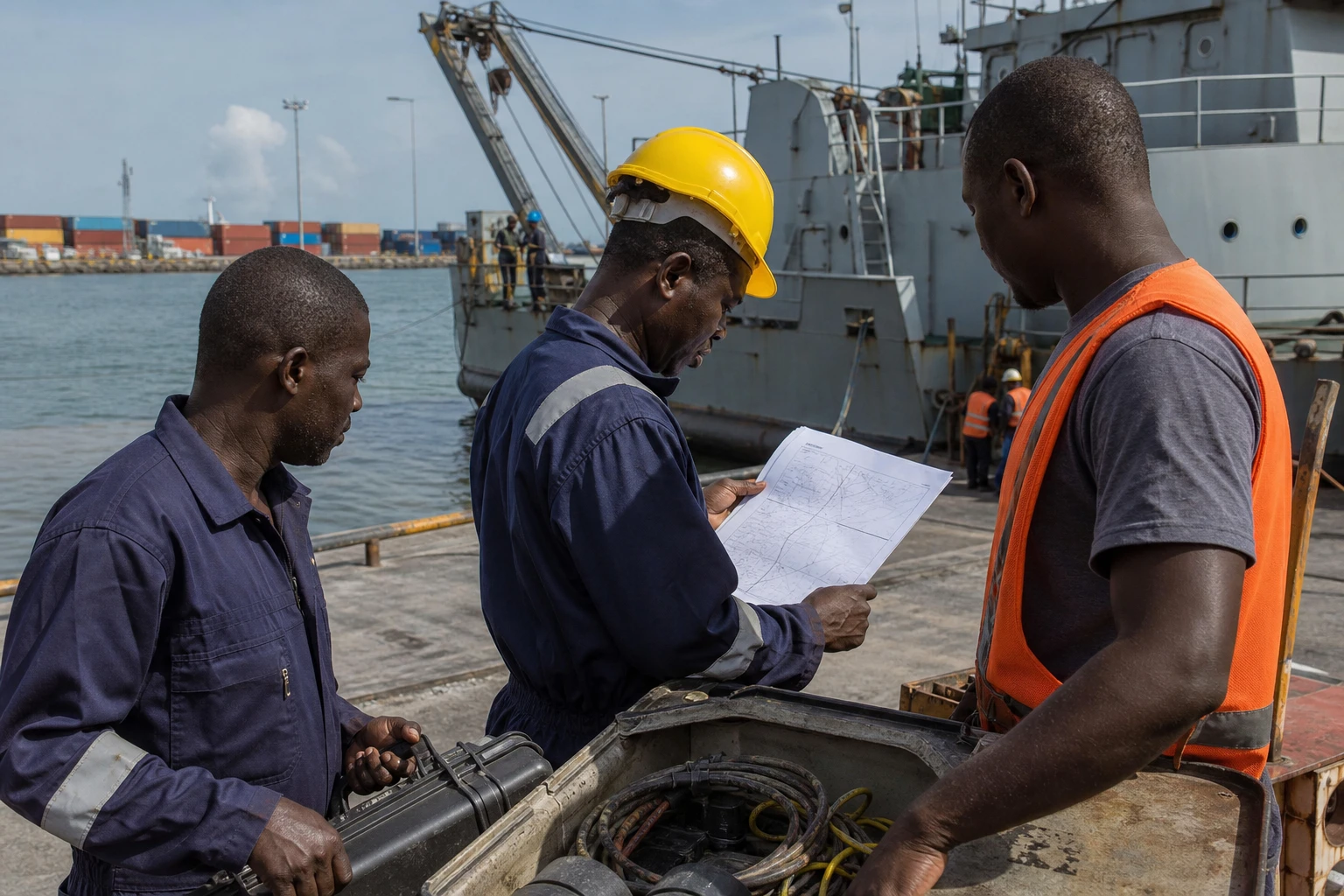
Oil exploration is gradually resuming in Liberia, but each new project underlines a simple reality: several steps remain between investor interest and production. The case of offshore block LB-32 illustrates this sequence, with the arrival of a new Australian operator, but does not yet amount to a definitive petroleum licence.
Liberia’s sector revives after a lengthy pause
Since 2024, Monrovia has been seeking to reactivate its offshore basin. The process gathered pace in 2025 with the signing of production-sharing contracts with TotalEnergies and Oranto Petroleum. These contracts set out how the state and companies will share hydrocarbons if a commercial discovery is made.
The agreements with TotalEnergies cover blocks LB-6, LB-11, LB-17 and LB-29. Those signed with Oranto concern LB-15, LB-16, LB-22 and LB-24. Parliamentary ratification of these contracts, announced by the Liberia Petroleum Regulatory Authority, marked an important step in the resumption of offshore exploration.
Liberia does not yet produce oil, however. The National Oil Company of Liberia, or NOCAL, says current activities remain at the exploration stage. Seismic surveys and geological studies must still establish whether potential resources can be exploited profitably.
Bounty targets LB-32 but does not yet hold the block
On 22 September 2026, Australia’s Bounty Oil & Gas announced an agreement to acquire 100% of PetroQuest Liberia Deep Water LLC, a company registered in Arizona. The transaction is intended to open the way for it to enter block LB-32, off south-eastern Liberia in the Harper Basin.
The legal distinction is crucial. PetroQuest holds neither an awarded licence nor an executed production-sharing contract. It has a letter of commitment issued by NOCAL in October 2025. The document gives it the exclusive right to negotiate a future contract for LB-32 and designates it as a pre-qualified candidate with the regulator.
The process must still involve PetroQuest, NOCAL and the LPRA. The negotiated contract will then have to be submitted for approval by the Liberian Parliament. According to information provided in connection with the transaction, the parties are aiming to conclude it around January 2027, subject to the fulfilment of the stipulated conditions.
NOCAL itself notes that a block can be awarded through several mechanisms: a tender, direct negotiation or “Executive Allocation”. The latter procedure allows a block to be awarded to the state-owned company, which can then negotiate the entry of a private partner. NOCAL’s website lists LB-32 among the blocks covered by this arrangement.
A licence in very deep water
LB-32 covers about 2,322 square kilometres. Water depths range from 1,500 to 4,200 metres. The block lies near the maritime boundary with Côte d’Ivoire, in an area where geological structures extend across the regional border.
Seismic data are already available for the area. According to information published about the transaction, about 656 square kilometres have 3D coverage and 753 kilometres of lines have been acquired using 2D seismic. Bounty wants to obtain this data from TGS before carrying out its own technical assessment.
The targets under consideration lie in Upper Cretaceous sedimentary fans, formed by the accumulation of material on the seabed. They have not been drilled, however. No well has yet confirmed the presence of commercial oil in the specific area of LB-32.
Bounty will therefore need to distinguish geological indications from proven reserves. The company said it would not publish an independent estimate of potential resources before directly analysing the 3D data and involving a qualified evaluator.
A financial transaction subject to several conditions
To acquire PetroQuest, Bounty plans to pay A$1.5 million in cash. It must also issue 863.15 million shares to the sellers. Additional shares may be issued if targets related to resources and the search for a partner are met.
The Australian company has also announced a capital raise of about A$3.55 million. The funds are intended to finance the acquisition, technical studies, steps related to the Liberian contract and the company’s working capital requirements.
The transaction remains subject to legal and technical due diligence, approval by shareholders and the relevant authorities, and confirmation of a satisfactory path towards securing the production-sharing contract. The deal therefore does not immediately turn Bounty into a producer or PetroQuest into the holder of a definitive licence.
Transparency and public oversight at the heart of the case
The arrangement has also revived debate about oil-sector governance in Liberia. The authorities describe “Executive Allocation” as a mechanism provided for under the legal framework. Liberian observers have nevertheless called for greater transparency on the beneficiaries, the economic terms and NOCAL’s precise role.
In the case of LB-32, several commercial details remain private. The available information does not publicly identify PetroQuest’s owners. Nor does it specify the stake NOCAL could grant to the future partner. These unanswered questions make parliamentary scrutiny and publication of the contract particularly important.
The precedent of the contracts ratified with TotalEnergies and Oranto shows that Parliament retains a decisive role. The LPRA, the independent upstream regulator, must in turn oversee compliance in negotiations, work commitments and local content obligations.
An issue that extends beyond Liberia’s borders
The case forms part of the wider momentum in the Gulf of Guinea and along the West African Transform Margin. In Côte d’Ivoire, the discovery of Baleine and its subsequent start-up have heightened interest in offshore basins around Liberia. Results in neighbouring countries do not, however, guarantee a discovery in LB-32.
For Liberians, the issue is not limited to attracting capital. It also concerns public revenues, training, skilled jobs, protection of the marine environment and the ability of institutions to negotiate a balanced contract. For investors, the next milestone will be turning a letter of commitment into a legally approved agreement.
The announced timetable points to January 2027. Until then, three developments will be closely watched: completion of the PetroQuest acquisition, publication of the main terms of the future contract and Parliament’s decision. Until these steps are completed, LB-32 remains an exploration prospect, not a new source of Liberian oil production.