Algeria
 Egypt
 Libya
 Morocco
 Sudan
 Tunisia
 Benin
 Burkina Faso
 Cabo Verde
 Côte d'Ivoire
 Ghana
 Guinea
 Guinea-Bissau
 Mali
 Mauritania
 Niger
 Nigeria
 Senegal
 Sierra Leone
 The Gambia
 Togo
 Cameroon
 Central African Republic
 Chad
 DR Congo
 Equatorial Guinea
 Gabon
 Republic of the Congo
 São Tomé and Príncipe
 Burundi
 Comoros
 Djibouti
 Eritrea
 Ethiopia
 Kenya
 Madagascar
 Malawi
 Mauritius
 Mozambique
 Rwanda
 Seychelles
 Somalia
 South Sudan
 Tanzania
 Uganda
 Angola
 Botswana
 Eswatini
 Lesotho
 Namibia
 South Africa
 Zambia
 Zimbabwe
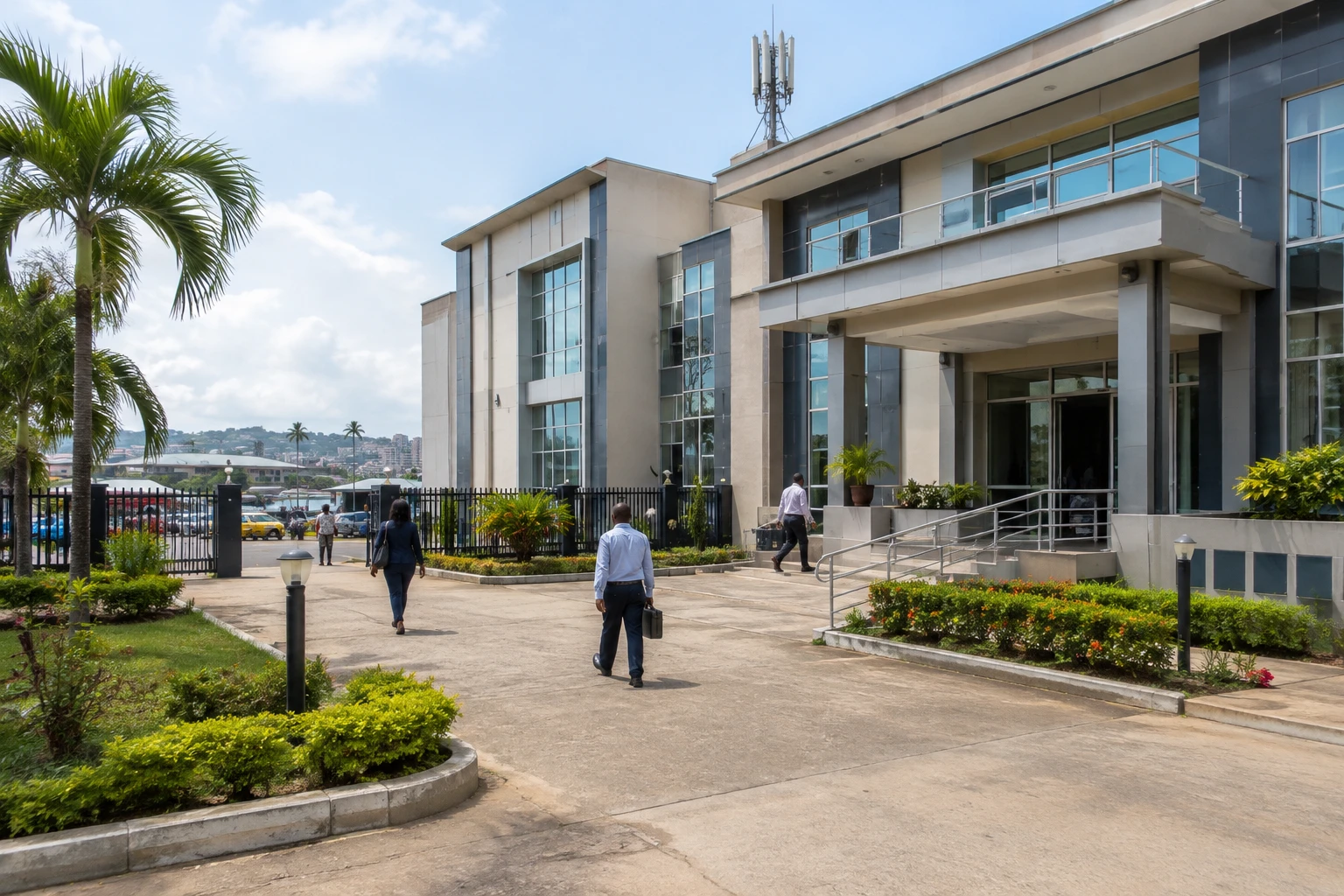
In Monrovia, a faster mobile network could make it easier for businesses to work and people to access digital services. But the arrival of 5G does not, by itself, answer the essential question: how many Liberians can connect, at what price and from which locations?
Coverage does not guarantee access
Liberia has a marked gap between network availability and internet use. According to data from the International Telecommunication Union (ITU), around 32% of the population used the internet in 2024. In other words, nearly seven in 10 people were offline that year. A separate estimate published by DataReportal for early 2025 puts the proportion of internet users at 32.4%. These figures confirm the broad scale, but refer to different periods.
At the same time, earlier generations of mobile networks have extensive coverage. ITU figures cited in the reference data indicate that in 2025, 2G covered 98% of the population, 3G 94% and 4G 93%. This juxtaposition is a reminder that an available signal does not automatically mean that a resident owns a suitable phone, can afford data or actually uses the internet.
A commercial launch whose scope remains unclear
Orange Liberia announced the launch of 5G services in the country on 23 October 2026, presenting itself as the first operator to offer the technology in Liberia. Several specialist media outlets reported the announcement. However, the company has not made public the locations covered at launch, prices, number of sites or expansion timetable.
5G, the fifth generation of mobile networks, can offer higher speeds and lower latency — the time taken for data to travel from sender to receiver. These features can support video calls, online professional services and some data-intensive applications. They do not, however, guarantee measured service quality for Liberian users: no observed speed figures accompanied the announcement.
The difference between a national announcement and actual access is crucial. If the first antennas mainly serve business districts and profitable urban areas, businesses in Monrovia could benefit before small businesses and rural communities. Residents without compatible devices, meanwhile, will not benefit directly from the new generation.
Prices, devices and local uses matter
Deployment depends on more than technology. Operators must fund equipment, its power supply, connections and maintenance. In rural areas, where revenue per subscriber is often lower and distances greater, making each site profitable can be more difficult. Choosing priority areas is therefore also an economic and regulatory decision.
For households, the cost of a compatible phone and data plans will affect uptake. Reliable electricity, useful content and services suited to local needs will also play a part. For small businesses, a fast connection can make some operations easier, but only if the service is accessible, stable and affordable. Without these conditions, the gains risk being concentrated among customers and organisations that are already well connected.
The national regulator, the Liberia Telecommunications Authority, will have an important role in monitoring service quality, competition conditions and changes in coverage. The timetable for other operators and the publication of precise information on areas served will also make it possible to assess whether the launch expands availability beyond the first sites.
A Liberian and West African issue
Liberia is a member of ECOWAS, the Economic Community of West African States. For countries in the region, the growth of advanced networks is part of a broader digital transformation, but the results depend as much on affordable access as on technical performance. Regional averages should not obscure differences between countries, or gaps between capitals and less densely populated areas.
The next step in Liberia will therefore be less symbolic than practical: establishing initial coverage, prices and expansion deadlines, then comparing those announcements with actual use and observed quality. 5G could strengthen the country’s digital capabilities. Its impact, however, will be judged by its ability to complement existing networks and bring more Liberians closer to regular internet access.