Algeria
 Egypt
 Libya
 Morocco
 Sudan
 Tunisia
 Benin
 Burkina Faso
 Cabo Verde
 Ghana
 Guinea
 Guinea-Bissau
 Liberia
 Mali
 Mauritania
 Niger
 Nigeria
 Senegal
 Sierra Leone
 The Gambia
 Togo
 Cameroon
 Central African Republic
 Chad
 DR Congo
 Equatorial Guinea
 Gabon
 Republic of the Congo
 São Tomé and Príncipe
 Burundi
 Comoros
 Djibouti
 Eritrea
 Ethiopia
 Kenya
 Madagascar
 Malawi
 Mauritius
 Mozambique
 Rwanda
 Seychelles
 Somalia
 South Sudan
 Tanzania
 Uganda
 Angola
 Botswana
 Eswatini
 Lesotho
 Namibia
 South Africa
 Zambia
 Zimbabwe
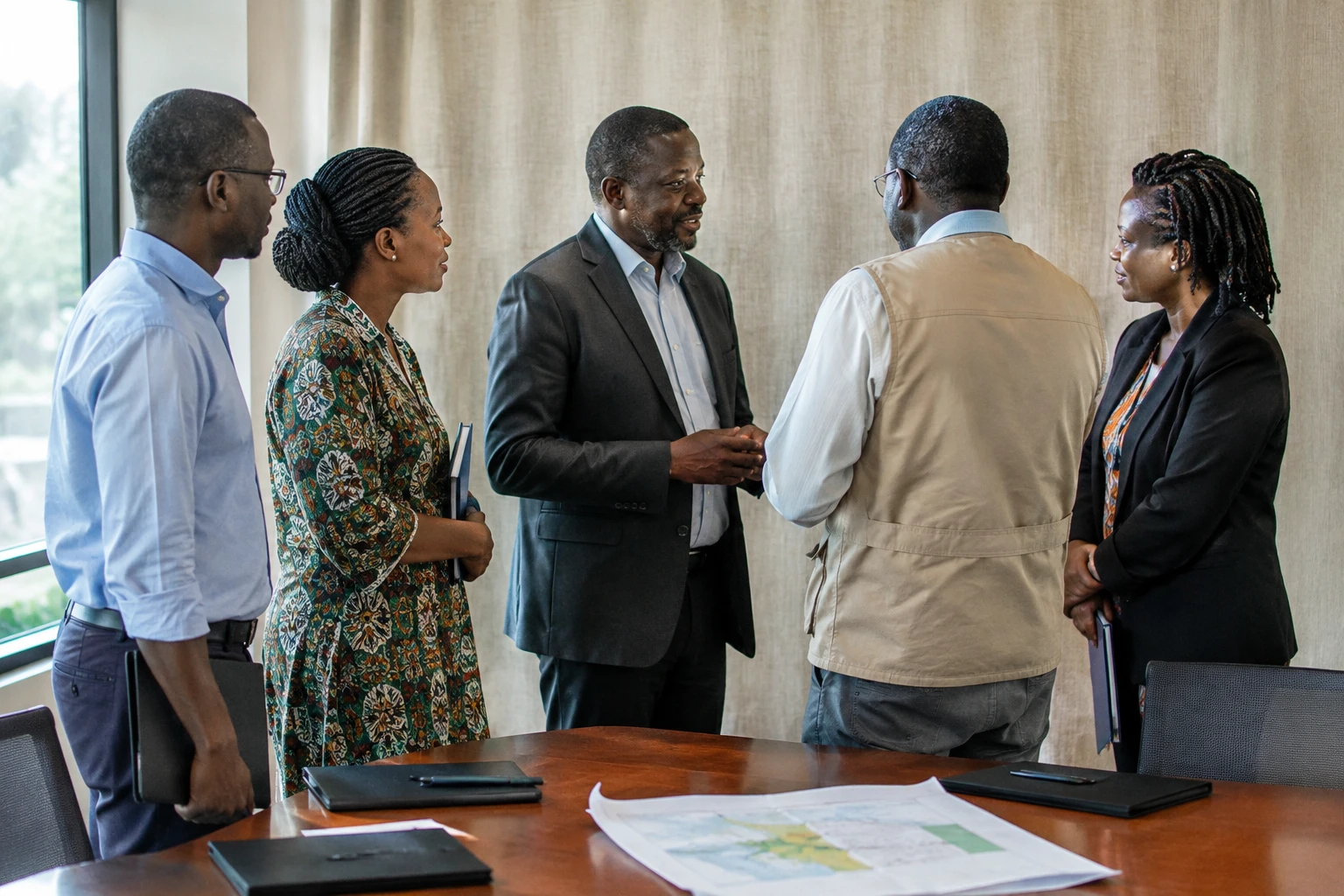
In Boundiali, the potential of a large mine will also be measured by what remains in the region after construction: skilled jobs, contracts for Ivorian businesses and lasting infrastructure. Initial estimates are substantial. But they do not yet show what share of the benefits will go directly to local residents.
A gold project still in preparation
Located in northern Côte d’Ivoire, the Boundiali project is part of the country’s expanding gold exploration sector. The government describes the discovery as a major deposit. However, an estimated mineral resource is not yet production: the project must clear technical, administrative and financial hurdles before a mine can open.
On 8 October 2026, Prime Minister Robert Beugré Mambé met in Abidjan with executives from Aurum Resources, the Australian company developing the project. Chief executive Caigen Wang cited around 100 tonnes of gold identified by drilling. The Ivorian public news agency AIP, for its part, reported an estimate of around 115 tonnes. These figures are resource estimates, not quantities of gold already extracted or guaranteed.
Technical documents published by the company estimate resources at 3.22 million ounces, or nearly 100 tonnes. A pre-feasibility study published in June 2026 puts probable reserves at 1.21 million ounces, distinct from the total resources. It forecasts cumulative production of around 1.5 million ounces over eleven years. The difference is a reminder that not all identified resources necessarily become economically mineable reserves.
Jobs announced, but their distribution remains unclear
According to government announcements on 8 October, construction could support 4,200 direct and indirect jobs. Operations would generate around 2,200 jobs from 2028. The timetable remains provisional: the company says it is targeting first production in the first half of 2028, while construction is expected to begin in late 2026.
These figures do not specify the share of positions reserved for Ivorian workers, how long they will last or what qualifications will be required. Indirect jobs can also cover a range of activities, including local subcontracting, transport, catering and specialist services. For residents of Boundiali and nearby communities, the difference between a temporary construction job and a permanent position is tangible.
Local content — the participation of the country’s businesses, workers and suppliers in a project — is therefore a central issue. The Ivorian authorities have made it a priority in the mining sector. Official figures show that mining jobs rose from 8,291 in 2016 to 16,325 in 2024. This growth gives a measure of the sector’s expansion, but on its own says nothing about job quality or geographical distribution.
At local level, the benefits will also depend on contracts awarded to Ivorian businesses, vocational training and the infrastructure built. The mines minister has highlighted the need for major projects that can benefit local communities beyond the life of the mine. This raises a question of oversight: who will choose these investments, on what criteria and with what transparency?
Financing and permits remain decisive
Boundiali has yet to receive final approval for construction. Aurum says it has started a definitive feasibility study and is targeting an investment decision towards the end of 2026. The company also says applications for mining permits are under way. In other words, the announced timetable still depends on the study’s findings, permits and the mobilisation of capital.
The figures cited are not the same. Aurum’s pre-feasibility study puts pre-production expenditure at $342 million. Government communications on 9 October cite an investment of around $503 million. These estimates may cover different scopes; the public information consulted does not allow them to be compared item by item. They should therefore be attributed separately rather than presented as a single established cost.
The mine is part of a national trend in which gold is taking on a growing role. For Côte d’Ivoire, a member of ECOWAS, the stakes go beyond the revenues from a single project: they include local processing, skills and the ability to integrate domestic suppliers more effectively into West African mining supply chains. Experience from other projects in the country shows that announcements of jobs and investment must be tracked as permits are granted and construction proceeds.
For Boundiali, the next steps will therefore be decisive: publication of the definitive study, an investment decision, the issuance of permits and more detail on local recruitment. These milestones will show whether there is a gap between the announced geological potential and the economic benefits actually accessible to Ivorians.