Algeria
 Egypt
 Libya
 Morocco
 Sudan
 Tunisia
 Benin
 Burkina Faso
 Cabo Verde
 Ghana
 Guinea
 Guinea-Bissau
 Liberia
 Mali
 Mauritania
 Niger
 Nigeria
 Senegal
 Sierra Leone
 The Gambia
 Togo
 Cameroon
 Central African Republic
 Chad
 DR Congo
 Equatorial Guinea
 Gabon
 Republic of the Congo
 São Tomé and Príncipe
 Burundi
 Comoros
 Djibouti
 Eritrea
 Ethiopia
 Kenya
 Madagascar
 Malawi
 Mauritius
 Mozambique
 Rwanda
 Seychelles
 Somalia
 South Sudan
 Tanzania
 Uganda
 Angola
 Botswana
 Eswatini
 Lesotho
 Namibia
 South Africa
 Zambia
 Zimbabwe
On Ivorian roads, prevention becomes a public concern
In Abidjan and in towns across the country, road safety is not decided only at junctions or during police checks. It begins well before getting behind the wheel, when people learn to recognise a sign, read road markings and understand the risks of dangerous overtaking. In Côte d’Ivoire, this idea is gaining prominence, as the authorities have for several years stressed that human behaviour remains central to road accidents, with 90 % of crashes attributed to road users’ behaviour.
This issue goes beyond the mere comfort of driving. It affects professional drivers, motorcyclists and pedestrians, as well as families, transport companies and the informal economy that keeps millions of people moving every day. The problem is all the more pressing because Ivorian roads account for a large share of urban and intercity mobility in the sub-region, in an area where ECOWAS relies heavily on road trade.
A digital tool to relearn the basics
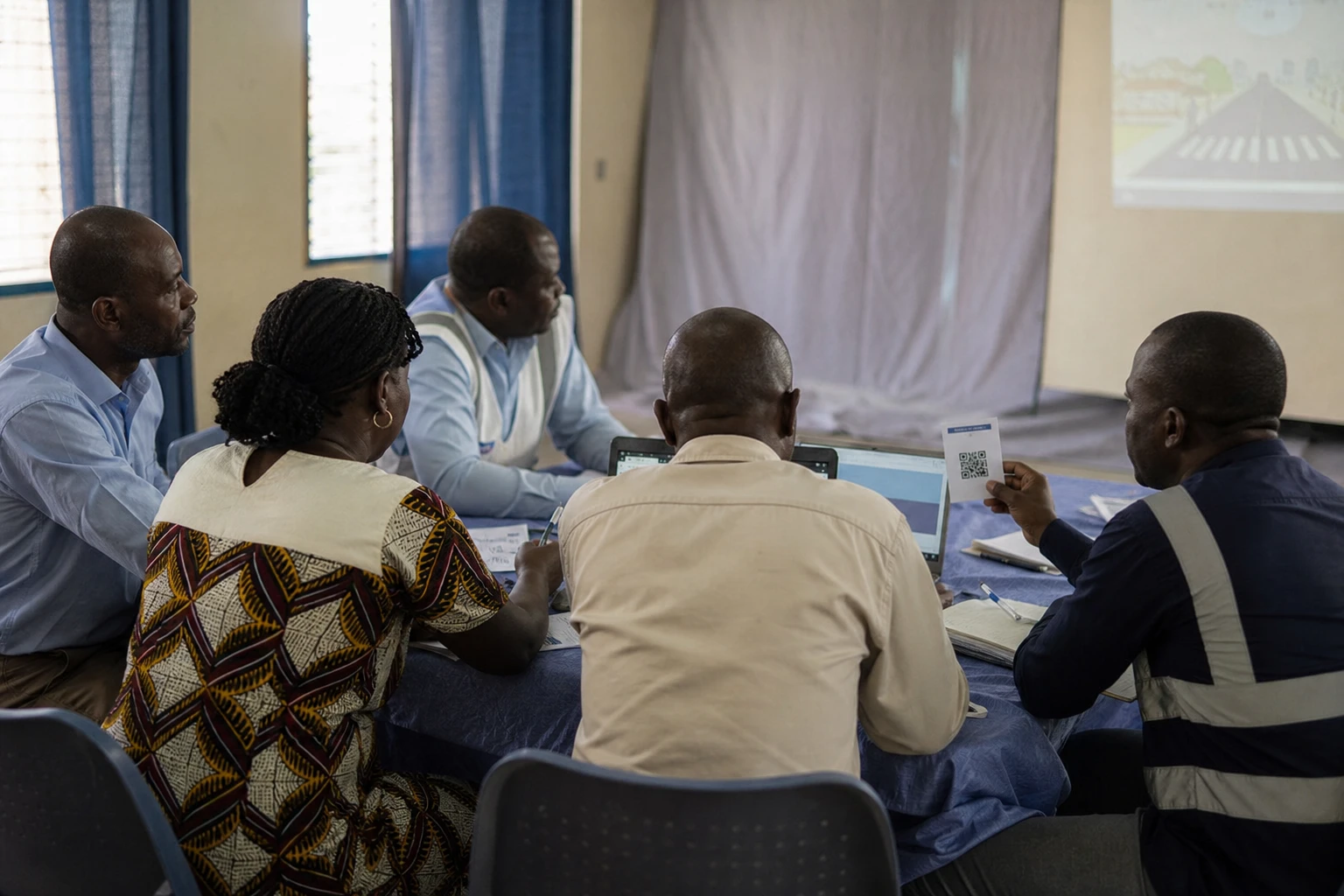
It is in this context that « Bon Chauffeur » has emerged, a digital platform designed to explain the Highway Code in a simple and interactive way. The principle is straightforward: users answer questions about road signs, traffic rules and certain technical aspects of vehicles, then receive a score and the correct answers. The tool is aimed both at people preparing for an exam and at those who obtained their licence long ago and have never revised the rules.
The initiative is part of a broader trend: digital technology is increasingly being used in Côte d’Ivoire to make public services more efficient, secure procedures and simplify access to information. In the transport sector, the authorities have already introduced electronic ticketing for offences, licence management and administrative monitoring tools. « Bon Chauffeur » extends this approach, but with a more educational than punitive focus.
The choice of format is no coincidence. By turning learning into a question-and-answer game, the platform seeks to bridge the gap between road users and a subject often seen as punitive. The strategy appeals to young drivers, but also to experienced drivers who have developed habits without always updating their knowledge. It can also reach users at bus stops, where QR codes provide access to the platform.
Why this approach could matter in everyday life
Road safety in Côte d’Ivoire remains a public health, mobility and productivity issue. Official figures point to a persistent problem: in 2022, the Ministry of Transport reported 1 051 road deaths, down from more than 1 500 in 2021, and set a target of halving deaths and injuries by 2030. The authorities have also stressed that prevention must complement checks and penalties.
In practice, the platform could address a familiar blind spot. Many motorists take their driving test and then never open a Highway Code manual again. Others drive professionally over long distances, under heavy time pressure and with little room for manoeuvre. A mobile tool, available at any time, can therefore serve as a regular reminder. This is particularly useful in a country where motorbikes, taxis and public transport account for a large share of daily traffic.
Accessibility nevertheless remains central. The initiative’s promoter emphasises the importance of a fun format and less intimidating language. This idea reflects an important social reality: not all road users have the same reading skills or the same familiarity with digital services. If the platform is to reach a broad audience, it will therefore need to remain simple, visual and easy to understand without jargon.
This also matters for urban and intercity transport drivers. In Abidjan, driving takes place in a dense environment, with cars, buses, motorbikes and pedestrians constantly sharing the road. In this setting, reminders about right of way, safe distances and sound vehicle maintenance habits can have a tangible effect. Digital tools do not replace training, but they can extend learning and reinforce good habits.
An Ivorian perspective, with regional reach
Côte d’Ivoire is not alone in this effort. Across Africa, road crashes remain particularly prevalent. The WHO has reported that road deaths rose by 17 % in the African Region between 2010 and 2021, while falling globally. UNECA also notes that the most vulnerable road users, particularly pedestrians, pay a heavy price.
In this context, a platform such as « Bon Chauffeur » forms part of a broader prevention policy of interest to all of West Africa. Road corridors connect ports, capitals, industrial zones and regional markets. When driver training improves, it is not only urban journeys that become safer: the movement of goods and people across the ECOWAS area does too.
The issue goes beyond Côte d’Ivoire alone. The African Union has recently strengthened its road safety agenda, and the African Road Safety Charter has now entered into force, with the goal of halving deaths and serious injuries by 2030. Within this continental framework, national digital prevention initiatives are useful if they are backed by genuine public policy, training and evaluation of their impact.
For Ivorians, the stakes are very tangible. The challenge is to move from seeing road safety as a constraint to embracing a shared culture of respect for the rules of the road. If « Bon Chauffeur » finds its audience, it could show that a simple tool, designed in Abidjan, can help change long-standing habits without humiliating road users. That may be its real strength: turning an issue often approached through the lens of shock into an accessible, lasting learning routine.