Algeria
 Egypt
 Libya
 Morocco
 Sudan
 Tunisia
 Benin
 Burkina Faso
 Cabo Verde
 Ghana
 Guinea
 Guinea-Bissau
 Liberia
 Mali
 Mauritania
 Niger
 Nigeria
 Senegal
 Sierra Leone
 The Gambia
 Togo
 Cameroon
 Central African Republic
 Chad
 DR Congo
 Equatorial Guinea
 Gabon
 Republic of the Congo
 São Tomé and Príncipe
 Burundi
 Comoros
 Djibouti
 Eritrea
 Ethiopia
 Kenya
 Madagascar
 Malawi
 Mauritius
 Mozambique
 Rwanda
 Seychelles
 Somalia
 South Sudan
 Tanzania
 Uganda
 Angola
 Botswana
 Eswatini
 Lesotho
 Namibia
 South Africa
 Zambia
 Zimbabwe
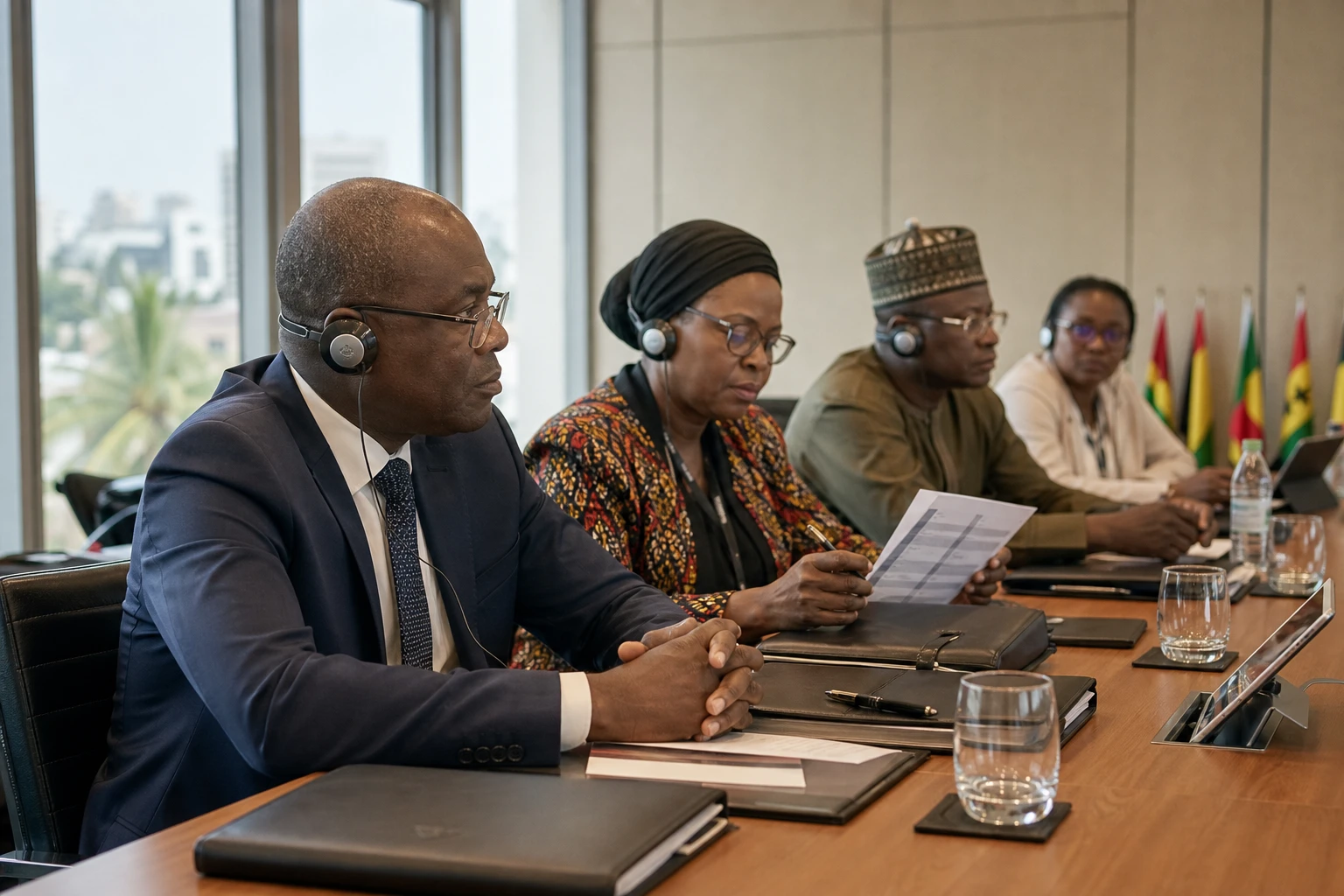
For a small Ivorian business, securing an investment loan is often harder than finding a market. The new refinancing line granted to COFINA is specifically intended to strengthen the link between microcredit and conventional banking.
Regional funding to expand business lending
The West African Development Bank (BOAD), the financing institution for the WAEMU region, has approved a CFAF 10 billion refinancing line for COFINA Côte d’Ivoire. The decision was taken at the bank’s 152nd board meeting, held on 24 September 2026 in Lomé, Togo.
The funding is intended to support medium-term loans for small and medium-sized enterprises (SMEs) and small and medium-sized industries (SMIs). It also targets financial inclusion, green projects and women’s entrepreneurship. BOAD has not specified the share allocated to each of these areas.
In practice, the funds will not be paid directly to each business. They are intended to strengthen COFINA’s capacity to provide loans. The aim is to finance investments that take longer to generate returns: equipment, business expansion, processing, digital services and energy solutions.
The decision published by BOAD places the operation among a series of financing initiatives for the private sector and financial inclusion across West Africa.
Mesofinance at the heart of the scheme
Founded in 2014, COFINA Côte d’Ivoire describes itself as a mesofinance provider. This segment serves entrepreneurs whose needs exceed those met by microcredit, but who do not always meet the requirements set by commercial banks.
The model addresses a common reality. A business may already have customers, revenue and regular activity, yet lack sufficient collateral or sufficiently long financial records to secure a conventional bank loan. It is then caught between two stools: too large for microcredit, but still too fragile for a bank.
Data published by COFINA Côte d’Ivoire show that the institution had more than 90,000 clients at the end of 2025. Its total assets stood at CFAF 139 billion. Its loan book amounted to CFAF 76 billion, compared with CFAF 69 billion in deposits.
The new line therefore represents about 13% of COFINA’s reported loan book at that date. This comparison gives an indication of its significance for the institution. It does not mean, however, that all CFAF 10 billion will be disbursed immediately or that it will benefit a predetermined number of businesses.
A need that remains largely unmet
Financing remains one of the main constraints on the growth of Côte d’Ivoire’s private sector. The findings of the World Bank’s 2023 Enterprise Survey provide a measure of the challenge, based on businesses’ responses.
The detailed figures available show that 27.6% of small businesses cite access to finance as their main constraint, compared with 17.8% of medium-sized businesses. Nearly 70% of small businesses’ investments are still said to rely on their own funds. Banks therefore remain a limited source of financing for equipment purchases or business expansion.
This reliance on own funds slows projects and encourages growth in stages, which is often slower. In the formal economy, it limits the ability to hire and invest. In the informal economy, it can prevent a business from reaching the threshold needed to formalise, declare its activities or access new markets.
The problem is not only the amount of funding available. Collateral requirements, loan terms, the cost of credit and the quality of accounting records also weigh on lending decisions. A business based in Abidjan may find it easier to access financial services than one operating in a secondary city or rural area.
Women entrepreneurs and green projects under scrutiny
BOAD lists women’s entrepreneurship among the line’s priorities. This addresses a persistent shortfall in access to financial services. Women entrepreneurs often face additional difficulties in providing collateral, having their income recognised or financing businesses that remain small in scale.
Green finance is the other stated focus. It could cover solar equipment, reduced energy consumption, waste management or adapting agricultural activities to climate-related constraints. The announcement, however, does not specify eligibility criteria or environmental monitoring mechanisms.
That detail will matter. Without measurable targets, the concepts of inclusion and green finance risk remaining broad. The actual distribution of loans, the beneficiary sectors and the share going to women-led businesses will help determine the scheme’s real reach.
An established strategy across WAEMU
The new operation builds on partnerships COFINA has forged with development institutions. In 2020, the group announced an initial CFAF 5 billion refinancing line from BOAD for its Ivorian subsidiary. It targeted, in particular, SMEs with environmental and social impact, as well as off-grid solar electrification solutions.
In 2023, COFINA also secured a CFAF 10.5 billion line from the European Investment Bank. The funding was intended to support SMEs linked to Côte d’Ivoire’s agricultural value chains, with a focus on women and sustainable investment.
The recurrence of this financing points to a structural need. It also highlights the growing role of non-bank financial institutions in financing West Africa’s private sector. In WAEMU, where eight countries share the CFA franc, regional development banks are seeking to channel savings more effectively towards local businesses.
For Côte d’Ivoire, the challenge now is to turn this long-term funding into loans that are genuinely accessible. The terms offered, disbursement timelines and distribution between Abidjan, other cities and rural areas will need to be monitored. The next step, then, is less the announcement of the line than proof of its impact on investment and the growth of Ivorian SMEs.