Algeria
 Egypt
 Libya
 Morocco
 Sudan
 Tunisia
 Burkina Faso
 Cabo Verde
 Côte d'Ivoire
 Ghana
 Guinea
 Guinea-Bissau
 Liberia
 Mali
 Mauritania
 Niger
 Nigeria
 Senegal
 Sierra Leone
 The Gambia
 Togo
 Cameroon
 Central African Republic
 Chad
 DR Congo
 Equatorial Guinea
 Gabon
 Republic of the Congo
 São Tomé and Príncipe
 Burundi
 Comoros
 Djibouti
 Eritrea
 Ethiopia
 Kenya
 Madagascar
 Malawi
 Mauritius
 Mozambique
 Rwanda
 Seychelles
 Somalia
 South Sudan
 Tanzania
 Uganda
 Angola
 Botswana
 Eswatini
 Lesotho
 Namibia
 South Africa
 Zambia
 Zimbabwe
Beyond artworks, a battle for cultural sovereignty
In Benin, the debate over restitution is no longer limited to objects displayed in museums. It also concerns administrative memory, the written records of colonisation and the way a country regains control of its history. In Porto-Novo, the Beninese capital, this demand is taking a very concrete form: the government is now seeking the return of 35 more artworks, as well as colonial archives held in France.
This latest phase is part of a trajectory already under way. For several years, Benin has made heritage protection a pillar of public policy, with a cultural heritage law adopted in 2021, the establishment of specialised scientific bodies and museum projects designed to meet international standards. The country is advancing on two fronts: conserving material assets and recovering the documents that tell their story. Across West Africa, this approach also resonates with debates within ECOWAS, the Economic Community of West African States, on the movement of artworks, archives and the promotion of national heritage.
A request formalised under a new legal framework
The starting point is clear. The Beninese government has formally requested the restitution of more cultural property held in French public collections. A total of 35 artworks are covered, as well as Beninese archives. The government is relying on a strengthened legal framework in its own country and on the new French law adopted in May 2026, which facilitates the restitution of cultural property that has been unlawfully appropriated. This framework law was promulgated on 9 May 2026 and published in the Official Journal the following day. It now makes it possible to handle requests on a country-by-country basis by decree, without having to pass a specific law for each case.
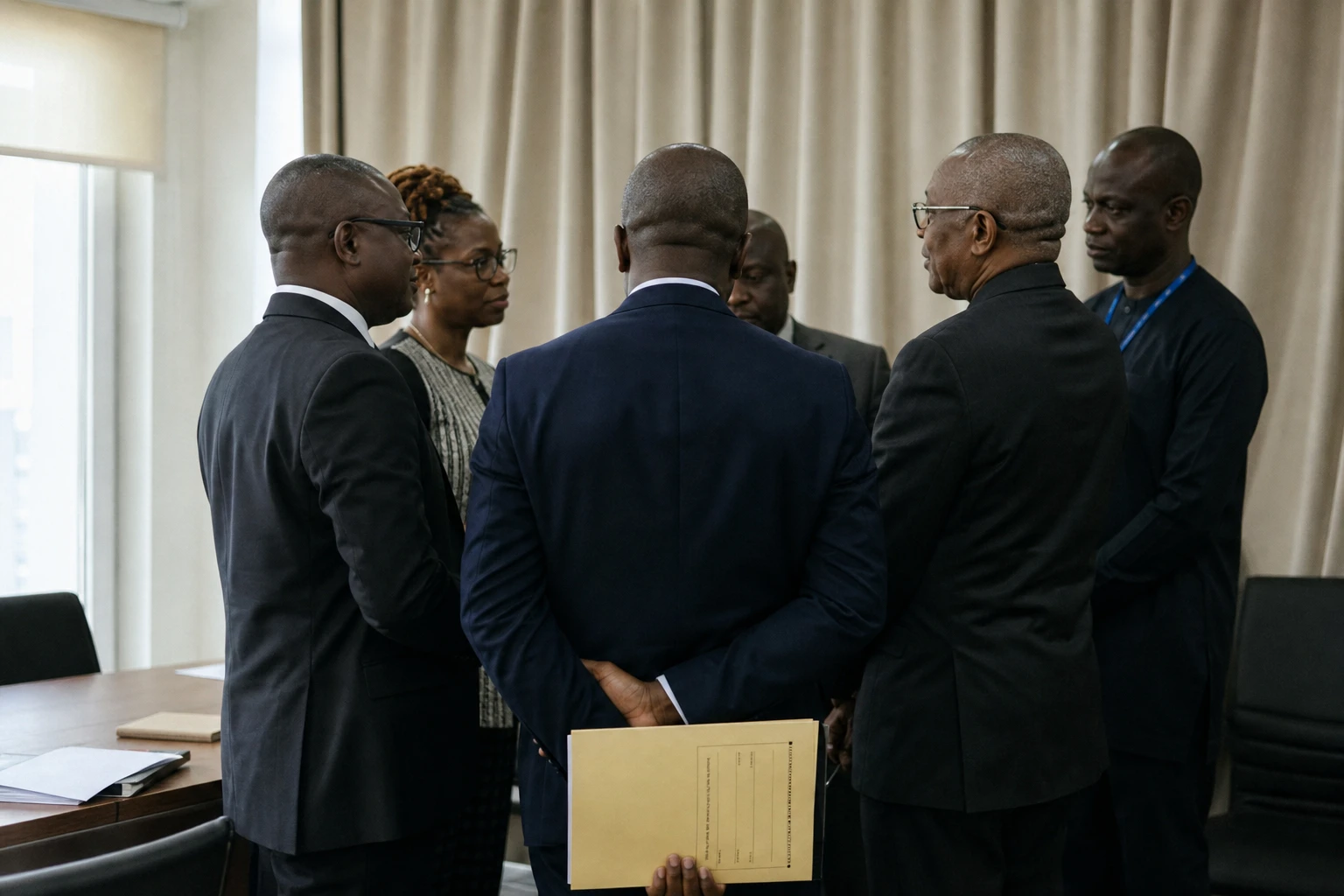
In Cotonou, the Beninese authorities have established a national scientific committee to prepare the case. According to the government, the group brings together specialists in heritage, art history and restitution. Its task is to strengthen the claim for the 35 cultural objects and prepare for the joint Franco-Beninese scientific commission. This approach matters. In restitution cases, the strength of the evidence carries as much weight as the symbolic significance of the request.
This work also draws on experience already gained. In November 2021, France returned 26 artworks to Benin, following an exceptional legislative procedure. The Beninese Council of Ministers then confirmed that the transfer had been definitively completed. In May 2025, a 27th object, the kataklè, also joined the national heritage after being returned by Finland. These precedents show that Benin’s strategy is not a one-off. It is becoming a long-term effort.
Colonial archives: less visible, but decisive
Benin’s request goes beyond statues, thrones or ritual objects. It includes colonial archives. This is important. Archives are not an accessory to heritage. They are the raw material of history, law and research. In Benin, the National Archives, based in Porto-Novo, already hold an old collection that partly dates from the colonial period. But some documents from that era remain outside the country, particularly in France. The National Archives of Benin note that their older holdings stem from relations between the Kingdom of Dahomey and the French colonial administration, and then from the running of the territory under French rule until 1960.
This is where the issue takes on a practical dimension. The return of archives can help researchers, lawyers, museums, local authorities and families reconstruct lineages, ownership and historical continuities. It can also inform public policy, from museum curation to education. For a country seeking to better link culture, tourism and the creative economy, the stakes are therefore not only about memory. They are institutional and economic. Reconstructed heritage becomes a tool for knowledge, as well as for attracting interest and asserting cultural sovereignty.
What the case says about the balance of power between Paris and Cotonou
Dialogue between France and Benin has changed in nature. For a long time, restitution was an exceptional derogation. A more general framework now exists on the French side, making African requests clearer and, in theory, less arbitrary. For Cotonou, this legal opening is an opportunity. It makes it possible to move beyond an exceptional process that required the fight to be restarted for every object. For Paris, it is also an acknowledgement that heritage law is changing in response to demands from Africa and elsewhere.
But the balance of power has not disappeared. It has shifted. Benin is not only seeking the return of prestigious objects. It is also demanding recognition of archives as an integral part of the national heritage. This is a more ambitious approach. It says that a country needs not only to recover works of art. It must also regain the documents that describe its past, institutions, territories and ruptures. In a country such as Benin, where the histories of Porto-Novo, Abomey and the former kingdoms continue to shape the collective imagination, this demand carries considerable civic weight.
The case also has regional significance. Across West Africa, several states are watching Benin’s approach. It combines scientific research, a legal framework, heritage diplomacy and museum development. This combination matters as much as the final outcome. It could inspire other requests across ECOWAS, where royal heritage, administrative archives and museum collections have often been dispersed through colonisation. Benin shows that successful restitution is not based on emotion alone. It rests on evidence, political continuity and the capacity to receive returned property.
The decisive step remains: turning the scientific case into a political decision. That is where what happens next will be determined, between Cotonou and Paris, but also between the museums, archivists and researchers of both countries. If the effort succeeds, it will strengthen an already visible trend: Africa is no longer asking only for its artworks to be returned. It is demanding to reclaim the narratives that go with them.