Algeria
 Egypt
 Libya
 Morocco
 Sudan
 Tunisia
 Burkina Faso
 Cabo Verde
 Côte d'Ivoire
 Ghana
 Guinea
 Guinea-Bissau
 Liberia
 Mali
 Mauritania
 Niger
 Nigeria
 Senegal
 Sierra Leone
 The Gambia
 Togo
 Cameroon
 Central African Republic
 Chad
 DR Congo
 Equatorial Guinea
 Gabon
 Republic of the Congo
 São Tomé and Príncipe
 Burundi
 Comoros
 Djibouti
 Eritrea
 Ethiopia
 Kenya
 Madagascar
 Malawi
 Mauritius
 Mozambique
 Rwanda
 Seychelles
 Somalia
 South Sudan
 Tanzania
 Uganda
 Angola
 Botswana
 Eswatini
 Lesotho
 Namibia
 South Africa
 Zambia
 Zimbabwe
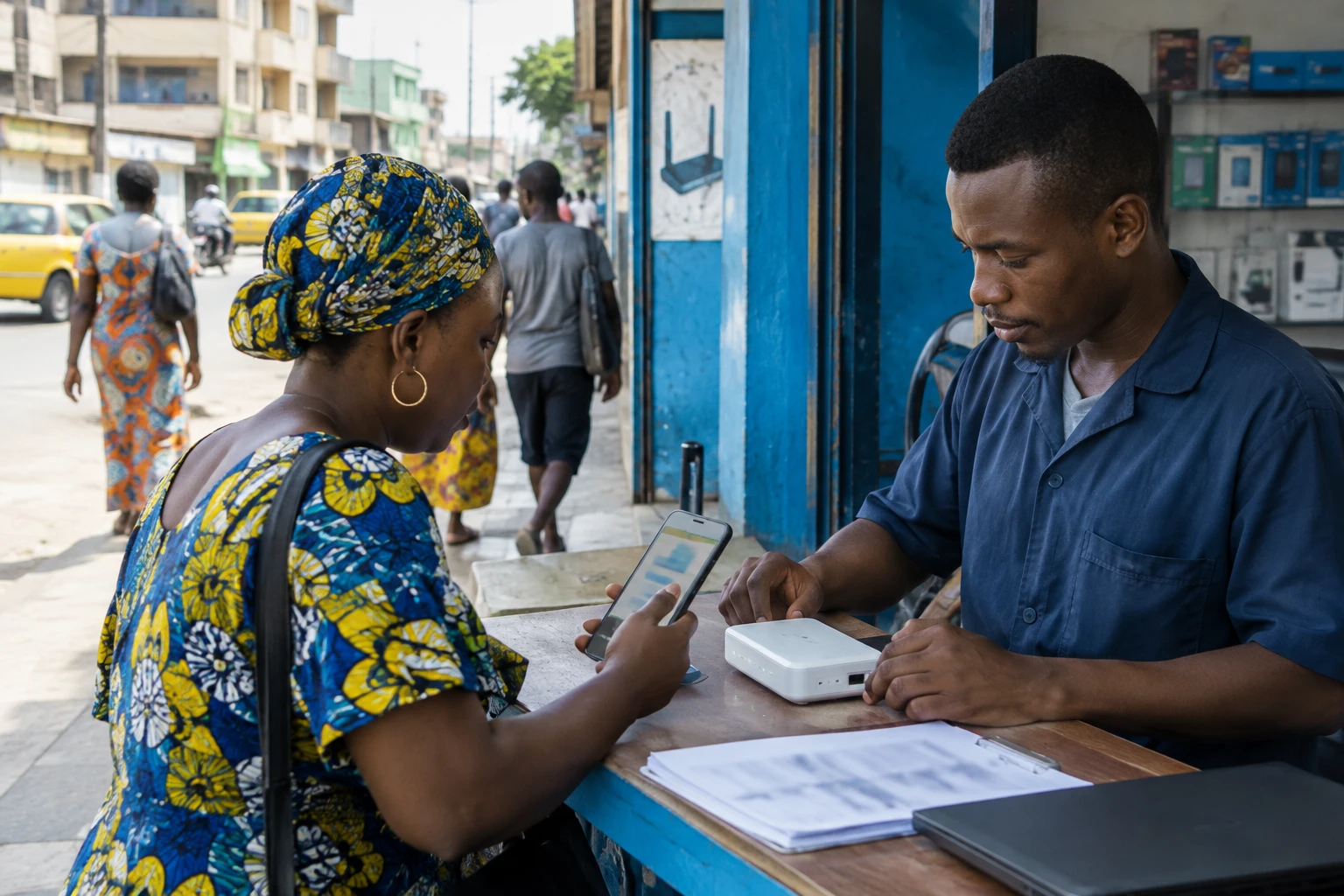
As networks get faster, the services they carry also multiply: payments, administrative procedures, professional exchanges and connected devices. For Benin, the challenge of 5G is therefore not simply to connect more people and things. It is also to protect these uses and keep services running when an attack occurs.
A digital debate rooted in Cotonou
The 15th edition of the Africa Digital Expo (ADEX) was held in Cotonou from 19 to 21 October 2026. The event brought together public- and private-sector players to discuss infrastructure, connectivity and digital uses. This edition placed cybersecurity among the conditions for digital transformation. The Beninese report on ADEX’s opening and the event organiser’s presentation confirm the dates and context of the meeting.
On Wednesday 21 October, a panel on cyber resilience in the 5G era brought together Titilope Fakuade, MTN Benin’s director of technology and information, Ouanilo Medegan Fagla, director-general of the National Centre for Digital Investigations (CNIN), and Luciano Hounkponou, president of the Personal Data Protection Authority (APDP). Specialists from Morocco and the Democratic Republic of the Congo also took part in the discussion.
Cyber resilience refers to an organisation’s ability to prevent an attack, detect it and then restore its services. This approach goes beyond simply installing security tools. It involves procedures, trained teams and a coordinated response when an incident occurs.
Anticipating risks before deployment
Titilope Fakuade argued for integrating security from the outset of digital projects. In other words, safeguards should not be added after a service has launched. They should be built into the entire process, from technical choices to day-to-day operations.
This requirement is becoming more important as networks carry more data and connect more devices. A vulnerability can then affect several activities at once. For an operator, the priority is network continuity. For a company, it may be protecting transactions. For users, an outage can prevent access to a service or expose personal information.
5G does not automatically cause a cyberattack. However, it expands the range of uses and systems that need to be secured. As Ouanilo Medegan Fagla argued during the panel, risks also arise from new practices made possible by the technology. Raising user awareness and preparing teams are therefore practical elements of defence.
Coordinating institutions and protecting data
In Benin, cybersecurity and data protection involve institutions with distinct roles. The CNIN conducts digital investigations. The APDP oversees personal data protection. The Electronic Communications and Postal Regulatory Authority (ARCEP) regulates the communications sector. Luciano Hounkponou called for greater cooperation between these authorities, arguing that regulation conducted in silos is ill-suited to risks that cut across several sectors.
The national framework is based in particular on the Digital Code, adopted in 2017 and promulgated in 2018. It brings together provisions relating to digital activities and personal data. The text is available from the Internet Governance Forum in Benin. The panel also presented the location of sensitive data and critical infrastructure as an issue of control and security. This does not mean that local storage alone is enough to protect data: governance, access controls and response capacity also matter.
This distinction matters for both government bodies and businesses. Institutions must protect the information they hold and keep their services running. Operators and providers, meanwhile, must secure the networks and systems on which economic activity depends. For citizens, the issue also concerns how their data are used and what remedies are available in the event of an incident.
Sharing incidents to build trust
The CNIN’s director-general warned against a purely passive approach to security. He also urged organisations not to routinely conceal attacks they have suffered. Sharing experiences can help other players recognise a vulnerability and better prepare their response.
This transparency requires a framework of trust. An organisation may hesitate to disclose an incident for fear of damaging its reputation or revealing a weakness. Yet without the circulation of useful information, the same mistakes risk being repeated. The challenge is therefore to report alerts and lessons learned while protecting victims’ data and details that could facilitate further attacks.
Speakers also emphasised the importance of local expertise. Training and retaining specialists makes it possible to better understand the country’s needs, respond more quickly and develop suitable solutions. This concerns operators as much as government bodies, businesses and educational institutions.
A shared challenge in West Africa
Networks and digital exchanges cross borders. An attack or outage can affect interconnected services, while investigations and data flows sometimes involve several jurisdictions. Regional cooperation therefore complements national measures. It does not replace operators’ responsibilities or the protection of users’ rights.
For Benin, the discussions in Cotonou raise a question of implementation: how can the principles of prevention, coordination and transparency be translated into operational procedures? The Benin Agency for Information Systems and Digital Technology, for its part, has reported on its teams’ participation in cybersecurity initiatives at an African level. This ASIN report illustrates the value of exchanges between institutions and specialists across the continent.
5G promises new services, but their usefulness will also depend on the trust they inspire. Beyond technological announcements, the ability to coordinate authorities, protect data and learn from incidents will determine the strength of this digital transformation.