Algeria
 Egypt
 Morocco
 Sudan
 Tunisia
 Benin
 Burkina Faso
 Cabo Verde
 Côte d'Ivoire
 Ghana
 Guinea
 Guinea-Bissau
 Liberia
 Mali
 Mauritania
 Niger
 Nigeria
 Senegal
 Sierra Leone
 The Gambia
 Togo
 Cameroon
 Central African Republic
 Chad
 DR Congo
 Equatorial Guinea
 Gabon
 Republic of the Congo
 São Tomé and Príncipe
 Burundi
 Comoros
 Djibouti
 Eritrea
 Ethiopia
 Kenya
 Madagascar
 Malawi
 Mauritius
 Mozambique
 Rwanda
 Seychelles
 Somalia
 South Sudan
 Tanzania
 Uganda
 Angola
 Botswana
 Eswatini
 Lesotho
 Namibia
 South Africa
 Zambia
 Zimbabwe
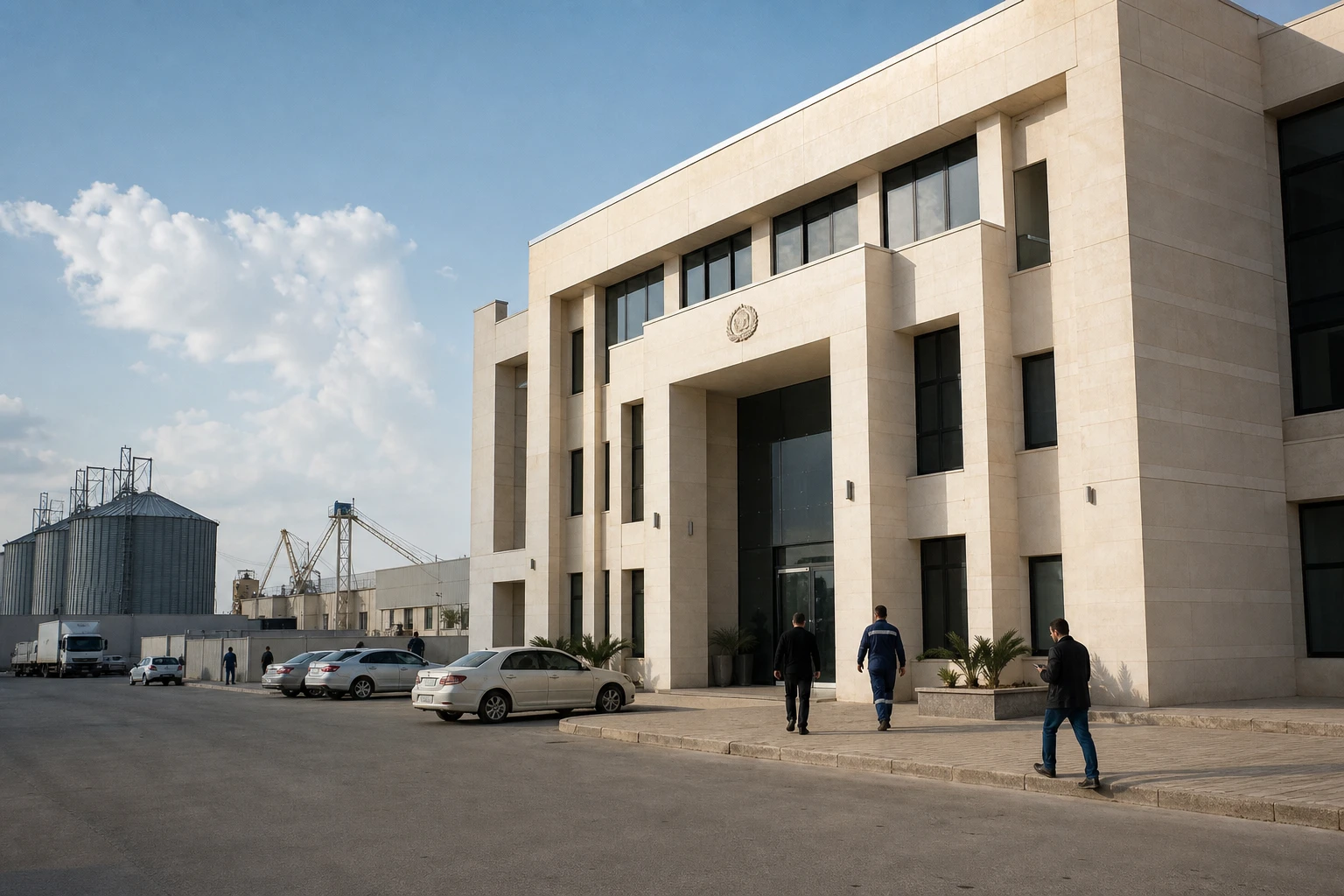
In Benghazi, sugar is becoming a real-world test of Libya’s economic diversification. Julyana Sugar Company’s project aims to install enough industrial capacity to supply the domestic market while opening the way to regional trade.
A plant planned around Benghazi’s port
In September 2026, Julyana Sugar Company signed a contract with German firm Braunschweigische Maschinenbauanstalt AG, known as BMA, to build an integrated sugar plant in the Julyana zone of Benghazi.
The site is expected to reach a minimum capacity of 2,500 tonnes a day. At full capacity over a complete year, that would represent a theoretical capacity of about 912,500 tonnes. This figure describes the plant’s industrial potential. It is not yet a forecast of actual production.
The announced timetable allows up to 24 months to complete and commission the facility. The contract was signed by Mohamed Ben Attia, chairman of the board of Julyana Sugar Company, and Uwe Altena, head of BMA. BMA describes the Benghazi project as infrastructure intended to strengthen food processing and the transfer of industrial skills in Libya.
The location is no coincidence. The Julyana free zone lies near the commercial port of Benghazi, one of eastern Libya’s main logistics hubs. This proximity could facilitate the arrival of raw sugar, the delivery of equipment and, eventually, the shipment of any surplus production.
Publicly available information does not, however, specify the investment amount, the financing structure or the exact date when construction will begin. These details will be crucial in assessing the project’s viability beyond the contract announcement.
Reducing a near-total reliance on imports
Libya does not currently have an operational industrial sugar sector capable of meeting its consumption needs. It therefore sources sugar from foreign markets, as it does with a large share of its food products.
Available estimates nevertheless vary according to the methods and categories used. The United States Department of Agriculture cited imports of about 662,000 tonnes of sugar in 2024. Data from FAOSTAT, reproduced in a commercial compilation, put refined sugar imports at nearly 678,500 tonnes that year, worth about $468 million.
These differences do not alter the main trend: Libyan demand is substantial and domestic supply remains very limited. Per capita consumption, estimated at about 31.5 kilograms a year in the data cited in the report, is among the highest on the African continent.
For importers and distributors, local production could reduce exposure to freight costs, port delays and fluctuations in international prices. For consumers, the effect would be less automatic. A plant alone does not guarantee lower prices. That will depend on energy costs, financing, domestic logistics and distribution arrangements.
The question of raw materials will also remain central. The planned facility is expected initially to process imported raw sugar. Libya does not yet have sufficiently developed sugar cane or sugar beet production to supply a plant of this scale.
An industrial project in an economy still dominated by hydrocarbons
The project is being developed in an economy where hydrocarbons provide most foreign revenues. This specialisation has enabled Libya to import a large share of its consumer goods. It has also constrained the development of industries capable of processing products locally and creating sustainable value chains.
The challenge is particularly complex in a country with an arid climate, where farmland and water resources are concentrated in limited areas. Producing sugar from local crops would therefore require separate investment in irrigation, agricultural research, storage and transport.
The refinery could nevertheless serve as a first step. It could create technical jobs, train operators and stimulate related activities such as maintenance, packaging, transport, quality control and warehousing. The stakes extend beyond the product sold in shops. They concern Benghazi’s ability to host a structured food-processing industry.
The benefits will not, however, be distributed evenly. Direct jobs will initially go to skilled workers and businesses near the site. Traders and households in more distant regions will still rely on the distribution network. In Libya’s sizeable informal economy, the impact will also depend on the project’s ability to involve small transport operators and retailers.
From Benghazi to North African markets
Julyana Sugar Company says it will initially target the Libyan market before exploring regional and international outlets. This ambition must be considered in the North African context, where industrial competition is already strong and trade flows depend on port infrastructure, health standards and customs agreements.
Libya belongs to the Arab Maghreb Union, a regional organisation established to promote co-operation among the Maghreb countries. The body remains largely inactive on economic integration. In practice, market access will therefore depend primarily on bilateral agreements, transport costs and the stability of trade corridors.
Benghazi’s location could nevertheless offer an advantage for reaching the eastern Mediterranean and some African markets. Commercial success will require consistent quality, regular volumes and reliable logistics. It will also depend on the Libyan authorities’ ability to harmonise procedures among the institutions administering the country’s different regions.
The project is being developed against a backdrop of continued political and institutional division in the country. Libya has two main rival centres of power, although administrations and businesses continue to advance some local projects. For a major industrial facility, site security, access to electricity, foreign currency availability and administrative continuity will be as important as imported technology.
The next steps will therefore be practical: the actual start of construction, confirmation of financing, installation of equipment and recruitment of staff. If these steps are completed, the Julyana plant could become an example of local processing of a product that has until now been bought almost entirely from abroad. Otherwise, it will remain another industrial announcement in an economy where diversification is still an objective rather than an established reality.
Libya Herald’s coverage of the project confirms the announced capacity of 2,500 tonnes a day and the maximum 24-month timetable. BMA’s statement, for its part, sets out the stated industrial aims: local production, skilled jobs and the transfer of expertise.