
 Algeria
 Egypt
 Libya
 Morocco
 Sudan
 Tunisia
 Benin
 Burkina Faso
 Cabo Verde
 Côte d'Ivoire
 Ghana
 Guinea
 Guinea-Bissau
 Liberia
 Mali
 Mauritania
 Niger
 Nigeria
 Senegal
 Sierra Leone
 The Gambia
 Togo
 Cameroon
 Central African Republic
 Chad
 DR Congo
 Equatorial Guinea
 Gabon
 Republic of the Congo
 São Tomé and Príncipe
 Burundi
 Comoros
 Djibouti
 Eritrea
 Ethiopia
 Kenya
 Madagascar
 Malawi
 Mauritius
 Mozambique
 Rwanda
 Seychelles
 Somalia
 South Sudan
 Tanzania
 Uganda
 Angola
 Botswana
 Eswatini
 Lesotho
 Namibia
 Zambia
 Zimbabwe
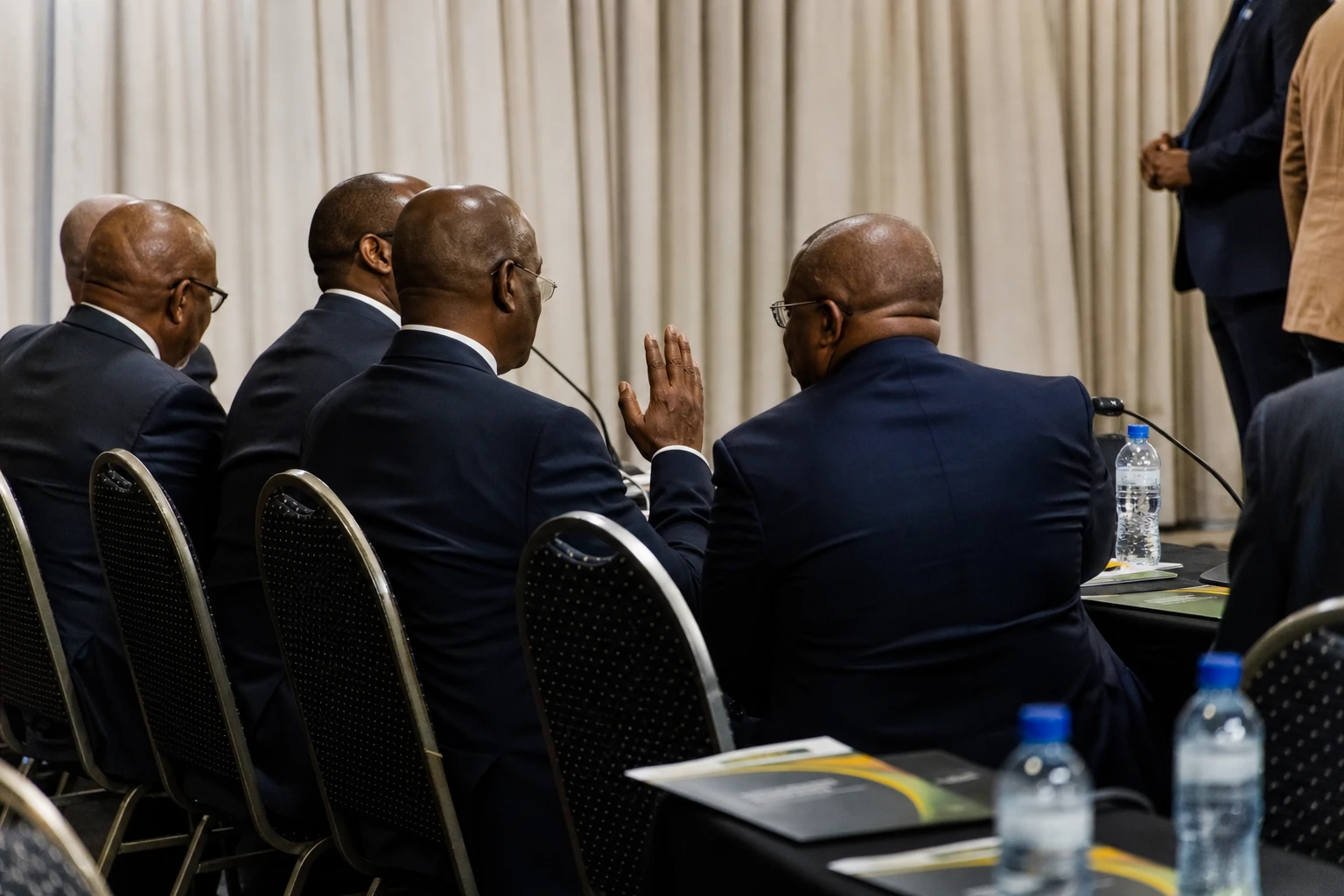
A suspension that affects more than one person
In Pretoria, South African sport has once again been reminded that success is not measured solely in medals. It also depends on clear rules, transparent accounts and strong institutions. When the body overseeing the Olympic and Paralympic movement falters, athletes, federations and selectors are the first to feel the shock.
The suspension of Barry Hendricks, president of the South African Sports Confederation and Olympic and Paralympic Committee, better known by the acronym SASCOC, comes amid an already tense climate. The organisation plays a central role in coordinating elite sport in South Africa, a member of SADC, the Southern African Development Community. It serves as an interface between federations, the state and international competitions.
What the internal process says
According to SASCOC, the decision was taken after a special board meeting held on 7 and 8 September 2026, following anonymous complaints relating to possible violations of the organisation’s safeguarding manual and codes of conduct. Retired judge Basheer Waglay was tasked with examining the allegations. He found there was sufficient evidence “prima facie” to refer the case to the internal judicial body.
First vice-president Lwandile Simelane is acting in the role to ensure the institution’s continuity. SASCOC stresses the procedural nature of the measure and reiterates the presumption of innocence. At this stage, Barry Hendricks has not been found guilty. He is suspended while the internal review of the case is under way.
This distinction matters. In South African sport, emergency suspensions are often interpreted as admissions of guilt. The organisation says it wants to avoid that. It is seeking to separate day-to-day management from the investigation. In theory, this is a safeguard. In practice, it is also a test of credibility.
South African sport under pressure
The Hendricks case has not arisen in a vacuum. For several months, South Africa’s parliament has voiced frustration at SASCOC’s difficulties in producing financial statements and meeting its governance deadlines. MPs have also raised the withdrawal of funds, extended terms of office and internal disputes that cost time and money.
This institutional fragility has very tangible effects. When an umbrella body becomes mired in difficulties, federations are left waiting, sponsors hesitate and athletes prepare for competitions amid uncertainty. Elite sport then becomes a battleground for administrative disputes. Pretoria, the administrative capital, is no longer merely the seat of decision-making. It is also where the country’s ability to govern its sporting ecosystem is being tested.
The problem is not new. In July 2026, the Sunday Times reported that Barry Hendricks was already under investigation following several anonymous allegations, including possible interference in an electoral process, a renovation project funded by public partners and a safeguarding case at a multi-sport competition abroad. This sequence shows that the current crisis is part of a series of tensions, not an isolated incident.
Swimming, legal disputes and governance on the ground
The storm is not confined to SASCOC. South African swimming is also going through a turbulent period. In August 2026, Swimming South Africa provisionally suspended its president, Alan Fritz, and its chief executive, Shaun Adriaanse, amid allegations of abuse of power and falsification of official documents. Here, too, the crisis is about governance before it is about the pools.
The case has become more serious with legal disputes involving Tatjana Smith, one of the leading figures in South African sport, and an ongoing dispute with the water polo federation. When an Olympic champion finds herself in a dispute with her own organisation, the message to young athletes is stark: fame offers no protection from administrative delays.
For swimmers, clubs and coaches, the immediate consequences are simple: less stability, less trust and more time lost to proceedings. For leaders, the battle is primarily legal and political. For the public, it becomes a question of reputation. Sport occupies a major place in South African society. When sporting institutions begin to fracture, the debate quickly extends beyond the discipline concerned.
What this says about southern Africa
Beyond the Hendricks case, the affair points to a broader issue in southern Africa: how to modernise sports governance without bringing federations’ activities to a halt. SADC and national sports administration bodies often face the same recurring tensions, between ethical requirements, political pressure, financial dependence and weak disciplinary mechanisms.
For South Africa, the issue is sensitive because it also affects the country’s continental image. The country organises, funds and represents a significant part of African sport at global and regional competitions. If the umbrella body is in doubt, the entire chain is weakened, from youth recruitment to the selection of national teams.
What happens next will depend on SASCOC’s ability to conduct a clear, swift and well-documented process without turning a disciplinary case into a factional war. That is now the central issue: Barry Hendricks’s suspension is not merely a personal matter. It is a test of South African sports governance and a signal being watched well beyond Pretoria.



