Algeria
 Egypt
 Libya
 Morocco
 Sudan
 Tunisia
 Benin
 Burkina Faso
 Cabo Verde
 Côte d'Ivoire
 Ghana
 Guinea
 Guinea-Bissau
 Liberia
 Mauritania
 Niger
 Nigeria
 Senegal
 Sierra Leone
 The Gambia
 Togo
 Cameroon
 Central African Republic
 Chad
 DR Congo
 Equatorial Guinea
 Gabon
 Republic of the Congo
 São Tomé and Príncipe
 Burundi
 Comoros
 Djibouti
 Eritrea
 Ethiopia
 Kenya
 Madagascar
 Malawi
 Mauritius
 Mozambique
 Rwanda
 Seychelles
 Somalia
 South Sudan
 Tanzania
 Uganda
 Angola
 Botswana
 Eswatini
 Lesotho
 Namibia
 South Africa
 Zambia
 Zimbabwe
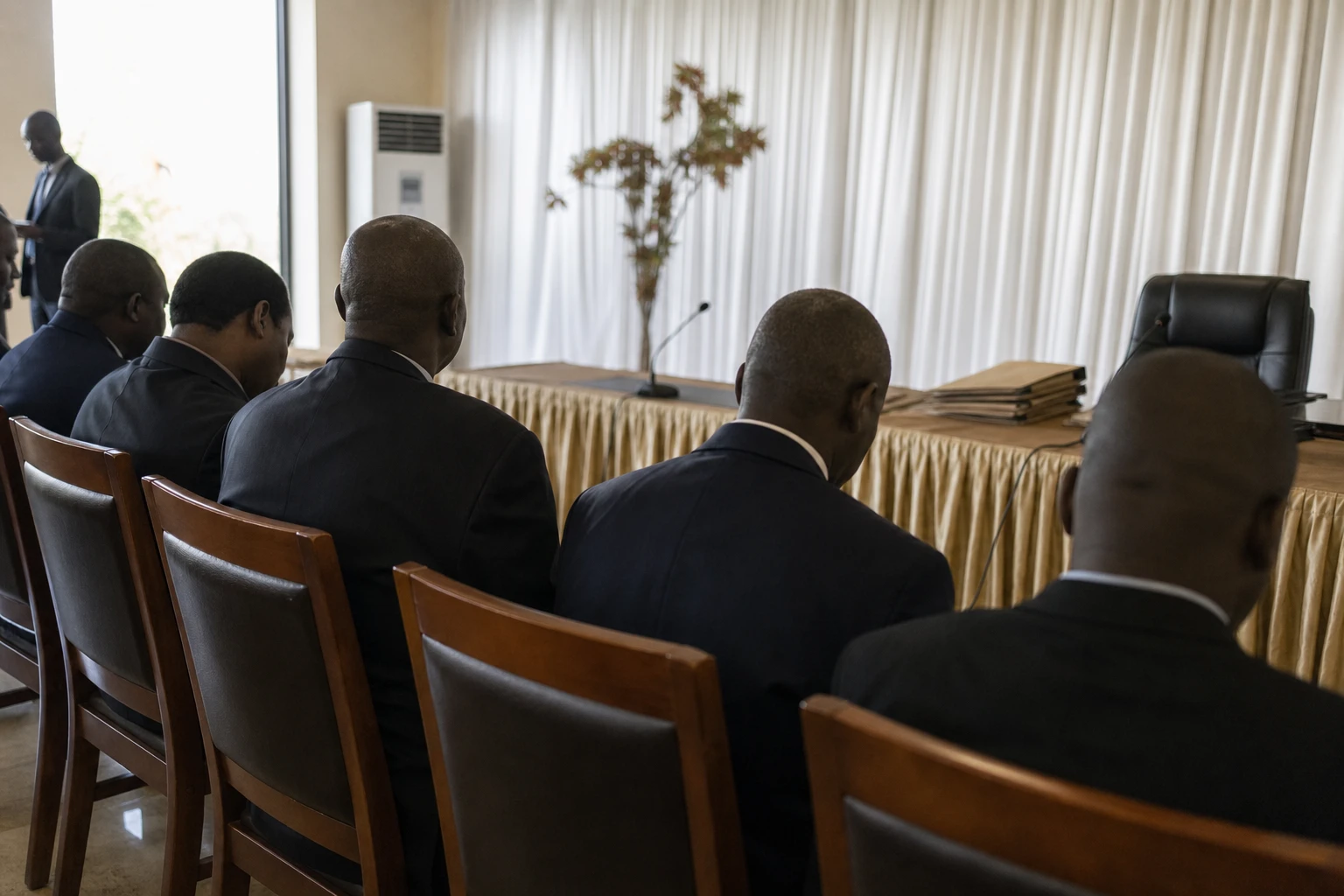
In Bamako, a gambling case that goes beyond policing
In Mali’s capital, clandestine networks almost never thrive alone. They take root where complicity, permits that serve as a façade and gaps in oversight converge. The case of the ten Chinese nationals placed in pre-trial detention after being arrested in Bamako illustrates precisely this: in Mali, a gambling case can quickly expose the grey areas between business, administrative protection and alleged corruption.
The starting point is straightforward. On Wednesday 5 August, Malian justice refused the request for provisional release made by the ten defendants, who were arrested as part of an investigation into the opening of a clandestine casino in an affluent district of Bamako. In a country where unauthorised games of chance are prohibited under the criminal code, the issue is not simply that of an illegal establishment. It also concerns the credibility of the state, the ability of the police and justice system to trace the networks, and the role of local protection in sensitive cases.
Mali is no stranger to cases involving foreign nationals, the informal economy and opaque networks. In recent months, the transitional authorities have already taken a tougher line on illegal gold mining involving Chinese operators, a strategic sector for public revenues and social peace in several regions of the country. At the same time, the government has strengthened its judicial system, including through specialised bodies such as the National Economic and Financial Division. The clandestine casino case is therefore part of a broader sequence: a state signalling its determination to regain control of profitable but illegal activities, often protected by local intermediaries.
What the investigation reveals about how the networks operate
According to judicial information reported in the case, the operation is said to have begun with the recruitment of young women and the search for a house suited to gaming rooms, followed by the establishment of an operation covered by false permits. Local complicity, among civilians and within some uniformed services, is said to have facilitated the venue’s set-up and protection. This is the part of the case that most interests investigators: the casino was reportedly not run solely by foreigners, but relied on a carefully built local foothold.
The same sources describe an establishment frequented by foreigners and Malians, including some well-known figures, with activity considered intense and significant flows of money. These figures and estimates should remain attributed to investigators, as they have not yet been confirmed by a public court ruling. But the pattern is consistent with a familiar phenomenon in West African capitals: when clandestine gambling takes hold, it attracts customers, intermediaries, security guards, recruiters and, often, protection networks.
Mali’s criminal code is clear. Unauthorised games of chance are prohibited, and the law provides for penalties for those who organise them or regularly derive income from them. The legal framework is therefore in place. The real issue lies elsewhere: in enforcing the rules, in the ability of the authorities to detect clandestine operations early, and in the willingness to pursue hidden complicity. This is often where sensitive cases are won or lost.
The refusal of provisional release can also be read as a judicial signal. In cases where the charges point to a lasting organisation, links of complicity and financial flows, judges often prioritise keeping people in detention while the investigation is under way. This can also help prevent pressure on witnesses, the destruction of evidence or sudden departures. In Mali, where the justice system is seeking to project greater firmness in economic and security cases, this kind of decision carries considerable weight.
Economic, social and diplomatic stakes
Beyond policing, the case touches several parts of Bamako society. For the authorities, it puts the regulation of illegal activities in the capital and public confidence in the rule of law at stake. For residents of the districts concerned, it points to another reality: leisure and nightlife activities can serve as a front for fast-money networks, involving alcohol, precarious recruitment and sometimes the exploitation of vulnerable people. For inspectors, it raises an even more delicate question: how can they identify what is hidden behind premises officially described as “private” when the paperwork appears to be in order but is not?
The diplomatic dimension is also present. Mali has extensive economic cooperation with China, particularly in infrastructure and extractive industries. But in 2025, the transitional authorities also showed they were prepared to challenge Beijing over abuses linked to illegal gold mining involving Chinese nationals. The clandestine casino case is not in itself a bilateral dispute. It nevertheless serves as a reminder that no economic partnership exempts anyone from complying with national laws.
The episode should also be set against Mali’s regional trajectory. A member of ECOWAS, the country has faced tensions with the West African organisation since the military transition. In this context, every case in which the state demonstrates its ability to enforce the law carries greater symbolic weight. This is not a minor policing matter. It is a way for Bamako to say that sovereignty also applies to private activities, financial networks and the conduct of foreign and local networks.
The most relevant precedent is not necessarily judicial, but institutional. In Bamako, the authorities have repeatedly issued tough messages against illegal activities, including clandestine gold mining, fraud and various forms of trafficking. The consistency of this approach will be tested at one specific point: what happens next in the investigation. If the local complicity cited in the case is established, it will extend well beyond the circle of foreign defendants. It will then become a test of Mali’s ability to pursue hybrid networks to the end—networks that combine the informal economy, administrative cover and fast money.
On a continental scale, the case is a reminder of a constant across Africa: cross-border flows involve not only mines, roads and trade. They also pass through leisure activities, nightlife venues and small pockets of tolerance that authorities sometimes allow to flourish. For Bamako, the real issue will therefore be less the image of a clandestine casino than what follows from the investigation: who signed, who protected, who profited, and who will actually be prosecuted.