Algeria
 Egypt
 Libya
 Morocco
 Sudan
 Tunisia
 Benin
 Burkina Faso
 Cabo Verde
 Côte d'Ivoire
 Ghana
 Guinea
 Guinea-Bissau
 Liberia
 Mali
 Mauritania
 Niger
 Nigeria
 Senegal
 Sierra Leone
 The Gambia
 Togo
 Cameroon
 Central African Republic
 Chad
 DR Congo
 Equatorial Guinea
 Gabon
 Republic of the Congo
 São Tomé and Príncipe
 Burundi
 Comoros
 Djibouti
 Eritrea
 Ethiopia
 Madagascar
 Malawi
 Mauritius
 Mozambique
 Rwanda
 Seychelles
 Somalia
 South Sudan
 Tanzania
 Uganda
 Angola
 Botswana
 Eswatini
 Lesotho
 Namibia
 South Africa
 Zambia
 Zimbabwe
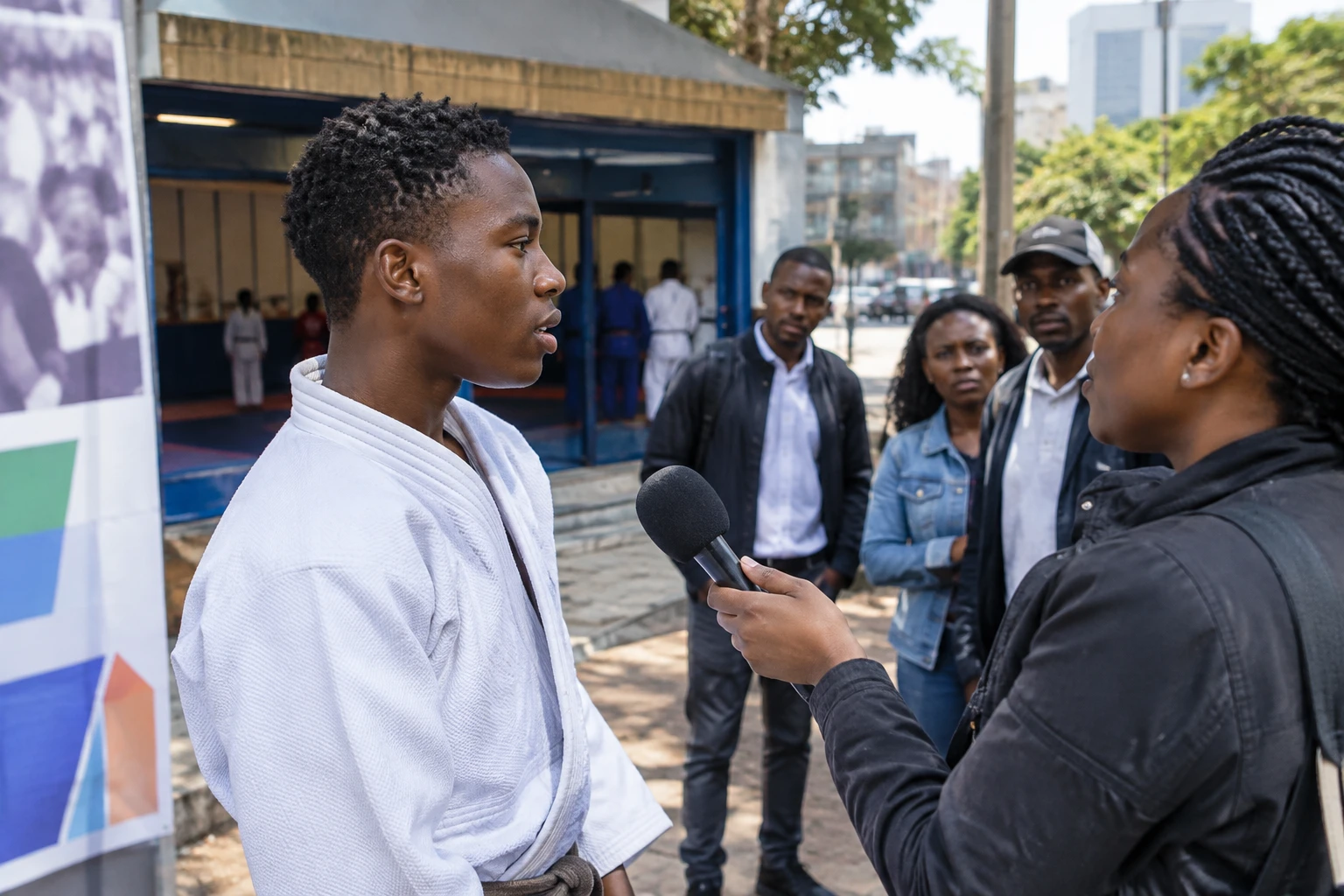
For Arno Yafunga, every session on the tatami brings a personal dream closer to a stage rarely open to young refugees. At 15, the judoka from the Democratic Republic of the Congo is preparing to represent the Refugee Olympic Team at the Youth Olympic Games (YOG) in Dakar, from 31 October to 13 November 2026.
A journey between Kinshasa and Nairobi
Arno grew up in Kenya after leaving the DRC as a child. In Nairobi, he divides his time between school, morning runs and evening judo training. His father, Arnold, a black belt, introduced him to the discipline and accompanies him on the tatami.
The young athlete is aiming for the men’s under-55kg category. He says he wants to win gold and show that young refugees can achieve great things when they have opportunities to compete. This ambition, expressed in the account of his journey, of course does not prejudge the sporting result in Dakar.
Judo also provides him with a daily framework. Arno says the sport teaches him respect and responsibility, and helps him steer clear of company he considers risky. His experience is a reminder that access to sport can matter in an adolescent’s life beyond competition.
A first-of-its-kind team for the Youth Games
Arno will be part of a six-athlete refugee delegation, made up of three girls and three boys. They live in Kenya and Uganda and will compete in athletics, judo and taekwondo. The International Olympic Committee confirms that this is the first Refugee Olympic Team to compete at the YOG.
The group is part of a partnership between the Kenyan and Ugandan national Olympic committees, the Olympic Refuge Foundation and sports federations. Ahead of the Games, the six athletes met for a training camp in Kaptagat, Kenya, to train together and prepare for their first competition under the Refugee Team banner.
For Dakar, the significance therefore goes beyond the selection of one athlete. The YOG will be the first Olympic event held on the African continent. By also welcoming a team of young refugees, Senegal will bring two firsts together on one sporting stage, across Dakar, Diamniadio and Saly.
Barriers remain after selection
Arnold describes the difficulties refugees face in obtaining documents or work permits in Kenya. He also points to the cost and availability of equipment, as well as access to training venues. These barriers affect families and young athletes who have not been identified by a programme or federation.
The context matters. In February 2025, Kenya hosted more than 836,000 refugees and asylum seekers, according to the joint programme of the World Food Programme and the United Nations High Commissioner for Refugees. Most lived in the Dadaab and Kakuma areas; a smaller proportion lived in urban areas, including Nairobi. These figures describe a diverse population, not a uniform experience: needs and opportunities vary according to place of residence, documentation and available resources.
Arno’s participation does not resolve these constraints. Rather, it shows what sports support can make possible, while making visible the gap between an exceptional qualification and regular access to equipment, clubs and competitions. His father’s role as his coach also highlights the importance of family members and local trainers in developing young talent.
A sporting event with regional reach
Kenya and Uganda are major host countries for displaced people in East Africa. Their Olympic committees are helping prepare the team, while Senegal is hosting the Games in West Africa. The delegation thus connects different parts of the continent through sport, without conflating the distinct realities of each country.
Beyond the medals, attention will turn to how the six athletes can continue practising after Dakar. For Arno, the Senegalese tatami will be a high-level test and an opportunity to carry a message he puts in his own words: refugee status does not take away the right to dream. For sports institutions, what happens next will also be measured by the practical opportunities to sustain training and open up further pathways for young people.