Algeria
 Egypt
 Libya
 Morocco
 Sudan
 Tunisia
 Benin
 Burkina Faso
 Cabo Verde
 Côte d'Ivoire
 Ghana
 Guinea
 Guinea-Bissau
 Liberia
 Mali
 Mauritania
 Niger
 Nigeria
 Senegal
 Sierra Leone
 The Gambia
 Togo
 Cameroon
 Central African Republic
 Chad
 DR Congo
 Equatorial Guinea
 Gabon
 Republic of the Congo
 São Tomé and Príncipe
 Burundi
 Comoros
 Djibouti
 Eritrea
 Ethiopia
 Madagascar
 Malawi
 Mauritius
 Mozambique
 Rwanda
 Seychelles
 Somalia
 South Sudan
 Tanzania
 Uganda
 Angola
 Botswana
 Eswatini
 Lesotho
 Namibia
 South Africa
 Zambia
 Zimbabwe
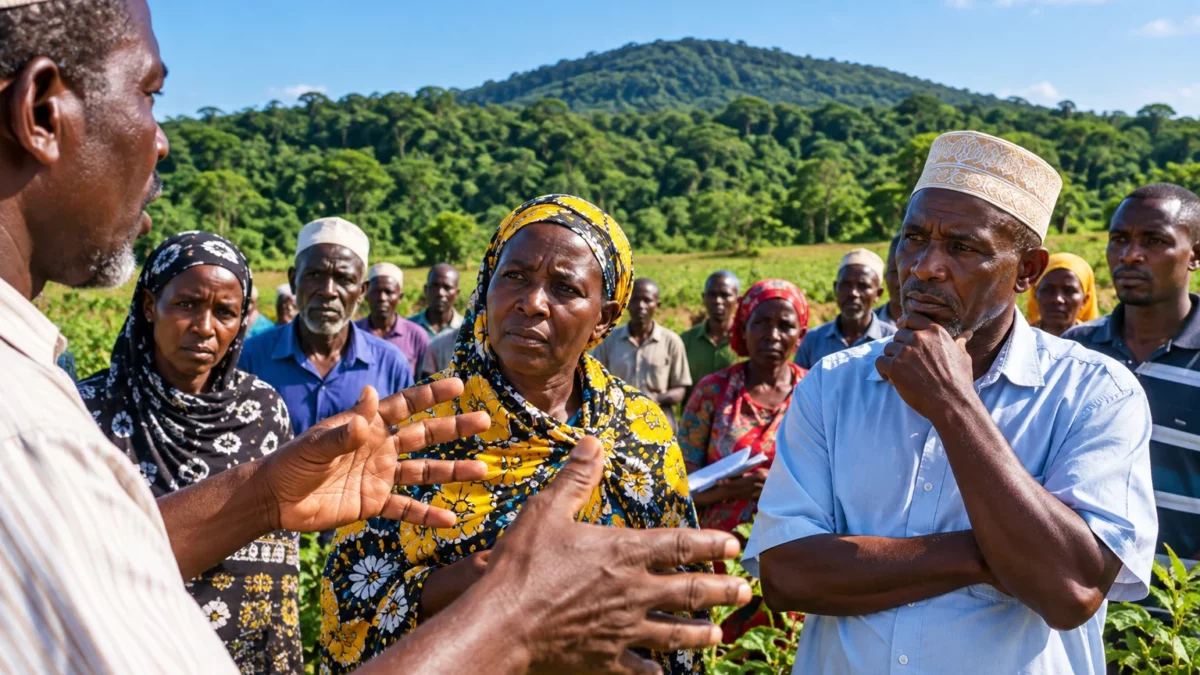
At Mrima Hill, the stakes go beyond mineral exploration. In Kenya’s coastal Kwale County, an investment decision touches on the country’s industrial ambitions, farmland and a sacred site for the Digo community.
A project still far from extraction
On 19 November 2026, Kenya’s Ministry of Mining announced its intention to award the Mrima Hill project to the Frontier Minerals Consortium, a group of US companies. It comprises Frontier Minerals, Bunker Hill Mining, ReElement Technologies and American Resources. The Kenya News Agency also reported the selection.
This is not yet a mining licence. The ministry says the consortium will have to engage with communities and obtain the required approvals before applying for an exploration licence. Such a licence allows resources to be studied, but not minerals to be extracted for commercial purposes.
The site is about 65 kilometres south-west of Mombasa. A notice published in Kenya’s official Gazette identifies niobium and rare earths among the resources targeted. Niobium is used, among other things, to make specialised alloys. Some rare earths are used in the magnets found in electric motors and wind turbines, as well as in electronic equipment.
A coveted resource, uncertain figures
The selection comes amid international competition to secure strategic minerals and develop their processing. Nairobi is seeking to attract investors while increasing the value added within the country. For Kenya, the challenge is to ensure the benefits go beyond exporting raw materials: jobs, local processing and public revenues will determine the project’s real impact.
Spectacular estimates of the deposit’s value should nevertheless be treated with caution. The Gazette says the government has not prepared an economic viability study. An estimate put forward in 2013 referred to potential gross revenues over several decades, but did not deduct development or operating costs and did not measure the share that would accrue to Kenya. It is therefore neither a certified valuation of the deposit nor a promise of public revenue.
The selection of the US consortium has not ended the controversy over the process. Australia’s RareX, which says it came second, says it will challenge the award. It argues that Frontier failed to submit its expression of interest by the deadline. This is an allegation by an unsuccessful competitor and has not, at this stage, been established by an independent decision. The challenge mechanism is intended to allow it to be examined.
Land, forest and local consultation
For residents of the region, the immediate question remains what information is available and how much say they will have. Farmers fear losing their land or livelihoods. Digo community leaders have raised concerns about the risks to Mrima Hill, a sacred forest where, according to local traditions, ancestral graves are located. The site was designated a national monument in 1992.
The ministry says the selection paves the way for a local partnership and strict regulatory oversight. But several local representatives are calling for the project’s terms to be made public and for the government’s responsibilities not to be left to the investor alone. A civil society organisation has petitioned the Kwale County High Court over a proposed agreement between Kenya and the United States. The attorney-general disputes the court’s jurisdiction, leaving the case as a point to watch.
The precedent of Cortec Mining shows why environmental approvals and transparency will matter. In 2013, Kenya’s environmental authority rejected an assessment linked to an earlier attempt to develop the site, citing, among other things, its protected status. The dispute was later considered in international arbitration, where Kenya prevailed. That history does not predetermine the new project, but makes it essential to clarify whether exploration is compatible with forest protection and community rights.
Next steps will be decisive
Kenya’s framework provides for further steps before any commercial extraction: environmental and social impact assessments, consultations, agreements with communities and additional approvals. Rare earths and niobium could help diversify the economy, but the benefits will depend on the conditions in practice: protection of water and biodiversity, fair compensation, access to information and revenue sharing.
Across East Africa, investors and governments seeking to turn strategic resources into local industrial capacity will be watching the case. For Kenya, selecting a consortium is only the beginning. What follows will show whether the state can reconcile global competition, public oversight and the informed consent of the people directly affected.