Algeria
 Egypt
 Libya
 Morocco
 Sudan
 Tunisia
 Benin
 Burkina Faso
 Cabo Verde
 Côte d'Ivoire
 Ghana
 Guinea
 Guinea-Bissau
 Liberia
 Mali
 Mauritania
 Niger
 Nigeria
 Senegal
 Sierra Leone
 The Gambia
 Togo
 Cameroon
 Central African Republic
 Chad
 DR Congo
 Equatorial Guinea
 Gabon
 Republic of the Congo
 São Tomé and Príncipe
 Burundi
 Comoros
 Djibouti
 Eritrea
 Ethiopia
 Kenya
 Madagascar
 Malawi
 Mauritius
 Mozambique
 Rwanda
 Seychelles
 Somalia
 South Sudan
 Tanzania
 Uganda
 Botswana
 Eswatini
 Lesotho
 Namibia
 South Africa
 Zambia
 Zimbabwe
Targeted financing for businesses still struggling to access banking
In Luanda, a €30 million credit line is being added to the tools already introduced for Angola’s micro, small and medium-sized enterprises. The message is clear: without credit, economic diversification will remain a distant goal. In a country still heavily dependent on oil revenues, MSMEs need to be able to buy equipment, modernise their workshops and secure their stocks if they are to play a greater role in employment and local production.
This new instrument is part of a broader course pursued by Angola for several years. The 2023-2027 National Development Plan makes increasing private-sector access to finance, particularly for MSMEs, a priority. The issue is also regional, as the expansion of the Lobito Corridor is intended to connect Angolan businesses more closely with markets in the Southern African Development Community (SADC), where logistics and industrial supply chains are taking shape around new trade routes.
What the agreement signed by Luanda and Madrid provides
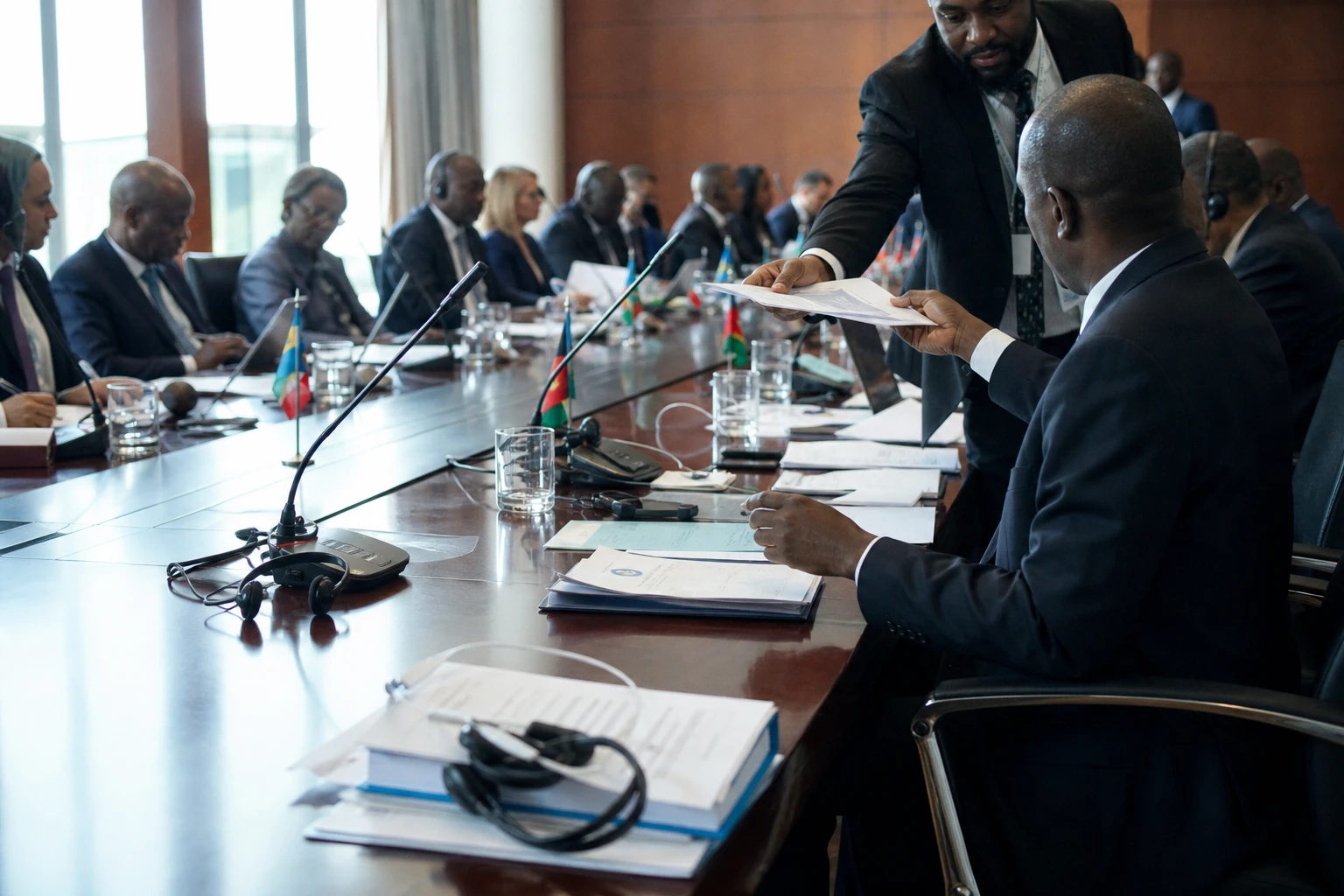
The agreement was concluded in Luanda on 22 July between Angola’s Ministry of Finance and Spain’s Official Credit Institute (ICO). It is intended to enable Angolan businesses to obtain loans through partner commercial banks to buy equipment, technology, raw materials and other inputs from Spanish suppliers. The mechanism is therefore aimed at both investment and productive modernisation.
The ministry’s statement describes a scheme designed to strengthen the production capacity of domestic businesses, promote the modernisation of the business sector and stimulate productive investment. No official details have been given on the mechanism’s exact duration or the timetable for disbursements. Angolan business media have, however, reported that the facility amounts to €30 million, or about $34.8 million.
Financial co-operation between Angola and Spain is not new. An Angolan institutional source said in 2025 that a new €30 million credit agreement was in preparation to finance small projects involving Angolan clients and Spanish companies. This continuity explains the chosen format: financing linked to purchases of goods and services, rather than straightforward budget support.
Why credit remains key for Angolan MSMEs
The problem is not simply the existence of businesses, but their ability to cross the threshold into formal financing. According to the International Monetary Fund, financial inclusion remains low in Angola and small and medium-sized enterprises have limited access to credit. The same assessment notes that the authorities are using several measures to address this weakness: subsidised loans, administrative requirements mandating that a share of credit go to certain sectors, and public guarantees.
The World Bank’s findings point in the same direction. Its analyses of Angola note that access to banking services remains uneven, particularly outside major urban centres, and that MSMEs need financing to support more diversified growth. Its economic report on Angola also stresses the need to move beyond the oil-centred model to unlock more activity in agriculture, trade, processing and services.
In practice, the obstacles are well known: high interest rates, collateral requirements imposed by banks, administrative red tape and the limited presence of financial services in some rural areas. For a small business in Benguela, Huambo or the country’s interior, accessing credit poses a different challenge than it does for a company based in Luanda. The announced financing may therefore help businesses already connected to the banking system, but broader tools will be needed to reach the country’s productive base.
A test for Angola’s diversification and the role of the Lobito Corridor
The Angolan government has already established several schemes to ease financing constraints, including the Diversifica Mais initiative, designed to improve access to credit and support non-oil value chains. The programme focuses in particular on the Lobito Corridor, seen as a strategic route for industry, transport and regional trade. The idea is simple: if businesses cannot invest or produce on a large scale, the corridor will remain an infrastructure project without a solid business base.
In this context, the Angolan-Spanish credit line carries broader political significance than a simple trade agreement. It shows that Luanda is seeking partners able to support the upgrading of its productive sector, while retaining control over the national framework for diversification. For the authorities, the expected benefits are twofold: supporting the private sector and reducing dependence on imports of intermediate goods. For businesses, the stakes are more tangible still: gaining access to equipment, improving productivity and competing more effectively across the region.
The initiative has real continental significance. Angola is increasingly hosting and promoting initiatives linked to economic corridors, logistics integration and local processing. In Southern Africa, where value chains remain fragmented, financing for MSMEs is no secondary issue. It is one of the factors that will determine whether major infrastructure projects generate lasting jobs and a denser industrial base. The next thing to watch, then, will be less the signing itself than how partner banks and Angolan businesses actually use this credit line in the coming months.