Algeria
 Egypt
 Libya
 Morocco
 Sudan
 Tunisia
 Benin
 Burkina Faso
 Cabo Verde
 Côte d'Ivoire
 Ghana
 Guinea
 Guinea-Bissau
 Liberia
 Mali
 Mauritania
 Niger
 Nigeria
 Senegal
 Sierra Leone
 The Gambia
 Togo
 Cameroon
 Central African Republic
 Chad
 DR Congo
 Equatorial Guinea
 Gabon
 Republic of the Congo
 São Tomé and Príncipe
 Burundi
 Comoros
 Djibouti
 Eritrea
 Ethiopia
 Kenya
 Madagascar
 Malawi
 Mauritius
 Mozambique
 Rwanda
 Seychelles
 Somalia
 South Sudan
 Tanzania
 Uganda
 Botswana
 Eswatini
 Lesotho
 Namibia
 South Africa
 Zambia
 Zimbabwe
A legal response to a very real digital threat
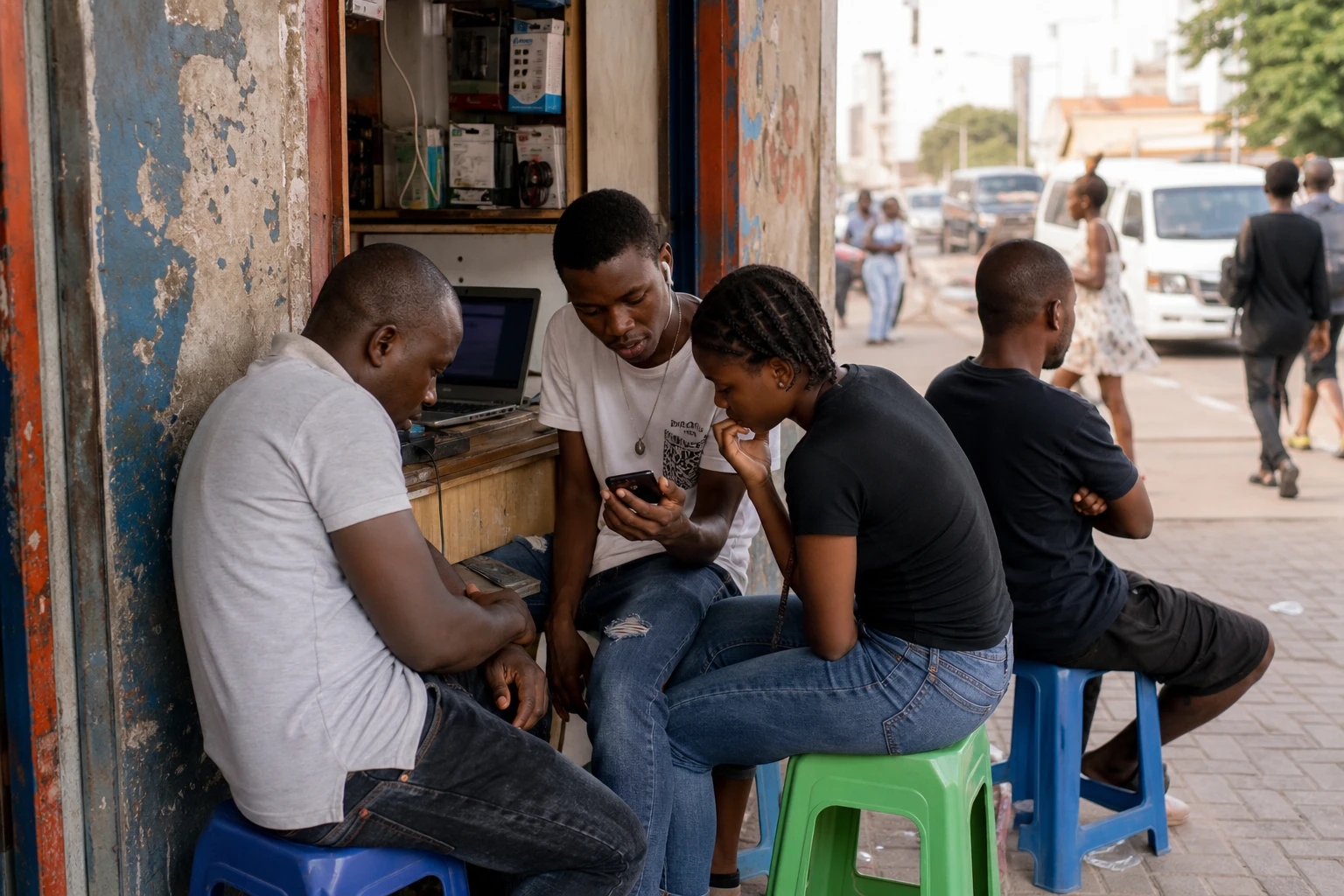
On screens, a rumour can travel faster than a correction. In Angola, the authorities have chosen to address this risk through legislation. The country is entering a phase in which the fight against disinformation is no longer confined to public debate, but is subject to a stricter criminal and administrative framework.
This shift comes amid a regional environment in which African states are seeking to regulate digital content more effectively, balancing protection of the public sphere against fears that such laws could be used for political purposes. Angola, whose capital is Luanda, belongs to SADC, the Southern African Development Community, which has 16 member states. Across the continent, the issue also touches on how African democracies regulate the internet without undermining freedom of expression.
What Angola’s law provides
The law against online false information came into force on Thursday 6 August, after its publication in the Official Gazette on Tuesday 4 August, according to information made public by the Angolan authorities and reported by the local press. Parliament approved the bill in principle in January 2026, after the government had begun drafting it in October 2025; it was then promulgated in July by President João Lourenço.
The framework introduces civil and criminal liability for people found guilty of disseminating false information online. It provides for prison sentences of one to three years for distributing false content, three to eight years when such content incites hatred or harms the reputation of people or institutions, and up to ten years if its dissemination compromises electoral processes or state security. Fines of up to 400 national minimum wages have also been announced.
The law goes beyond simple punishment. For the first time, it provides legal definitions of several digital-related concepts, including false information, deepfakes, disinformation, inauthentic accounts, manipulated content and networks for artificial dissemination. It also applies to content created abroad when it is aimed at the Angolan public.
Digital platforms are also covered. They must put transparency mechanisms in place, submit monthly reports to the telecommunications regulator and remove the content concerned, or face liability. The government presents this framework as a tool to protect citizens and institutions in a rapidly expanding digital environment.
The debate is about more than disinformation
The authorities’ argument is clear: the spread of false content affects not only politics but also social life, family relationships and institutional stability. As early as 2023, the ministry responsible for the sector had said that disinformation, defamation and digital manipulation had become widespread, harming people’s reputations as well as the effectiveness of institutions.
But the criticism is just as clear. At the heart of the debate is the regulator responsible for enforcing the law, INACOM, a public institution overseen by the Ministry of Telecommunications, Information Technology and Social Communication. Its board is appointed by presidential decree, fuelling misgivings among those who fear that enforcement could be too closely aligned with the executive.
Angolan observers therefore argue that the problem is not only the principle of the law, but the decision-making chain around it. When the authority that receives reports, oversees platforms and can initiate proceedings depends on the government, the boundary between legitimate regulation and political pressure becomes more sensitive. This is an institutional concern, not a theoretical dispute.
This concern is reinforced by a broader trend. Africa Check has documented that between 2016 and the following years, the 11 African countries it studied almost doubled the number of laws and regulations penalising “false information”, from 17 to 31. The organisation also notes that some of these rules do not always require proof of actual harm before proceedings can be brought.
What this means for Angolans and the region
For the authorities, the new framework should curb coordinated manipulation campaigns, particularly ahead of political milestones, in a country where false information can quickly have tangible consequences. For journalists, activists and ordinary users, the risk is the opposite: that the law will be used to deter criticism, investigation or comment. The dividing line will therefore depend less on the text itself than on how it is enforced.
Angola’s context gives this debate particular significance. The state has launched several digital transformation initiatives, while public institutions emphasise cybersecurity, digital governance and the modernisation of public administration. In this environment, the question is not only how to punish abuses, but how to establish clear rules for a digital space that has become central to economic, social and political life.
Within SADC, Angola thus joins other states seeking an as-yet-unstable balance between digital sovereignty and democratic safeguards. Across Africa, the Angolan law revives a long-standing question: how can online manipulation be fought without giving the state too much power over what can be said, shared or challenged? This tension is no longer confined to elections. It concerns the everyday governance of the internet.
The next test will be enforcement. If the authorities publish transparent implementation guidelines, if remedies are effective and if penalties remain proportionate, the law could be seen as a regulatory tool. If it is used mainly to control inconvenient voices, it will join the long list of African laws intended to protect public debate but which end up restricting it.