Algeria
 Egypt
 Libya
 Morocco
 Sudan
 Tunisia
 Benin
 Burkina Faso
 Cabo Verde
 Côte d'Ivoire
 Ghana
 Guinea
 Guinea-Bissau
 Liberia
 Mauritania
 Niger
 Nigeria
 Senegal
 Sierra Leone
 The Gambia
 Togo
 Cameroon
 Central African Republic
 Chad
 DR Congo
 Equatorial Guinea
 Gabon
 Republic of the Congo
 São Tomé and Príncipe
 Burundi
 Comoros
 Djibouti
 Eritrea
 Ethiopia
 Kenya
 Madagascar
 Malawi
 Mauritius
 Mozambique
 Rwanda
 Seychelles
 Somalia
 South Sudan
 Tanzania
 Uganda
 Angola
 Botswana
 Eswatini
 Lesotho
 Namibia
 South Africa
 Zambia
 Zimbabwe
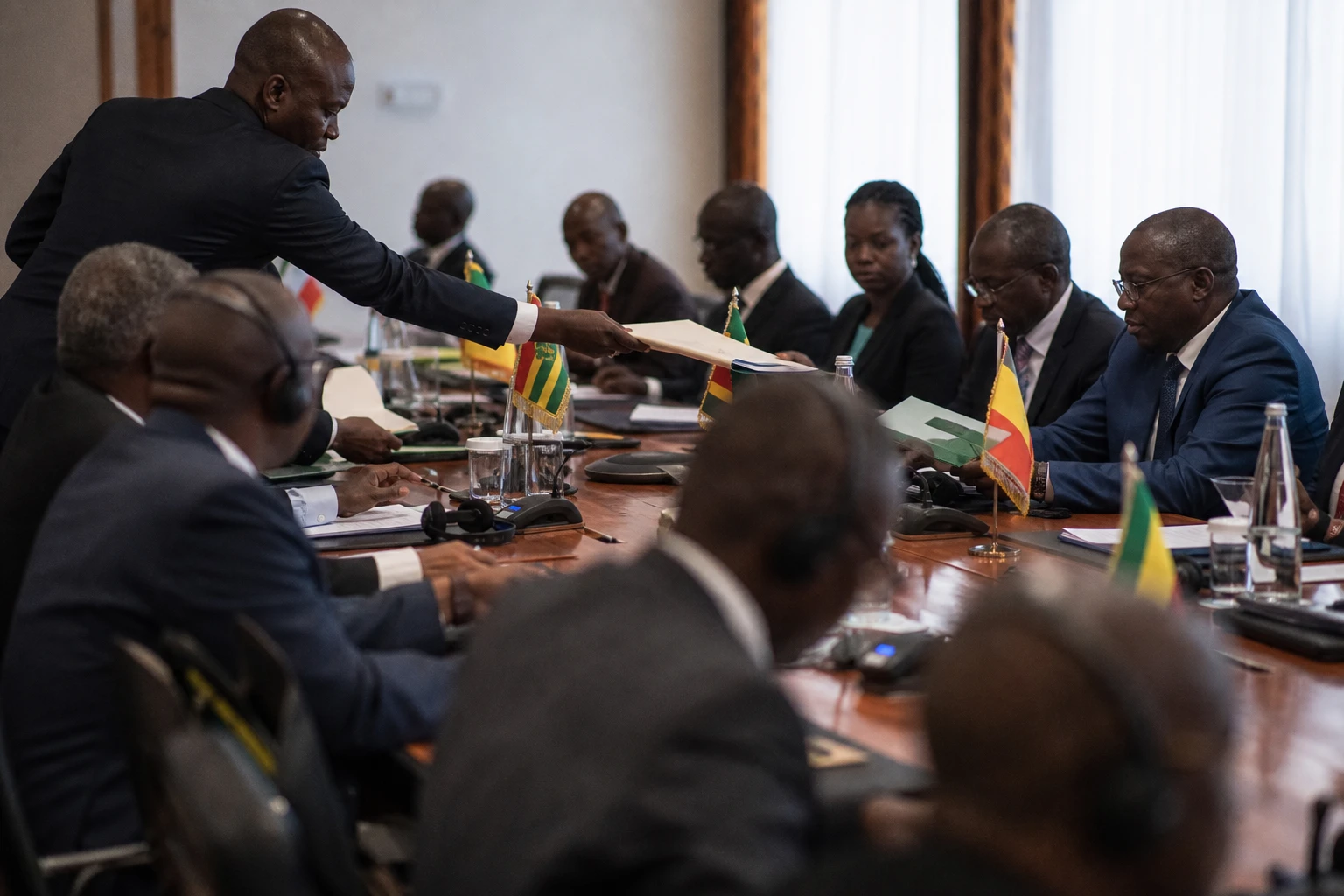
At Anéfis, the front shifts but the balance of power remains fragile
In northern Mali, a road, a garrison and a town can carry more weight than a long speech. Anéfis, east of Kidal, is one such place. When this transit point is in doubt, the entire Gao–Kidal–Tessalit line becomes harder to hold, for Bamako and its allies on the ground alike.
For several weeks, northern Mali has seen renewed clashes between the Malian Armed Forces, backed by Russian partners from Africa Corps, and a coalition of separatist and jihadist fighters. This period comes as Bamako’s junta has stepped up security cooperation with Moscow and within the Confederation of Sahel States, while the West African region remains shaped by realignments following Mali’s withdrawal from ECOWAS.
What happened near Anéfis
On Saturday 18 July 2026, a Malian army convoy was targeted in the north of the country. Armed groups announced an ambush against Malian soldiers and their Russian partners in a remote area of the Gao region, near the strategic corridor leading towards Kidal. The army, for its part, said it had launched a counter-offensive, without immediately detailing its losses.
Casualty figures remain contradictory. Fighters from the Azawad Liberation Front claimed to have inflicted heavy losses and captured soldiers. The Malian army has not confirmed these figures so far. During fighting in the desert, the absence of immediate corroboration of deaths, injuries or prisoners is common. These figures should therefore be treated with caution until they are confirmed by a second independent source.
The attack comes less than a week after fighting around Anéfis. Between 4 and 9 July, the Malian authorities said they had retaken control of the town after intense clashes. The Malian government’s account subsequently described Anéfis as “completely under control”, while other sources said a siege had been broken after several days of fighting.
Why Anéfis matters so much
Anéfis is not just a small desert town. It lies on an axis linking Gao to Kidal and opening further north towards other areas of military and commercial movement. In northern Mali, control of roads matters as much as capturing a town. Whoever holds the routes also controls reinforcements, supplies and sometimes the tactical initiative.
The stakes are twofold for the Malian army. It must maintain a visible presence in the north, where the state has long faced challenges, while protecting its convoys in an environment where combined attacks, drones, ambushes and the mobility of armed groups make any lasting advance difficult. For local people, these clashes mean disrupted roads, restricted movement, slower commercial activity and renewed uncertainty for families whose livelihoods depend on transport, small businesses or services linked to Sahelian corridors.
The use of Africa Corps, successor to the Russian paramilitary presence in the region, remains central to Bamako’s strategy. The Malian government presents the partnership as a boost to sovereignty. But the reality on the ground is harsher: the state must defend dispersed positions over long distances, against groups that know the terrain and can strike at the right moment. This makes northern Mali look more like a war of attrition than a decisive battle.
Regional perspective and continental significance
This latest episode goes beyond Mali alone. It is a reminder that the Sahel remains a region of security realignment, where alliances shift, fronts move and states seek external support to hold their territory. Mali, Burkina Faso and Niger have now placed their bets on the Confederation of Sahel States, while ECOWAS has lost one of its members most exposed to the security crisis. Bamako’s stability therefore matters across the western Sahel.
For the African Union and sub-regional organisations, the stakes are political too. The longer fighting continues around Anéfis, the more mediation, border control and the movement of weapons return to the fore. Armed groups know that a success in northern Mali quickly resonates beyond the front lines. And for the authorities in Bamako, the test is clear: to show they can hold the ground without turning every recaptured town into a temporary victory.
The coming days will hinge on securing the Gao–Kidal corridor and the Malian forces’ ability to retain the initiative after this latest ambush. In northern Mali, control of a camp is worth nothing unless it lasts. That is where the strength of the state is measured in practice.