Algeria
 Egypt
 Libya
 Morocco
 Sudan
 Tunisia
 Benin
 Burkina Faso
 Cabo Verde
 Côte d'Ivoire
 Ghana
 Guinea
 Guinea-Bissau
 Liberia
 Mali
 Mauritania
 Niger
 Nigeria
 Senegal
 Sierra Leone
 The Gambia
 Togo
 Cameroon
 Chad
 DR Congo
 Equatorial Guinea
 Gabon
 Republic of the Congo
 São Tomé and Príncipe
 Burundi
 Comoros
 Djibouti
 Eritrea
 Ethiopia
 Kenya
 Madagascar
 Malawi
 Mauritius
 Mozambique
 Rwanda
 Seychelles
 Somalia
 South Sudan
 Tanzania
 Uganda
 Angola
 Botswana
 Eswatini
 Lesotho
 Namibia
 South Africa
 Zambia
 Zimbabwe
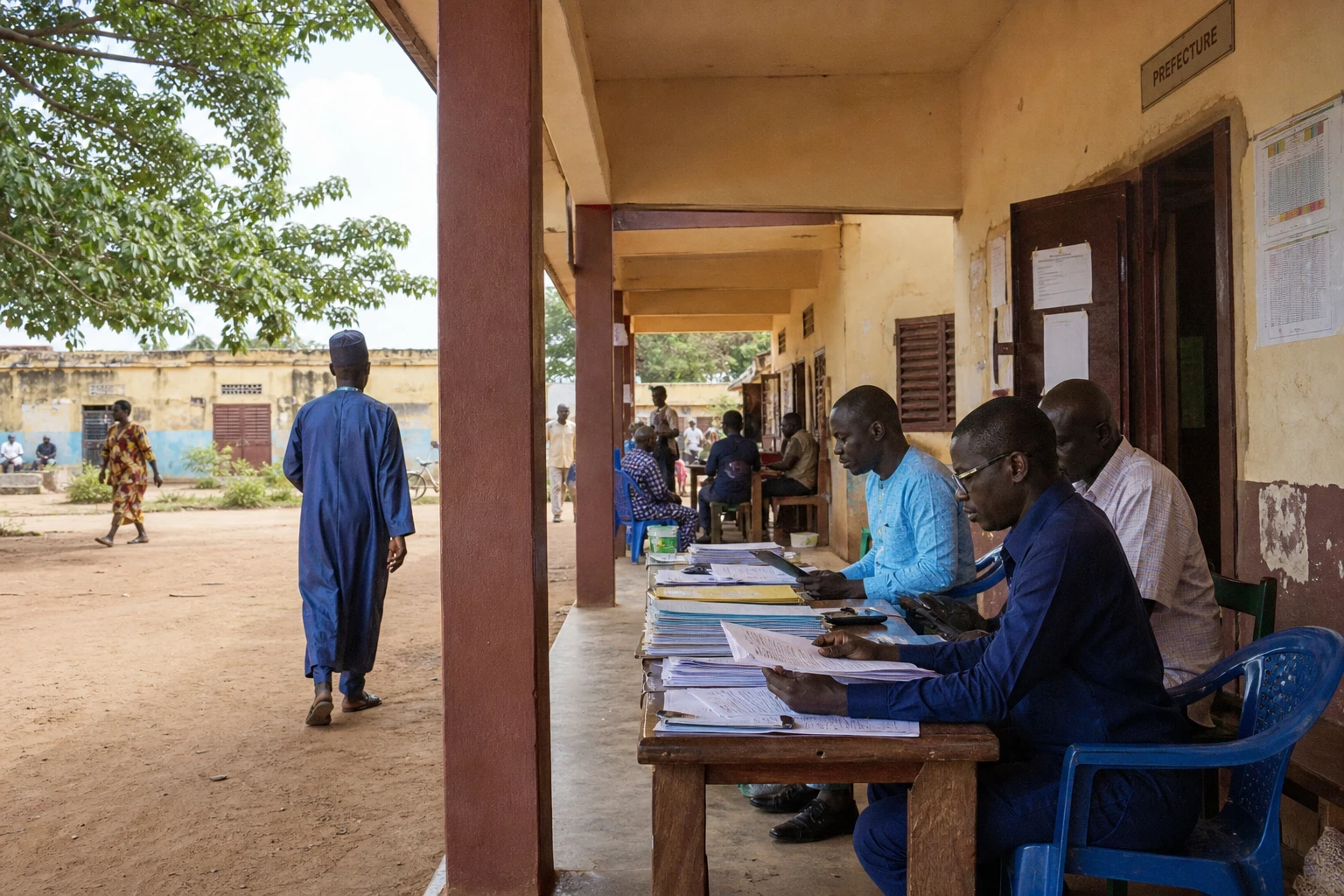
At Am Dafock, the border lays bare the Central African Republic’s vulnerability
At Am Dafock, in Vakaga, war does not end with the sound of gunfire. It is also visible in a closed school, an empty health centre, a destroyed market and families camping beneath tarpaulins. In this north-eastern part of the Central African Republic, security is as much a condition of survival as a matter of state.
The town lies on the edge of Sudan, in an area long traversed by traders, refugees, herders and armed groups. The border has become even more sensitive since the war in Sudan, which began in April 2023 and has displaced tens of thousands of people to the Central African Republic. In this already highly exposed north-east, every clash affects daily life in Birao, the capital of Vakaga, and on the roads linking isolated communes to administrative centres.
On 30 June 2026, Am Dafock came under an armed attack attributed by the United Nations Multidimensional Integrated Stabilization Mission in the Central African Republic (MINUSCA) to elements of the Popular Front for the Renaissance of the Central African Republic, the Democratic Movement for the Rally of the Central African People and other unidentified armed men. Since then, the Central African Armed Forces and MINUSCA have maintained their presence there, while the humanitarian situation remains tense. Local and UN authorities say thousands of displaced people have gathered near the mission’s base, with urgent needs for water, healthcare, shelter and protection.
What the fighting destroyed, beyond the buildings
The aftermath of the attack is a picture of an administration struck at its heart. The buildings housing the sub-prefecture, town hall, gendarmerie, health centre and other public offices were destroyed or burned, according to MINUSCA. The mission then set up a workspace at its base so that the sub-prefect could continue serving the population. This detail matters. In a border area, continuity of public services becomes a tangible marker of the state’s presence. When it disappears, residents are the first to bear the shock.
The figures give some idea of the scale of displacement, but they do not tell the whole story. MINUSCA referred to nearly 16,000 people affected by the attack, then more than 17,000 people who had taken refuge near its temporary base in Am Dafock. Other residents went to Birao, about 60 kilometres away. The difference between the totals probably reflects successive assessments of a crisis that is still evolving. In any case, the message is clear: people have not returned home, and insecurity, the lack of drinking water and the destruction of essential services are hindering their return.
The Central African Republic’s north-east is also paying the price of an unstable regional environment. Vakaga has long been an area of passage, trade and pastoral mobility. But the porous border with Sudan, the movement of weapons and local tensions have turned this transit area into a zone of vulnerability. The Sudanese crisis has added to the pressure. In April 2026, UN agencies estimated that more than 35,000 Sudanese refugees had arrived in the Central African Republic since April 2023, including about 22,000 settled in Birao, at the Korsi site. In a border town, this disrupts the balance of services, from water and land to schools and healthcare.
Vakaga, Birao, Bangui: one test of public authority
The crisis in Am Dafock extends beyond the local area. It raises questions about Bangui’s ability to hold on to its periphery, and about the Central African Republic’s capacity to administer territory far from the main routes on a lasting basis. In a country where state authority has often been intermittent outside the capital, every administrative post that reopens, every joint patrol and every temporary office set up in a secure base matters almost as much as a political statement. This is where residents’ trust is at stake.
For displaced families, the immediate priorities are to sleep under shelter, drink safe water, treat the wounded and regain a minimum level of economic activity. For traders, teachers, public servants and herders, the priority is also to resume a normal routine. When a border town grinds to a halt, an entire local network is blocked. Small businesses close, fewer goods circulate, children miss school and travel is reduced to essential journeys. The crisis therefore does not remain confined to the front lines; it infects the everyday economy.
The situation also serves as a reminder of a point that is often underestimated: stabilising a border area depends on more than force. It requires a combination of security, administrative presence and humanitarian aid. MINUSCA has played a buffering role, supporting medical evacuations, the delivery of drinking water and the protection of civilians. But this support cannot take the place, over the long term, of local administration, functioning public services and local dialogue capable of defusing tensions. The Central African Republic has already seen this in other prefectures: as long as local institutions remain absent, armed groups and communal fears gain ground again.
The national context adds another layer of complexity. The Central African Republic continues to have a high number of internally displaced people, estimated at 428,227 at the end of March 2026, according to UNHCR data, and is hosting large numbers of refugees from Sudan, Chad and other neighbouring countries. In a country already facing several humanitarian emergencies, every flare-up of violence in Vakaga forces scarce resources to be reallocated. Room for manoeuvre is limited, between protecting civilians, restoring administration and supporting host communities.
A local issue with regional repercussions
Am Dafock matters far beyond Vakaga. The town lies on a fault line connecting the Central African Republic to the Sudanese conflict, population movements across Central Africa and the security of trade routes to Birao and then Bangui. The episode illustrates a broader reality in the sub-region: when a border becomes unstable, the effects quickly spread to markets, displacement camps, pastoral areas and local administrations. CEMAC, the Central African Economic and Monetary Community, cannot treat such shocks as mere peripheral incidents; they affect the movement of people, food security and the continuity of the state.
The next point to watch is therefore not simply the resumption of military operations, but the consolidation of a minimum level of stability. The coming weeks will show whether patrols, humanitarian assistance and the reopening of administrative services are enough to avert another flare-up. In the Central African Republic’s north-east, peace is not measured by a swift return to silence. It is measured by the ability to rebuild, stone by stone, a credible public life for the people of Am Dafock, Birao and neighbouring communities.