Egypt
 Libya
 Morocco
 Sudan
 Tunisia
 Benin
 Burkina Faso
 Cabo Verde
 Côte d'Ivoire
 Ghana
 Guinea
 Guinea-Bissau
 Liberia
 Mali
 Mauritania
 Niger
 Nigeria
 Senegal
 Sierra Leone
 The Gambia
 Togo
 Cameroon
 Central African Republic
 Chad
 DR Congo
 Equatorial Guinea
 Gabon
 Republic of the Congo
 São Tomé and Príncipe
 Burundi
 Comoros
 Djibouti
 Eritrea
 Ethiopia
 Kenya
 Madagascar
 Malawi
 Mauritius
 Mozambique
 Rwanda
 Seychelles
 Somalia
 South Sudan
 Tanzania
 Uganda
 Angola
 Botswana
 Eswatini
 Lesotho
 Namibia
 South Africa
 Zambia
 Zimbabwe
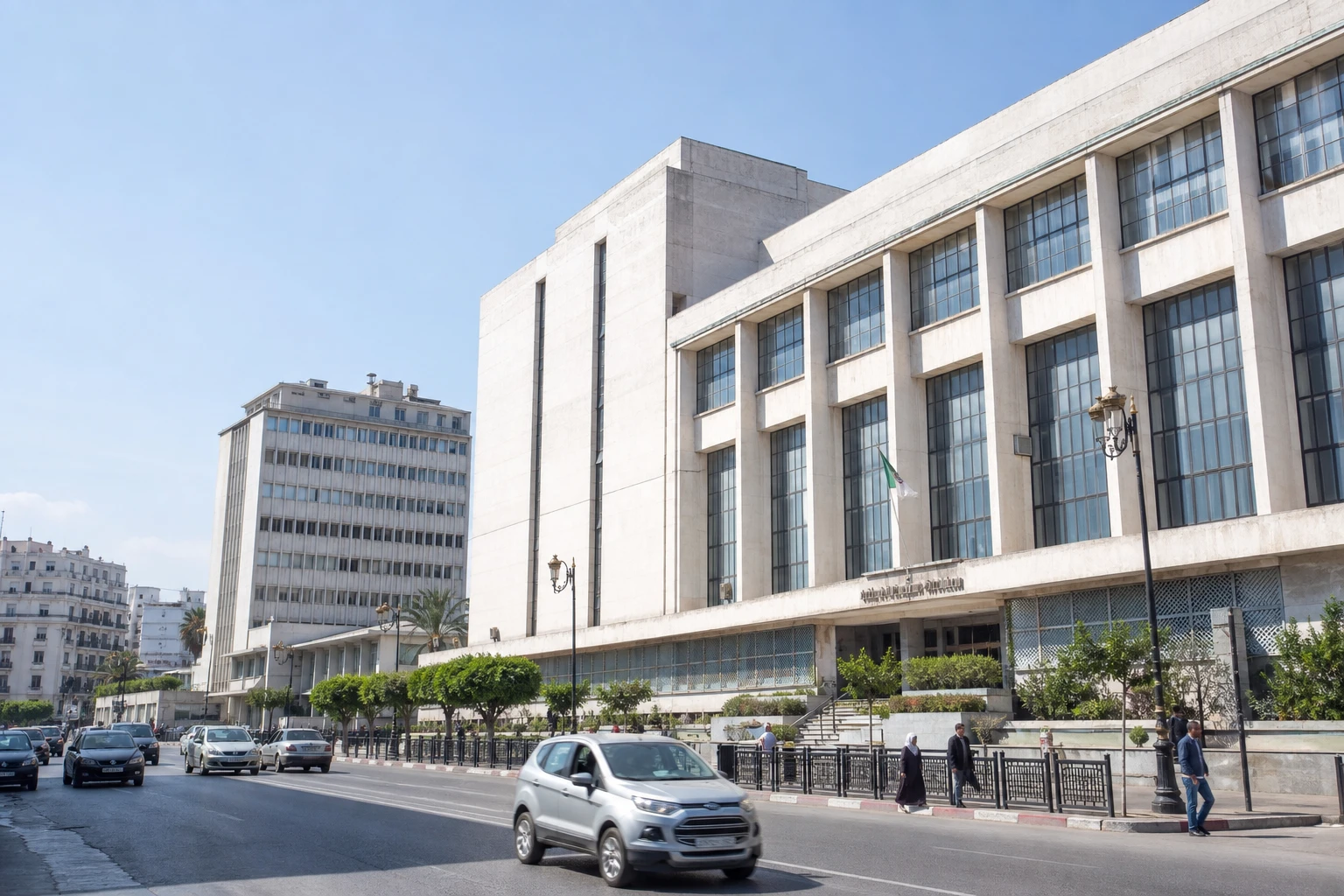
In Algiers, a fire at a centre for children has brought home a simple truth: the safety of social care facilities depends not only on emergency response, but also on daily maintenance, inspections and risk preparedness. In a capital where public services serve a large share of the population and institutions are concentrated, every incident of this kind immediately takes on national significance.
The tragedy struck the Mohammadia Establishment for Assisted Childhood, in eastern Algiers. The confirmed toll on Thursday 16 July 2026 was 11 dead and 19 injured. Emergency crews put out the fire in the morning, while several people were taken to Mustapha-Pacha Hospital for immediate treatment.
A capital on edge as July fires take hold
National mourning goes beyond grief. It comes as Algeria endures a spell of extreme heat. The National Meteorological Office has placed several northern wilayas under red alert, with temperatures that could reach or exceed 48 degrees. Meanwhile, Civil Protection said it had put out 913 fires across the country since 8 July.
This context gives the Mohammadia fire wider significance. In summer, heat, drought and winds make it harder to protect buildings, forests and public facilities. The authorities have deployed substantial human and material resources, showing the scale of pressure on emergency services. But it also highlights another reality: prevention becomes crucial when temperatures soar and the urban fabric remains exposed to multiple fire outbreaks.
The government’s decision to attend the funerals and then visit the injured reflects the event’s political and social gravity. Prime Minister Sifi Ghrieb, accompanied by members of the government, attended the burial of the victims at Sidi Rzine cemetery in Baraki, in the south-eastern suburbs of Algiers. The presidency also offered its condolences as soon as the tragedy was announced.
The facts, then the question of responsibility
According to the first information made public, the fire broke out at dawn on Thursday 16 July in the municipality of Mohammadia. The cause of the blaze was not yet known when the first official information was released. Witnesses described a difficult intervention, with firefighters forced to cut through metal bars to reach people trapped inside. For now, these are accounts gathered in the immediate aftermath, not the findings of an investigation.
The head of the forensic medicine department at Mustapha-Bacha Hospital said several bodies had been completely charred, making DNA analysis necessary for identification. President Abdelmadjid Tebboune confirmed that several children were among the victims. Precision matters here too: in this kind of tragedy, identification is not merely an administrative matter, but also a question of respect for families.
The facility itself is another concern. A care centre for children in state care houses particularly vulnerable people. Fire safety, emergency exits, accessible windows, the condition of electrical installations and the presence of alert systems are therefore not technical details. They determine whether lives can be saved when every minute counts.
In a large city such as Algiers, the question extends beyond the building affected. It concerns the entire chain of responsibility: the facility’s management, technical inspections, Civil Protection, social services, local authorities and central administration. In Algeria, where the state remains the main player in managing public and semi-public facilities, every apparent failure also becomes a matter of institutional trust.
What this tragedy says about Algeria today
The country is confronting two realities at once. On the one hand, climate risks and fires are increasing during the summer. On the other, some social care facilities are vulnerable, housing children or people dependent on public services functioning properly. When these two weaknesses converge, the human consequences are immediate.
For families, the immediate priorities are identifying the victims, caring for the injured and providing transparency about the circumstances. For the authorities, the task is different: to establish quickly whether this was a technical accident, structural negligence or a deliberate act. The authorities have not ruled out a criminal origin for some fires elsewhere in the country at the present time, but that possibility must be distinguished from the specific case of Mohammadia unless and until an investigation reaches a conclusion.
Socially, the shock is all the greater because the victims belonged to a defenceless group. This kind of tragedy affects Algerian society beyond the victims’ circle of family and friends. It is a reminder that the quality of care facilities, maintenance and monitoring are not secondary issues. In a capital such as Algiers, they determine the credibility of public action.
Regionally, the Mohammadia fire is part of a pattern also seen in many countries around the Mediterranean: heatwaves, multiple fire outbreaks, pressure on emergency services and the need to anticipate events rather than simply respond to them. In North Africa, where extreme weather events are recurring, the challenge extends beyond Algeria. It concerns the preparedness of cities, social institutions and alert systems. That is where part of collective security is shaped, quietly but tangibly.