
 Egypt
 Libya
 Morocco
 Sudan
 Tunisia
 Benin
 Burkina Faso
 Cabo Verde
 Côte d'Ivoire
 Ghana
 Guinea
 Guinea-Bissau
 Liberia
 Mali
 Mauritania
 Niger
 Nigeria
 Senegal
 Sierra Leone
 The Gambia
 Togo
 Cameroon
 Central African Republic
 Chad
 DR Congo
 Equatorial Guinea
 Gabon
 Republic of the Congo
 São Tomé and Príncipe
 Burundi
 Comoros
 Djibouti
 Eritrea
 Ethiopia
 Kenya
 Madagascar
 Malawi
 Mauritius
 Mozambique
 Rwanda
 Seychelles
 Somalia
 South Sudan
 Tanzania
 Uganda
 Angola
 Botswana
 Eswatini
 Lesotho
 Namibia
 South Africa
 Zambia
 Zimbabwe
When Algiers talks investment, Washington also listens for energy
In Algeria, diplomatic discussions are increasingly viewed through the lens of the real economy. For Algiers, the challenge is not simply to project a balanced relationship with the United States, but to turn that relationship into visible projects in energy, mining and industry. This comes as Algeria seeks to diversify its partners without abandoning its commitment to strategic independence.
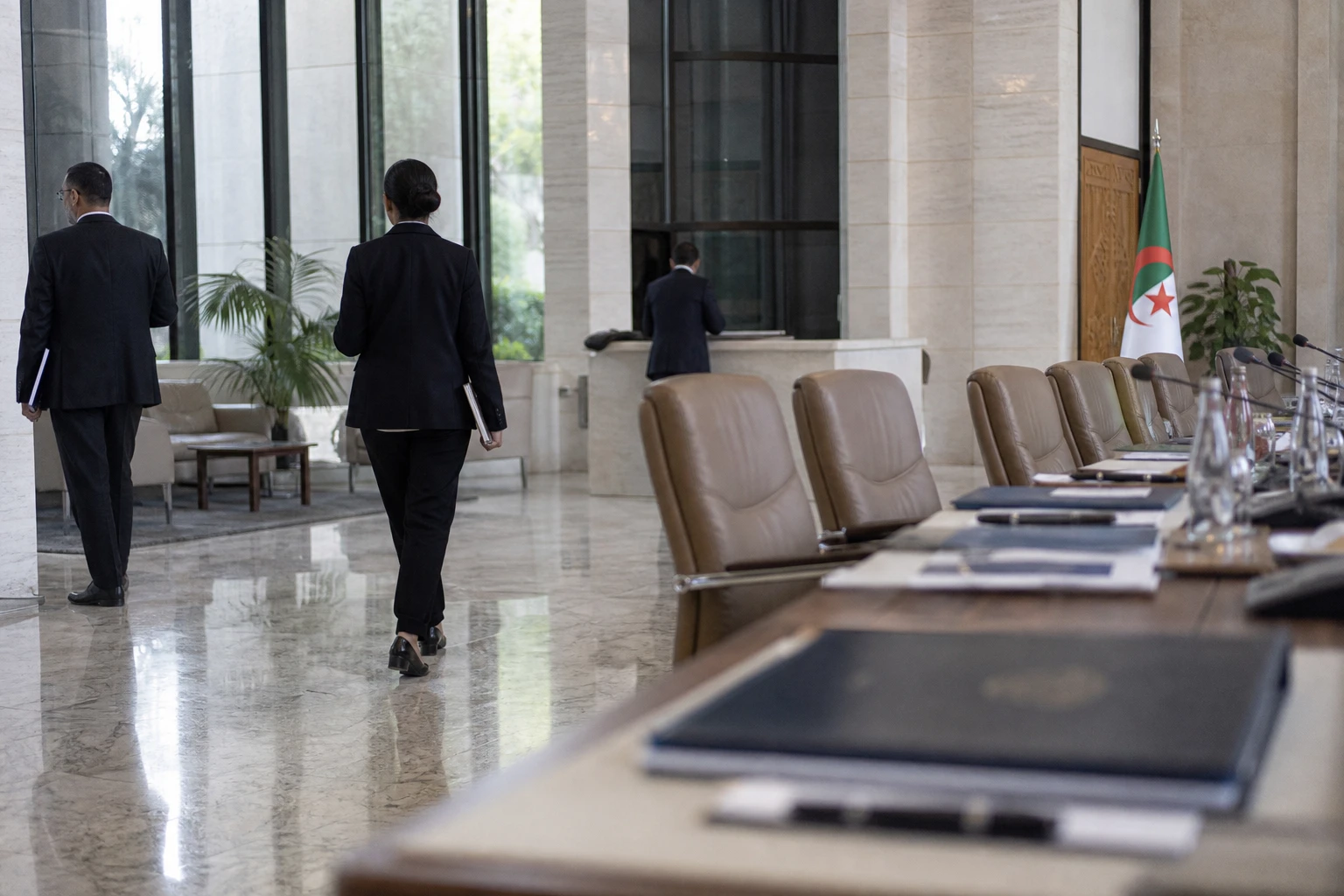
On 27 January 2026 in Algiers, President Abdelmadjid Tebboune received Massad Boulos, the US president’s senior adviser for Africa, Arab affairs and the Middle East. The US side described the meeting as a “fruitful” exchange focused on security, the economy and energy. The visit also included meetings with the prime minister and Ahmed Attaf, Minister of State and Minister for Foreign Affairs, the National Community Abroad and African Affairs.
A longstanding relationship, now more commercial
Algerian-US dialogue is not starting from scratch. For several years, Washington has said it supports the diversification of Algeria’s economy, the transition to renewable energy and a more predictable investment climate. Algiers, for its part, has sent a growing number of signals of openness to major companies and partners able to bring capital, technology and market access.
This shift also reflects regional considerations. Algeria remains a key player in the African Union, the Sahel-Sahara file and the Western Sahara question. Algiers’s exchanges with Washington therefore extend beyond energy. They also concern the stability of its immediate neighbourhood, from Libya to the Sahel. This context matters in Washington, but first and foremost in Algiers, which wants to prevent economic cooperation from being detached from its diplomatic positions.
Another factor behind US interest is the reform of Algeria’s investment regime. The State Department notes that the Algerian authorities are encouraging US companies to explore opportunities in agriculture, technology, mining, hydrocarbons, renewable energy and healthcare. This list sets out the practical scope of a partnership intended to go beyond diplomatic rhetoric alone.
The facts: security, minerals and energy at the heart of talks
In Algiers, Massad Boulos met Abdelmadjid Tebboune, followed by Ahmed Attaf. Discussions covered bilateral relations, regional priorities and ways to strengthen security and economic cooperation. The US official also stressed his country’s interest in opportunities for US companies operating in Algeria or considering investing there.
Energy featured prominently. Boulos announced discussions with Sonatrach officials on developing the energy partnership. This interest is not isolated. A few days earlier, Algeria’s Minister of Hydrocarbons had received a delegation from US company KBR to examine ways to strengthen cooperation. Taken together, these developments confirm that the energy sector remains the most immediately actionable pillar of the rapprochement.
Minerals were also central to the discussions. In April 2026, during US Deputy Secretary of State Christopher Landau’s visit to Algiers, the two countries discussed partnerships in mineral resources, particularly strategic and critical minerals. The issue has taken on added significance since the United States published its new list of critical minerals in November 2025, which includes phosphate. Phosphate is used in fertilisers, and therefore in food security, and is now among the materials Washington considers sensitive for its supply chains.
For Algeria, the issue is a tangible one. The integrated phosphate project at Bled El Hadba, in Tébessa, is moving forward in stages. The authorities accelerated work in spring 2026 in preparation for extraction, while the phosphoric acid plant is expected to come into operation towards the end of 2026 or the beginning of 2027. The Bled El Hadba deposit is regularly presented as one of the country’s major assets for adding value to raw materials locally.
What this means for Algiers, Tébessa and the region
Politically, Algiers is seeking to widen its room for manoeuvre. Algeria does not want to depend on a single power centre, either in energy or diplomacy. Strengthening ties with Washington therefore serves several purposes at once: attracting investors, securing industrial markets and showing that the country can engage with major capitals without moving into their orbit. This stance is consistent with Algeria’s tradition of diplomatic autonomy, strongly reflected in its approach to non-alignment and regional balances.
The economic stakes are even clearer. Algeria wants to move away from excessive dependence on hydrocarbons. In this context, mining, petrochemicals, fertilisers and energy-related services are becoming drivers of growth. If US companies establish a presence in these sectors, the expected impact will be more than financial. It will also affect logistics chains, skilled jobs and the development of industrial expertise, particularly in eastern wilayas such as Tébessa, where residents and local authorities are following the phosphate project closely.
But the distribution of the benefits remains a sensitive issue. In Tébessa, concerns over land compensation and local employment have already been raised by the industrial bodies involved. This is a reminder that a major mining project is about more than investment figures. It also entails social, territorial and environmental trade-offs. For local communities, the question is simple: will the project create lasting economic activity, or just another construction site?
A development to watch beyond Algiers and Washington
The visit confirms a broader trend in North Africa: raw materials, security and industry are no longer treated as separate issues. The United States is seeking stable supplies of minerals it considers critical; Algeria, for its part, is looking for partners able to support local industrial upgrading. There is common ground, but progress will depend on both sides’ ability to turn announcements into contracts, then factories, and ultimately exports.
At continental level, the issue goes beyond bilateral relations. It illustrates growing competition over Africa’s strategic minerals, at a time when the African Union is pushing for more value to be captured on the continent. With its reserves, Mediterranean position and active diplomacy in the Sahel, Algeria could play a greater role in this debate if it manages to industrialise its resources at home rather than exporting them only as raw materials. That is where the real significance of the rapprochement with Washington will be decided.



