Egypt
 Libya
 Morocco
 Sudan
 Tunisia
 Benin
 Burkina Faso
 Cabo Verde
 Côte d'Ivoire
 Ghana
 Guinea
 Guinea-Bissau
 Liberia
 Mali
 Mauritania
 Niger
 Nigeria
 Senegal
 Sierra Leone
 The Gambia
 Togo
 Cameroon
 Central African Republic
 Chad
 DR Congo
 Equatorial Guinea
 Gabon
 Republic of the Congo
 São Tomé and Príncipe
 Burundi
 Comoros
 Djibouti
 Eritrea
 Ethiopia
 Kenya
 Madagascar
 Malawi
 Mauritius
 Mozambique
 Rwanda
 Seychelles
 Somalia
 South Sudan
 Tanzania
 Uganda
 Angola
 Botswana
 Eswatini
 Lesotho
 Namibia
 South Africa
 Zambia
 Zimbabwe
When the network is overloaded, the issue is no longer merely technical
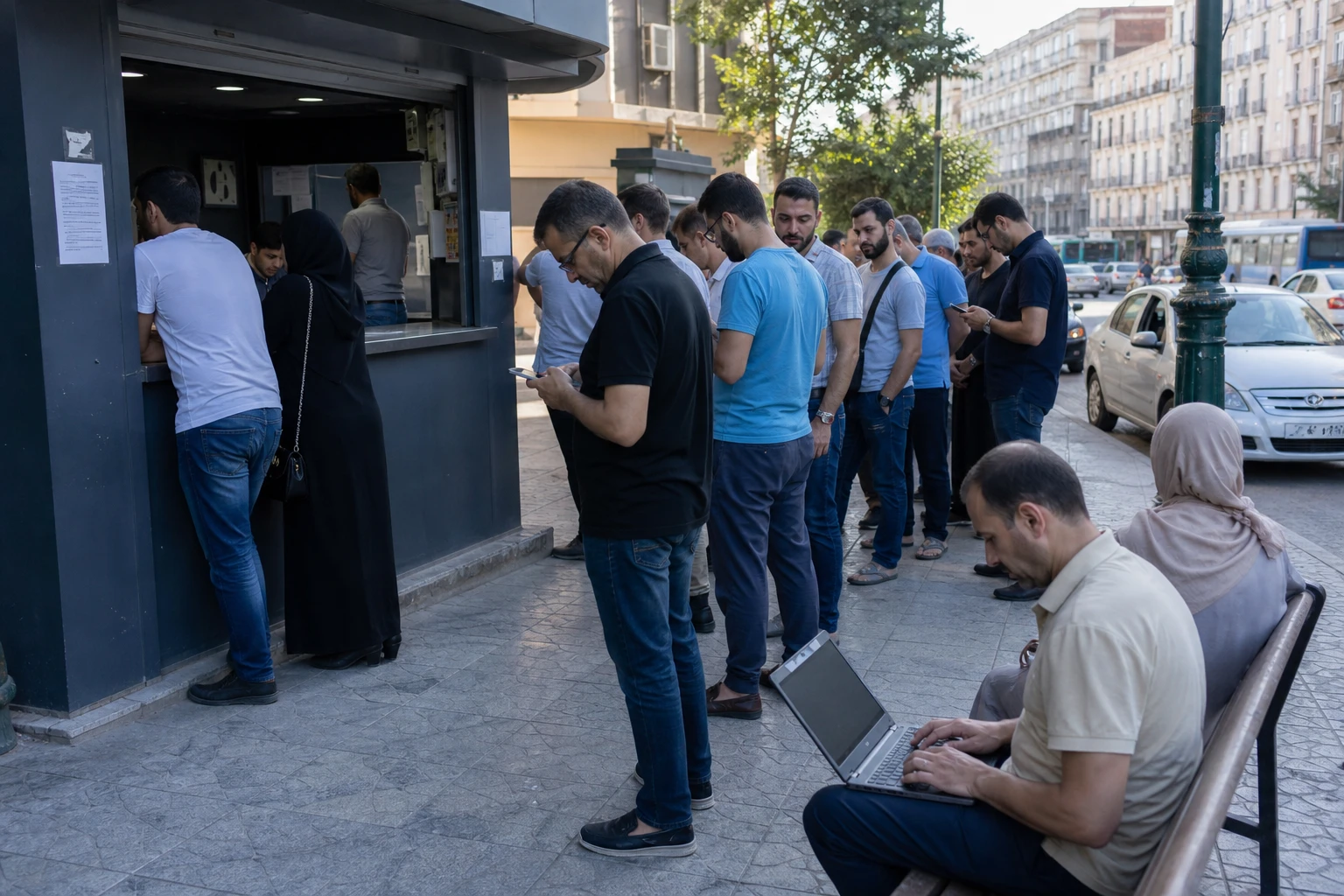
In a country where millions of Algerians use mobile services every day to work, pay, learn or communicate, network quality has become a public service issue. The challenge is no longer simply to cover more territory. Above all, networks must cope with demand, prevent outages and absorb increasingly heavy spikes in consumption. It is in this context that artificial intelligence is taking on a new role in Algeria’s telecommunications sector.
The debate is also part of a broader national trend. In May 2026, the Algerian government examined a draft national artificial intelligence strategy, while the country continues to roll out public digital services. In other words, AI is no longer confined to laboratories. It is entering management tools, networks and everyday use.
Heavily used networks, a more demanding regulator
The figures illustrate the pressure. At the end of September 2025, Algeria had 55.94 million mobile telephone subscriptions, according to the Regulatory Authority for Post and Electronic Communications, the ARPCE. The market is dominated by 4G, with 50.09 million subscribers, or 89.56% of the total. Average monthly traffic per subscriber has also risen. It increased from 8.72 gigabits in the third quarter of 2024 to 10.13 gigabits a year later.
This rising demand explains the growing interest in systems that can read early warning signs before an outage occurs. APS reports that Abdelmalek Bachir, director of the National Higher School of Artificial Intelligence, now sees cooperation with the telecoms sector extending beyond training alone. The aim is more practical: to use AI to improve network monitoring, anticipate congestion and allocate resources more effectively.
The regulator is not waiting for operators to put things right on their own. On 23 October 2024, the ARPCE imposed financial penalties totalling 1,053,325,166.30 dinars on the country’s three mobile operators, Mobilis, Djezzy and Ooredoo, after identifying breaches relating to coverage and quality of service. The message is clear: quality is not a matter of marketing rhetoric, but of monitored obligations.
AI, from fixing problems after the fact to anticipating them
In telecommunications, AI’s main contribution is speed of processing. Networks generate thousands of data points every minute. Equipment temperature, antenna load, traffic by area, peak times, recurring incidents: all of this can be analysed to identify correlations invisible to the human eye. Instead of waiting for an outage to occur, an operator can identify a deviation and intervene before a breakdown. This is a change in approach, not just a technological gimmick.
The same logic applies to congestion. AI can identify periods of strain linked to holidays, sporting events, tourist seasons, accidents or local disruptions. In a country as vast as Algeria, where usage is highly concentrated in certain cities and along certain routes, this fine-tuning can make the difference between a stable connection and a degraded experience. Subscribers benefit from a more reliable service. Businesses, meanwhile, reduce the interruptions that disrupt payments, remote meetings, sales and cloud exchanges.
This shift also affects public administration. The more public services move online, the more network quality becomes a condition for the digital state to function. A slow or unstable platform does not inconvenience only an individual. It also slows procedures, the flow of data and confidence in online services. The issue is therefore economic, but also institutional.
What this means for operators and users
For Algerian operators, AI requires a higher level of expertise. It is no longer enough to install more antennas or buy equipment. They must also know how to use data, train teams, clean datasets, secure systems and align technical operations with commercial needs. In this context, the National Higher School of Artificial Intelligence plays a useful role. It can supply professionals able to work at the intersection of algorithms, data and digital infrastructure.
For users, the expected change is easy to describe: fewer disconnections, less slowness and greater continuity of service. But the effect will not be the same everywhere. Large cities, with their higher population density and greater data consumption, feel congestion acutely. Remote areas, by contrast, are mainly looking for more consistent coverage and faster repairs. AI therefore does not replace investment in infrastructure or network expansion. It helps make better use of what is already there.
The economic context also matters. With mobile traffic exceeding 1.63 billion gigabits over three months, Algeria is entering a phase in which quality of service is becoming a factor in competitiveness. A reliable connection supports digital commerce, financial services, professional exchanges and new consumer habits. Poor quality, by contrast, fuels distrust and raises the real cost of digital transformation.
An Algerian development, but a North African signal
The Algerian case extends beyond its borders. Across North Africa, operators face the same challenge: supporting data growth without allowing quality to deteriorate. Algeria offers an interesting combination. The regulator imposes penalties, the state is driving digital strategy, and specialist schools are beginning to supply the sector with skilled professionals. This alignment of enforcement, planning and training matters as much as the technology itself.
At continental level, the issue also speaks to digital sovereignty. Several African countries are seeking to reduce their dependence on imported solutions and make better use of their own talent. In Algeria, the application of AI to telecommunications illustrates this shift: less show, more optimisation, more data and greater responsibility for public and private players. The next point to watch will be whether operators can turn this promise into visible results on the ground, as 5G use, cloud computing and digital services become part of the landscape.