Algeria
 Egypt
 Libya
 Morocco
 Sudan
 Tunisia
 Benin
 Burkina Faso
 Cabo Verde
 Côte d'Ivoire
 Ghana
 Guinea
 Guinea-Bissau
 Liberia
 Mali
 Mauritania
 Nigeria
 Senegal
 Sierra Leone
 The Gambia
 Togo
 Cameroon
 Central African Republic
 Chad
 DR Congo
 Equatorial Guinea
 Gabon
 Republic of the Congo
 São Tomé and Príncipe
 Burundi
 Comoros
 Djibouti
 Eritrea
 Ethiopia
 Kenya
 Madagascar
 Malawi
 Mauritius
 Mozambique
 Rwanda
 Seychelles
 Somalia
 South Sudan
 Tanzania
 Uganda
 Angola
 Botswana
 Eswatini
 Lesotho
 Namibia
 South Africa
 Zambia
 Zimbabwe
In Agadez, Arlit and Tchirozérine, access to essential services still depends on a fragile balance. A power cut can slow water pumps, disrupt businesses and complicate the supply of gas or fuel. In this region of northern Niger, residents are now asking for more than occasional repairs: a lasting solution.
A problem that goes beyond power cuts
For several weeks, the region’s main cities have faced simultaneous difficulties. Electricity is unavailable at times. Drinking water does not reach some neighbourhoods regularly. Domestic gas and fuel are also becoming harder to find.
This accumulation of problems turns a technical fault into a social issue. Households sometimes have to change their schedules, store water or look for gas at other outlets. Small businesses, meanwhile, are directly affected by the power cuts.
Products kept in cold storage can spoil. Workshops that use machinery cut back on activity. Drinks sellers, restaurant owners and craftspeople lose working hours. In an economy where informal activity plays a major role, every interruption quickly affects incomes.
“During this rainy period, there are a lot of mosquitoes, and when there is no electricity and no fans moving the air, it is unbearable,” said Barka Alhassane, president of the Collective of Civil Society Organisations of the Agadez region. He also warned of losses for traders and reduced output among small operators.
An electricity network under pressure
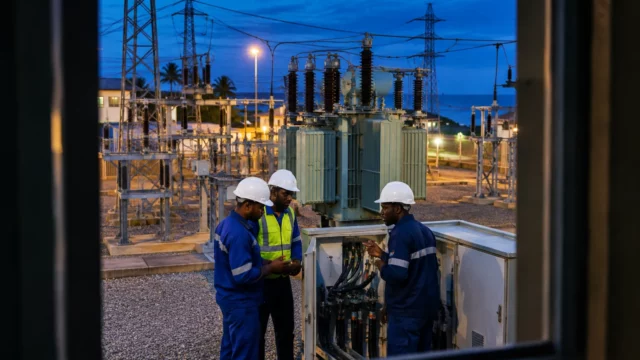
The northern region is largely supplied by the Société nigérienne du charbon, SONICHAR. Based in Anou Araren, near Tchirozérine, the company mines coal to generate electricity for the cities of Agadez, Arlit and Tchirozérine, as well as for mining activities.
The system remains vulnerable, however. A joint bulletin from the National Directorate of Meteorology and the World Food Programme says the northern zone has installed capacity of 36 megawatts, while demand can reach 50 megawatts. Demand from the three main cities served by NIGELEC is estimated at about 20 megawatts.
NIGELEC, the state-owned electricity distribution company, must therefore manage a lasting gap between available generation and demand. Ageing infrastructure makes the strain worse. SONICHAR operates equipment that was commissioned several decades ago, according to regional officials and Nigerien technical documents.
In June 2025, the governor of the Agadez region said that the cities of Agadez, Tchirozérine and Arlit were receiving about 7 megawatts against demand of more than 17 megawatts. He also reported that more than 7,400 new connections had been added since the start of the year. Demand is therefore growing faster than the network’s capacity.
Severe weather can make the situation worse still. In August 2025, several electricity poles fell on the road linking Arlit and Tchirozérine, cutting off power to Arlit for several days. NIGELEC and SONICHAR then mobilised their teams to restore service.
Water also depends on electricity
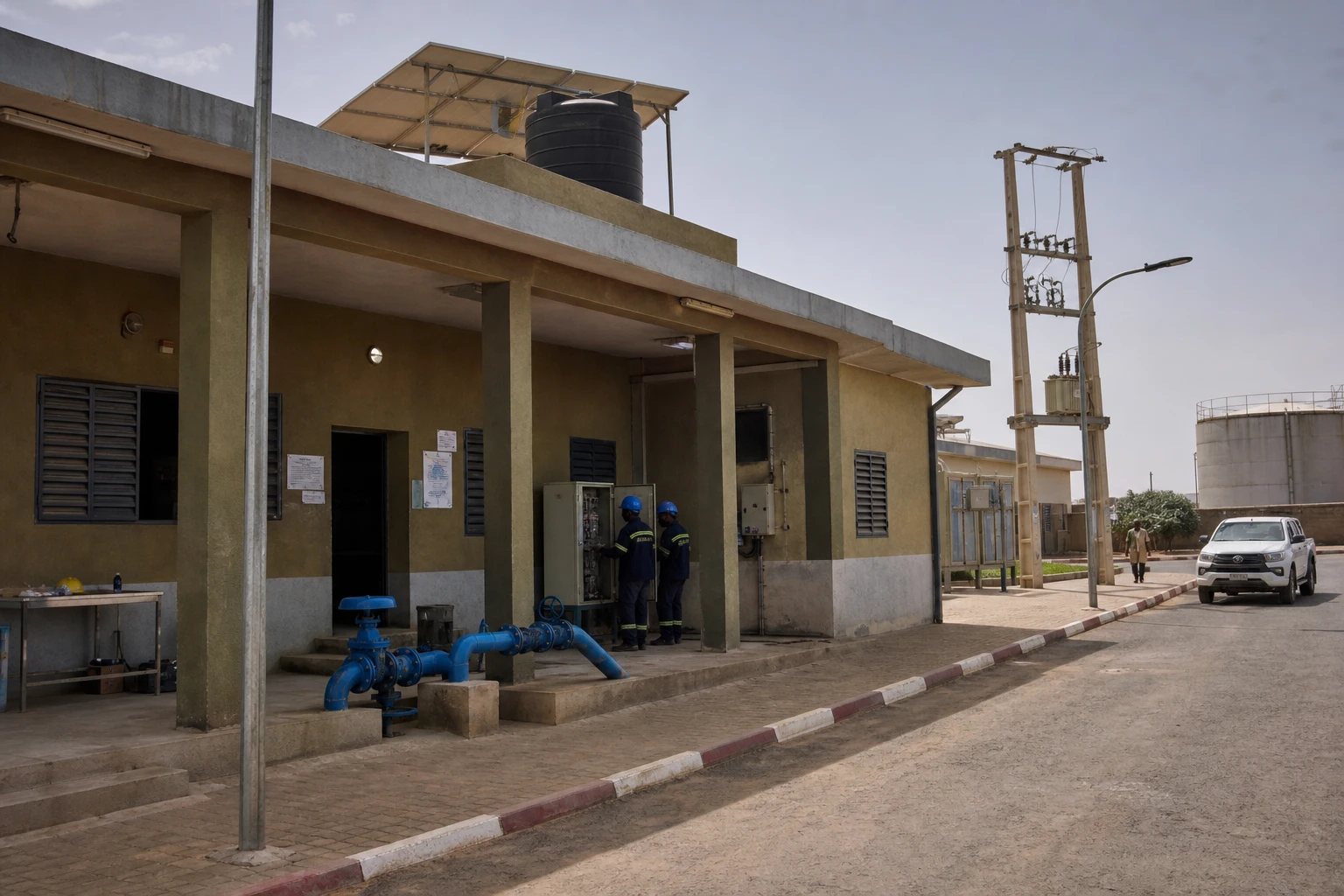
The energy crisis has a direct impact on water supplies. Pumping stations need a regular power supply. When the electricity stops, restarting the facilities can take time, especially when equipment is far from urban centres.
According to the Regional Directorate of Hydraulics and Sanitation, daily production in Agadez is about 19,500 cubic metres, against estimated demand of 25,000 cubic metres. In Arlit, production is estimated at 5,200 cubic metres a day, compared with demand of nearly 12,000 cubic metres.
These figures point to a structural shortfall, not a simple local fault. They explain why some neighbourhoods can go several days with reduced supply. In January 2025, civil society in Agadez had already reported disruptions linked to a pump failure at the Afara station and delays in starting a generator.
The situation is not uniform, however. Urban centres have organised networks, while rural areas depend more on boreholes, stand-alone water points and pastoral pumping stations. A breakdown can therefore have very different effects depending on distance, household incomes and the availability of alternatives.
Gas and fuel: another fragile supply chain
Supply difficulties are not limited to electricity and water. Domestic gas is also sometimes in short supply in the cities of Agadez and Arlit. In June 2026, regional authorities condemned the concealment of stocks, resale at prices above the official rate and the diversion of cylinders to gold-mining or market-gardening sites.
Fuel is also under pressure. The authorities in Agadez announced tighter inspections at service stations, the creation of emergency stocks and measures to combat speculation. These difficulties affect transport operators, generators, farmers and households that depend on mobility to work or obtain supplies.
In northern Niger, the different services form a single chain. Fuel powers generators. Electricity runs the pumps. Water sustains households, businesses and agricultural activities. A disruption at one point quickly spreads to the others.
A national and regional issue
The response cannot therefore be limited to maintaining a power station or replacing a pump. It requires increased generation, modernised power lines, secured stocks and better coordination between NIGELEC, SONICHAR, the Nigerien Water Company and local authorities.
Niger continues to face limited access to electricity. According to a national energy bulletin, the access rate stood at 21.45% in 2024, with less than 3% in rural areas. The issue in Agadez is therefore part of a national challenge: extending networks while ensuring a regular supply in cities that are already connected.
It is also part of a regional realignment. Niger’s withdrawal from the Economic Community of West African States, ECOWAS, took effect on 29 January 2025, alongside those of Mali and Burkina Faso. This shift makes it necessary to preserve supply routes and technical cooperation through other mechanisms, particularly in a region where exchanges of fuel, equipment and expertise remain essential.
For residents of Agadez, the timing of announcements matters less than the regularity of service. The priority will be to see whether the measures taken produce measurable results: more megawatts available, operational pumps, accessible stocks and better-regulated distribution. Without that, every new breakdown will continue to put both households and the local economy under strain.
Consult the Nigerien bulletin on energy in the Agadez region
Read regional data on access to drinking water
See Agadez officials’ explanation of the electricity shortfall