
 Algeria
 Egypt
 Libya
 Morocco
 Sudan
 Tunisia
 Benin
 Burkina Faso
 Cabo Verde
 Ghana
 Guinea
 Guinea-Bissau
 Liberia
 Mali
 Mauritania
 Niger
 Nigeria
 Senegal
 Sierra Leone
 The Gambia
 Togo
 Cameroon
 Central African Republic
 Chad
 DR Congo
 Equatorial Guinea
 Gabon
 Republic of the Congo
 São Tomé and Príncipe
 Burundi
 Comoros
 Djibouti
 Eritrea
 Ethiopia
 Kenya
 Madagascar
 Malawi
 Mauritius
 Mozambique
 Rwanda
 Seychelles
 Somalia
 South Sudan
 Tanzania
 Uganda
 Angola
 Botswana
 Eswatini
 Lesotho
 Namibia
 South Africa
 Zambia
 Zimbabwe
African football no longer has to wait to be “discovered” in Europe before its players are valued fairly. The sums now changing hands in the transfer market show one thing above all: top clubs are paying more because they are buying players who are ready, already exposed and often already decisive at the highest level.
A more expensive, but also more mature, market
This inflation has not come out of nowhere. The 2026 World Cup, to be held in Canada, Mexico and the United States, will feature 48 teams for the first time, and Africa will send a record contingent of 10 national teams, including Côte d’Ivoire, according to the Confederation of African Football. This additional visibility increases the exposure of players from the continent, and therefore their sporting and commercial value.
Valuation models follow the same logic. The CIES Football Observatory says it estimates a player’s transfer value using an algorithm that takes into account, among other things, the level of the most likely buying club. In other words, the rarer, younger and more accomplished the player, and the more experience he has in a strong league, the higher the price.
Records that say something about Africa
Yan Diomandé’s case illustrates this shift. Real Madrid confirmed on 6 August 2026 that he had joined from RB Leipzig on a seven-year deal, and several media outlets reported a fee of €125 million. The Spanish club did not disclose the cost in its announcement, but the move was widely presented as a major transfer.
Before him, the African record belonged to Bryan Mbeumo. In July 2025, Manchester United paid €81 million for the Cameroon striker, a transfer confirmed by the Premier League and reported by several international outlets. Here again, the message is clear: European clubs are no longer simply buying potential; they are paying for output that is already on display.
The trend also involves other African players. In 2025, a widely cited article on rising fees named Omar Marmoush, Victor Osimhen and Yoane Wissa among the players whose transfers brought African standards closer to those of the leading nationalities in the market. The same article noted that national teams such as Morocco, Senegal, Côte d’Ivoire, Cameroon and Nigeria are now producing highly valued players.
Why European clubs are paying more
There is, first, a sporting reason. Top-five European clubs are more willing to recruit African players already established in competitive leagues because this reduces risk. Journalist Moustapha Diop, quoted in a leading analysis of the African market, points out that age, position, international status and level of exposure matter as much as raw talent.
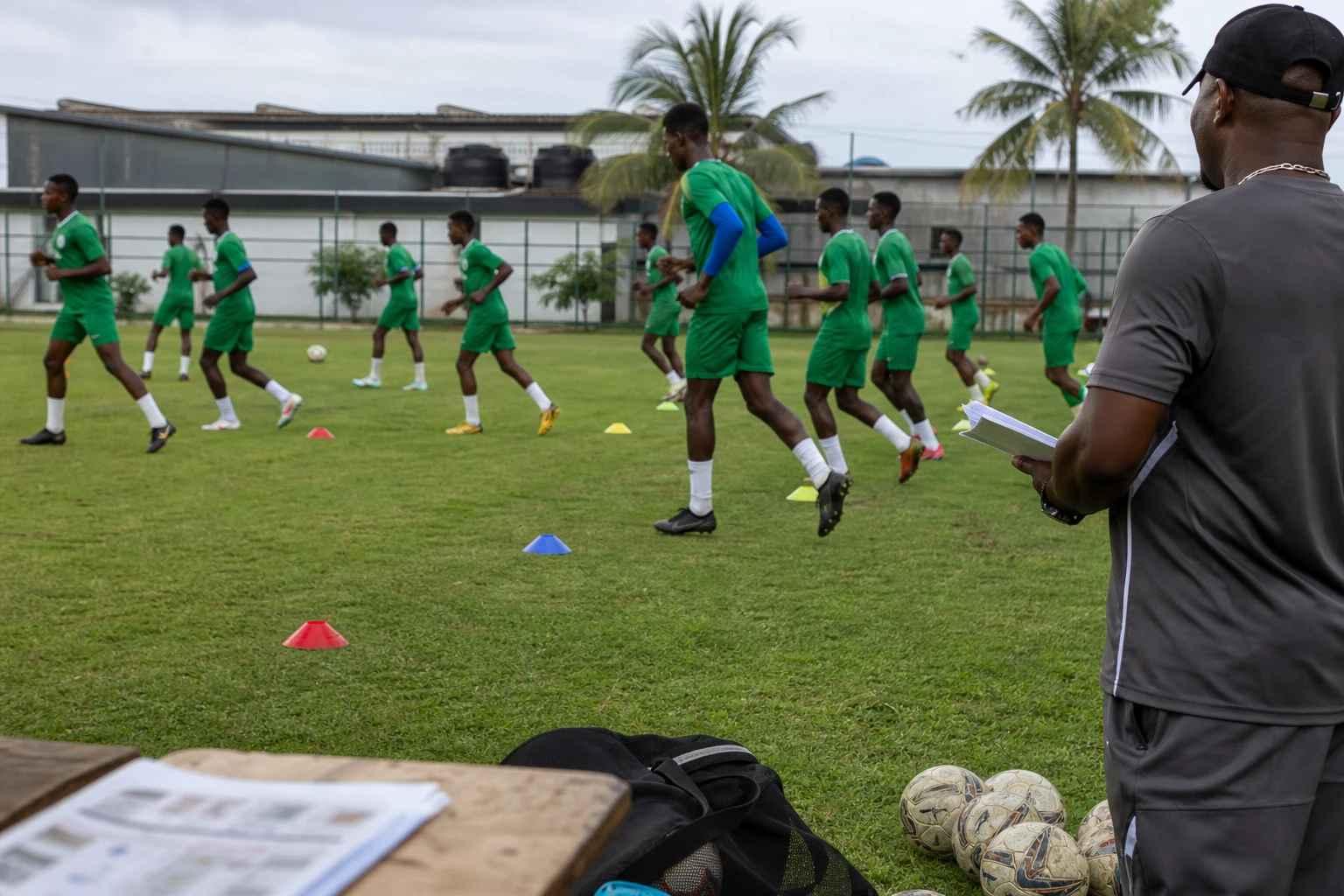
There is also a structural reason. Since the 1990s, African academies have multiplied and become more professional. ASEC Mimosas, in Côte d’Ivoire, is among the institutions cited as having developed players who later moved to Europe. This changes everything: a player from a better-structured academy reaches the standard expected by a buying club more quickly.
Finally, international competitions carry significant weight. A national team that goes far at the World Cup or wins the Africa Cup of Nations, known as the AFCON, gives its players an immediate platform. Scouts no longer look only at technique. They assess the ability to handle pressure, play a run of matches and perform outside the local environment.
What this means for Côte d’Ivoire and the continent
For Côte d’Ivoire, the stakes go beyond the prestige of an individual record. Yamoussoukro, the political capital, is seeing an economic reality confirmed: Ivorian football produces exportable assets. When an Ivorian player crosses the symbolic €100 million mark, the whole chain is viewed differently, from academies and agents to the clubs that develop players.
But local institutions do not automatically benefit from the windfall. Without robust solidarity, training and compensation mechanisms, the value created abroad can escape African clubs. The issue is therefore not just the sale price; it is the ability to retain a share of the value produced. The debate also touches on football governance, from funding training centres to protecting young players.
Across the continent, rising fees confirm that Africa is no longer just a reservoir of talent. It is becoming a centre of sporting production recognised by the biggest markets. One decisive question remains: will this recognition lead to more investment in local leagues, or only to new export records? The next transfer windows and the build-up to the 2026 World Cup will provide an initial answer.



