Egypt
 Libya
 Morocco
 Sudan
 Tunisia
 Benin
 Burkina Faso
 Cabo Verde
 Côte d'Ivoire
 Ghana
 Guinea
 Guinea-Bissau
 Liberia
 Mali
 Mauritania
 Niger
 Nigeria
 Senegal
 Sierra Leone
 The Gambia
 Togo
 Cameroon
 Central African Republic
 Chad
 DR Congo
 Equatorial Guinea
 Gabon
 Republic of the Congo
 São Tomé and Príncipe
 Burundi
 Comoros
 Djibouti
 Eritrea
 Ethiopia
 Kenya
 Madagascar
 Malawi
 Mauritius
 Mozambique
 Rwanda
 Seychelles
 Somalia
 South Sudan
 Tanzania
 Uganda
 Angola
 Botswana
 Eswatini
 Lesotho
 Namibia
 South Africa
 Zambia
 Zimbabwe
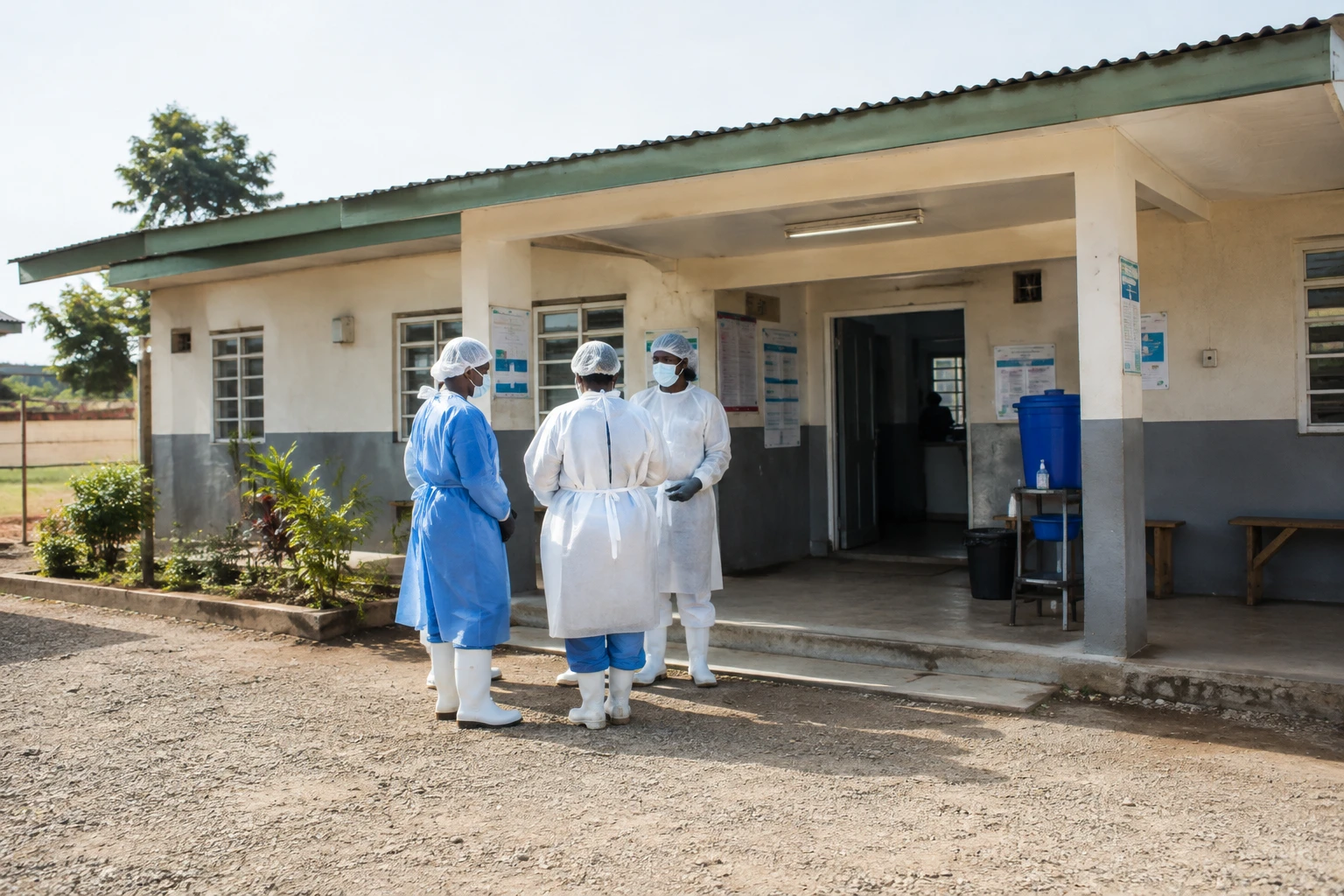
From treatment wards in eastern Democratic Republic of the Congo to markets in Nyala, this week’s news highlights two challenges facing African states: protecting their populations and enabling institutions to act amid deep tensions.
An epidemic tests Congolese health services
In the Democratic Republic of the Congo (DRC), the Ebola epidemic has surpassed 10,000 confirmed cases. The tally released by the Ministry of Health as of 25 October recorded 10,060 cases and 4,887 deaths. The epidemiological report published in the DRC places the main outbreaks in the provinces of North Kivu, Ituri and Tshopo.
In late October, the authorities reported 96 new cases, including 58 in North Kivu and 32 in Ituri. In these eastern provinces, population movements, difficulty accessing some areas and pressure on health facilities are complicating the monitoring of patients and their contacts.
There was, however, an encouraging sign from Ituri province. For the first time since May, MSF’s facility in Mongbwalu had no confirmed patients. While this does not mean the epidemic is over, the good news is a reminder that treatment, rapid detection and trust between health teams and communities can deliver results.
For Kinshasa, the challenge is to maintain surveillance and treatment on a large scale across several provinces at once. For residents, the priority is to be able to reach a centre quickly, receive clear information and ensure fear or rumours do not deter people from seeking care.
In Darfur, a market at the heart of civilian life is hit
In Nyala, the capital of South Darfur, a drone strike attributed to the Sudanese army hit a market on Monday 26 October. The Sudanese NGO Emergency Lawyers reported 102 deaths and 113 injuries. Médecins Sans Frontières said its teams had faced a surge of wounded people after the attack.
Nyala is controlled by the Rapid Support Forces, which have been fighting the regular army since April 2023. The conflict in Sudan is taking its toll far beyond the front lines. It disrupts trade, undermines access to healthcare and drives people to flee to neighbouring countries. For the people of Darfur, the collapse of security also affects markets, essential sources of supplies and income. Aid organisations and local human rights networks remain among the few actors able to document the immediate consequences.
Algiers and Niamey open a new security chapter
On 25 October, both chambers of the Algerian parliament approved the deployment of army units to Niger, at the request of President Abdelmadjid Tebboune. It is the first mission of Algerian soldiers abroad since 1973. The authorities have not made all operational details public, including the size and duration of the mission.
The decision follows the signing of a military cooperation agreement between Algiers and Niamey. Relations between the two neighbours have warmed recently after a period of tension. Niger, governed by the authorities who came to power in the July 2023 coup, is at the centre of regional realignments: along with Mali and Burkina Faso, it has left ECOWAS, the West African organisation tasked, among other things, with facilitating economic and political cooperation.
Algeria, which shares a long border with Niger, also has security interests in the region. The mission could therefore affect counter-terrorism cooperation and the protection of strategic projects. But its exact scope remains to be clarified. The deployment raises a broader question: how are Sahelian states and their neighbours organising their security as regional frameworks fragment and partnerships shift?
Moscow seeks to strengthen its partnerships with the continent
The third Russia-Africa summit was held in Moscow on 28 and 29 October. The African Union says 48 African countries took part. AU Commission Chairperson Mahmoud Ali Youssouf called for fairer representation of the continent on the United Nations Security Council, in line with common African positions. The African Union’s statement at the summit highlights this call to reform global governance.
Moscow presents its relations with African countries as a partnership between sovereign states. African governments, for their part, are seeking to diversify their diplomatic, trade and security ties. This does not mean their interests are identical, nor that announced commitments will produce tangible results everywhere. The outcome will depend on the agreements reached, their funding and their implementation.
The summit took place in a particular context, with several African countries reporting cases of their nationals being recruited to fight in the Russian army in Ukraine. Estimates of the number of men involved vary widely and have not been confirmed by independent official data. In Tunisia, families have appealed to the authorities over the fate of relatives who went to study in Moscow and have since lost contact with them. According to a Tunisian association, around ten Tunisian nationals were allegedly forcibly recruited into the Russian army on the Ukrainian front.
In Dakar, the budget exposes political tensions
In Senegal, the 2026 supplementary finance bill has been challenged by MPs from Pastef, the majority party in the National Assembly. The finance committee rejected it on 23 October. Prime Minister Ahmadou Alhaminou Mohamed Lô nevertheless said he believed an agreement was possible. Consideration of the bill was postponed until 27 October.
The debate concerns spending and financing choices, but also parliamentary oversight. Its outcome matters for the conduct of public policy and the preparation of state spending. The next stage of discussions will show whether the government and the parliamentary majority can reach an understanding, or whether the disagreement turns into a more lasting impasse.
From Kinshasa to Dakar, and from Niamey to Khartoum, the issues differ, but one question runs through this sequence: who decides, with what resources, and who bears the consequences? The next steps will be tangible: the course of Ebola cases, humanitarian access to Darfur, details of the Algerian mission and consideration of Senegal’s budget. In Moscow, the AU will also need to assess whether diplomatic commitments translate into cooperation that meets the priorities expressed by African states.