Algeria
 Egypt
 Libya
 Morocco
 Sudan
 Tunisia
 Benin
 Burkina Faso
 Cabo Verde
 Côte d'Ivoire
 Ghana
 Guinea
 Guinea-Bissau
 Liberia
 Mali
 Mauritania
 Niger
 Nigeria
 Senegal
 Sierra Leone
 The Gambia
 Togo
 Cameroon
 Central African Republic
 Chad
 DR Congo
 Equatorial Guinea
 Gabon
 Republic of the Congo
 São Tomé and Príncipe
 Burundi
 Comoros
 Djibouti
 Eritrea
 Ethiopia
 Kenya
 Madagascar
 Malawi
 Mauritius
 Mozambique
 Rwanda
 Seychelles
 Somalia
 South Sudan
 Tanzania
 Uganda
 Angola
 Botswana
 Eswatini
 Lesotho
 Namibia
 South Africa
 Zambia
 Zimbabwe
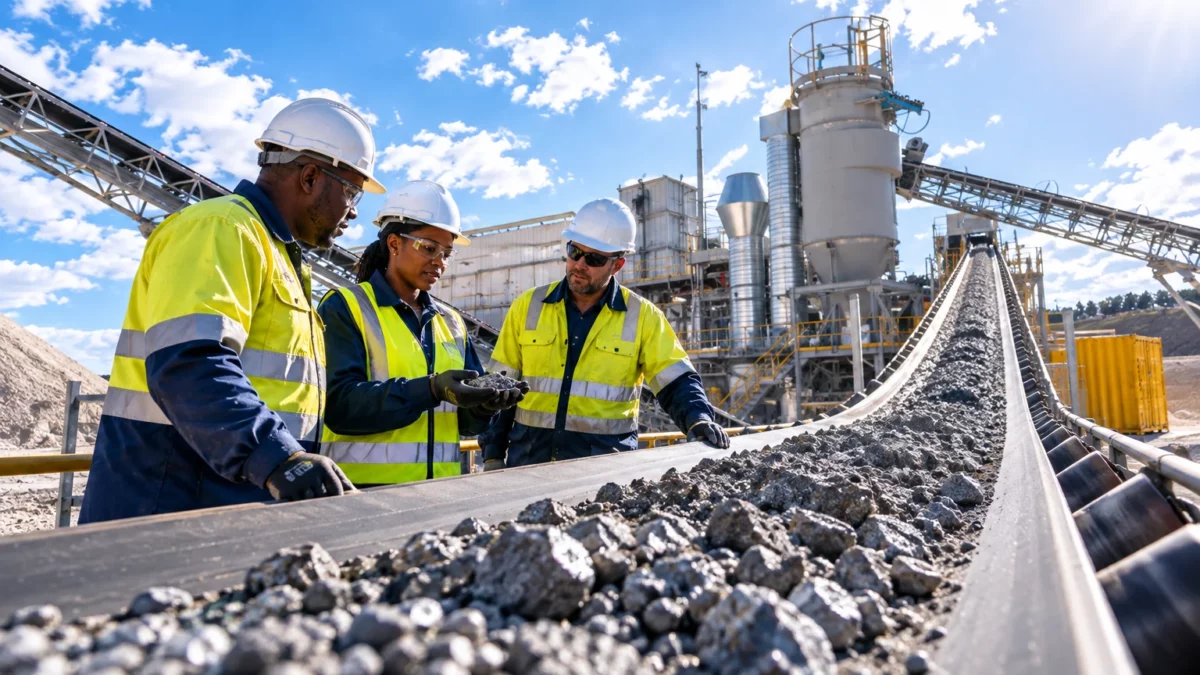
Mining finance can open a mine. It can also help build factories, skills and jobs in producer countries. The new agreement between South Africa and the European Investment Bank (EIB) will be judged against this second promise.
European credit, South African intermediary
Signed on 26 November 2026, the mechanism provides for up to €300 million, or about 5.8 billion rand, to be lent to the Industrial Development Corporation (IDC), South Africa’s public development finance institution. The IDC will then be able to direct the funds towards critical minerals projects in South Africa and other sub-Saharan African countries. The two institutions expect the operation could help mobilise about €900 million in total by attracting further investment.
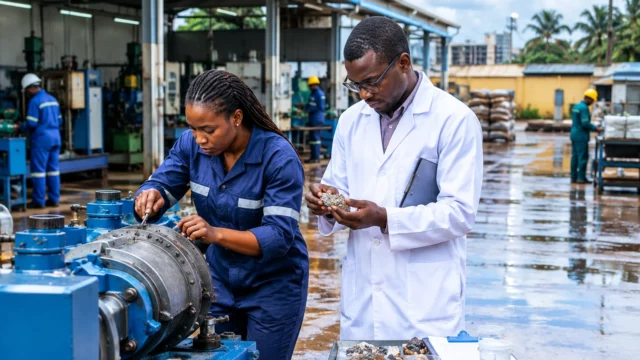
The facility covers several stages: extraction, processing, refining, recycling and mineral substitution. It can also finance necessary infrastructure, particularly in energy, transport and digital services. The agreement therefore promises more than capital for digging or extraction. It also targets industrial activities located closer to the resources.
Projects will, however, have to meet specific criteria. They will need to comply with environmental and social standards and demonstrate a link to European value chains. The EIB says this is its first operation outside the European Union focused on these chains since the launch of its critical raw materials initiative in 2025.
African challenge: more processing at home
The potential is considerable, but reserves alone do not guarantee local benefits. The United Nations Economic Commission for Africa estimates that the continent holds nearly 30% of the world’s critical mineral reserves. Yet the central issue remains the share of added value retained in producer economies: processing, refining and manufacturing components require capital, reliable electricity, water, skills and markets.
These needs vary from country to country. South Africa, in particular, has an established industrial and mining base. The Democratic Republic of the Congo, in Central Africa, is a major cobalt producer. Zambia, in southern Africa, produces copper, while Botswana is home to the K.Hill manganese project. Regional financing could therefore support different kinds of projects, but its impact will depend on selection criteria and the ability of states to negotiate local benefits.
The agreement also comes amid international competition to secure supplies. The European Union is seeking to diversify its sources of minerals needed for batteries, electricity grids and digital technologies. China, the United States and other partners are also pursuing supply strategies. For African countries, this competition could broaden financing options. It does not, by itself, guarantee technology transfers, lasting jobs or local processing.
Conditions to be assessed project by project
The required link to European value chains highlights the mechanism’s dual purpose: supporting investment in Africa while contributing to Europe’s security of supply. This framework could make it easier to access long-term financing, which is often difficult to secure for industrial projects. But it will be important to examine how contracts allocate benefits, risks and purchase commitments among investors, companies and host countries.
South Africa’s critical minerals strategy, adopted in 2025, also emphasises local processing and greater participation in global value chains. The EIB-IDC agreement thus aligns with an objective advocated by several African institutions: moving from exports dominated by raw minerals to more diverse industrial activities. The African Continental Free Trade Area (AfCFTA), which aims to facilitate trade between African countries, could help create regional markets for these processed products.
A previous example illustrates the IDC’s role beyond South Africa’s borders. On 23 November, Giyani Metals announced an additional $2.5 million in funding from the institution to advance its K.Hill manganese project in Botswana. The company expects a final investment decision in the second half of 2027. This targeted financing is not proof of what the new mechanism will deliver, but it shows that the IDC is already involved in regional mining projects.
Measuring the benefits will be decisive
For governments, the challenge will be to turn investment into productive capacity and public revenue. For communities near project sites, the impact will also depend on access to jobs, the management of water and land, and compliance with social and environmental safeguards. The announced requirements provide a framework; their application will need to be checked in the projects that actually receive funding.
The agreement’s continental reach will ultimately depend on its ability to support regional value chains rather than enclaves focused on a single overseas market. The Economic Commission for Africa and the African Development Bank have both advocated greater local processing of minerals. It remains to be seen which countries and projects will be selected, and what share of the investment will actually go towards processing, refining and shared infrastructure.
Funding announcements therefore set a direction, but do not yet amount to a record of achievement. Signed contracts, amounts actually disbursed, jobs created and value processed locally will show whether this partnership also serves Africa’s industrial priorities.