Algeria
 Egypt
 Libya
 Morocco
 Sudan
 Tunisia
 Benin
 Burkina Faso
 Cabo Verde
 Côte d'Ivoire
 Ghana
 Guinea
 Guinea-Bissau
 Liberia
 Mali
 Mauritania
 Niger
 Nigeria
 Senegal
 Sierra Leone
 The Gambia
 Togo
 Cameroon
 Central African Republic
 Chad
 DR Congo
 Equatorial Guinea
 Gabon
 Republic of the Congo
 São Tomé and Príncipe
 Burundi
 Comoros
 Djibouti
 Eritrea
 Ethiopia
 Kenya
 Madagascar
 Malawi
 Mauritius
 Mozambique
 Rwanda
 Seychelles
 Somalia
 South Sudan
 Uganda
 Angola
 Botswana
 Eswatini
 Lesotho
 Namibia
 South Africa
 Zambia
 Zimbabwe
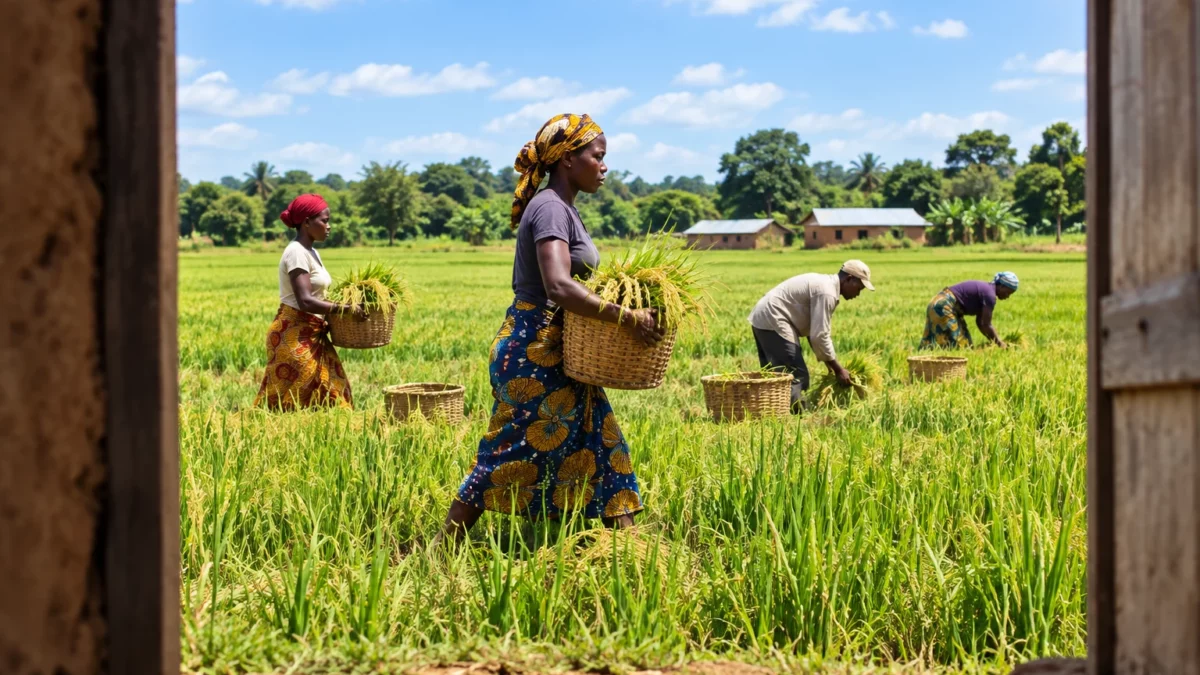
An economy can post sustained growth without sharing its benefits equally. In Tanzania, the next step is therefore to turn the expansion of mining, agriculture and tourism into jobs, public services and stronger incomes, while limiting exposure to external shocks.
A favourable forecast, but no guarantee
The International Monetary Fund (IMF) forecasts growth of 5.9% for the 2026/2027 financial year, which runs from July to June. In its end-of-mission statement published on 24 November, the institution estimates that economic activity could grow by around 6% in the medium term. It cites the mining, agricultural and tourism sectors in particular. Tanzanian media have also reported these projections following the mission led by IMF delegation chief Nicolas Blancher from 11 to 24 November.
The figure should, however, be read as a projection, not an outcome already secured. It depends on global conditions, domestic output and the government’s ability to maintain economic stability. The IMF places this forecast within a growth trajectory estimated at 6.1% in 2025/2026, after 5.1% in 2024/2025.
This development is taking place in an economy where mineral exports, agricultural products and tourism revenues contribute to foreign currency inflows. But these sectors do not all create the same jobs, and their benefits are not distributed equally across regions. Mining revenues can support public finances and exports, while agriculture directly involves many households and tourism also depends on transport, services and international demand.
Prices, foreign exchange and living conditions
The IMF expects inflation to remain within the Bank of Tanzania’s target range of 3 to 5%. It nevertheless forecasts a current account deficit of 2.9% of gross domestic product in 2026/2027, up from 2.5% in the previous financial year. The current account measures, among other things, trade in goods and services with other countries. According to the analysis reported by the institution, the recent fall in gold prices and persistently high oil prices would weigh on this balance.
This external imbalance does not affect everyone in the same way. A larger oil bill can raise the cost of transport and the inputs used by businesses. If these costs feed through to prices, households—particularly those whose budgets are spent on essential goods—feel the consequences. Exporters and the authorities, meanwhile, closely monitor foreign currency earnings and the reserves needed to pay for imports.
The risk does not come only from markets. The Fund cites a prolonged conflict in the Middle East, which could disrupt trade and international travel, as well as a tightening of financing conditions worldwide. Climate shocks could also put pressure on food and energy prices. Finally, social tensions or delays to reforms could undermine investor confidence and tourism activity. These risks are scenarios cited by the IMF, not certain consequences.
The debate over reforms and their effects
To preserve stability, the IMF recommends gradually tightening monetary policy if price pressures intensify. It also advocates greater exchange-rate flexibility, allowing the currency to absorb external shocks more effectively and foreign exchange reserves to be preserved. These measures are intended to contain inflation and imbalances, but their implementation must also take account of their effects on credit, businesses and the cost of imported goods.
On the budget, the institution notes that prudent management of public finances could create room to increase priority social spending. At the same time, it recommends strengthening the monitoring of fiscal risks and the management of public funds. The challenge is concrete: to fund services and human capital without deepening imbalances that would leave the economy more vulnerable.
The IMF also emphasises the private sector’s role in creating jobs. In its discussions with the authorities and other stakeholders, the mission stressed that growth alone is not enough to guarantee widely shared prosperity. Productivity, access to investment and training influence businesses’ ability to hire and pay better wages. Social priorities and reforms that support economic activity will therefore need to advance together, rather than being presented as competing objectives.
An East African issue to watch
Tanzania is a member of the East African Community (EAC), a regional organisation that aims, among other things, to facilitate trade and cooperation between its member states. Its economic outlook therefore has implications beyond the domestic market: trade flows, transport and supply chains link the region’s economies. A sustained rise in energy costs or disruptions to tourism can affect several neighbouring countries, although the scale of the impact varies according to their economic structures.
At the continental level, the issue highlights a question shared by many African states: how can growth and exports be converted into public revenue, jobs and services while reducing dependence on global commodity and energy prices? The answer will depend in particular on budgetary choices, price stability and the ability to spread benefits beyond export sectors.
In the coming months, the key points to monitor will be whether the announced policy directions are implemented and how external indicators and prices evolve. The Tanzanian authorities will have to balance support for priority spending, control of fiscal risks and monetary adjustment. The 5.9% forecast provides a benchmark; on its own, it does not say who will benefit from growth or how the country will withstand the next shock.
For the projections and available data, consult the IMF’s publications on the Tanzanian economy, analysis from Tanzanian outlet The Citizen and indicators from the Bank of Tanzania.