Algeria
 Egypt
 Libya
 Morocco
 Sudan
 Tunisia
 Benin
 Cabo Verde
 Côte d'Ivoire
 Ghana
 Guinea
 Guinea-Bissau
 Liberia
 Mali
 Mauritania
 Niger
 Nigeria
 Senegal
 Sierra Leone
 The Gambia
 Togo
 Cameroon
 Central African Republic
 Chad
 DR Congo
 Equatorial Guinea
 Gabon
 Republic of the Congo
 São Tomé and Príncipe
 Burundi
 Comoros
 Djibouti
 Eritrea
 Ethiopia
 Kenya
 Madagascar
 Malawi
 Mauritius
 Mozambique
 Rwanda
 Seychelles
 Somalia
 South Sudan
 Tanzania
 Uganda
 Angola
 Botswana
 Eswatini
 Lesotho
 Namibia
 South Africa
 Zambia
 Zimbabwe
A bid that goes beyond the pitch
At first glance, this is a sports bid. In reality, the joint bid by Burkina Faso, Mali and Niger to host the 2032 Africa Cup of Nations says something broader: three Sahelian states want to project themselves together on an important continental stage, and not only through security or diplomacy. For the Confederation of Sahel States, the challenge is simple to state: to show that a joint project can produce something more than political communiqués.
African football often provides this kind of mirror. It reveals organisational capacity, finances and infrastructure, as well as the confidence a country or group of countries wants to inspire. In the case of the AES, this ambition has a particular dimension because it is part of a regional realignment already under way since the Alliance was created in September 2023, transformed into a Confederation in July 2024 and officially left Ecowas in January 2025.
The framework set by CAF
The starting point is clear. On 3 July 2026, the Confederation of African Football invited its member associations to submit bids to host the Africa Cup of Nations in 2028, 2032 and 2036. In the same statement, the body recalled that the 2027 tournament will be held in Kenya, Tanzania and Uganda from 19 June to 17 July 2027. CAF says it developed its award framework with support from PwC and external technical, financial and legal advisers.
In other words, the process is open, but the competition remains demanding. A declaration of interest is not an award. It is only entry into a regulated process, in which administrative compliance, financial strength, stadiums, transport, hotels, security and the ability to move teams, supporters and media all matter. CAF describes the system as transparent, credible and ethical.
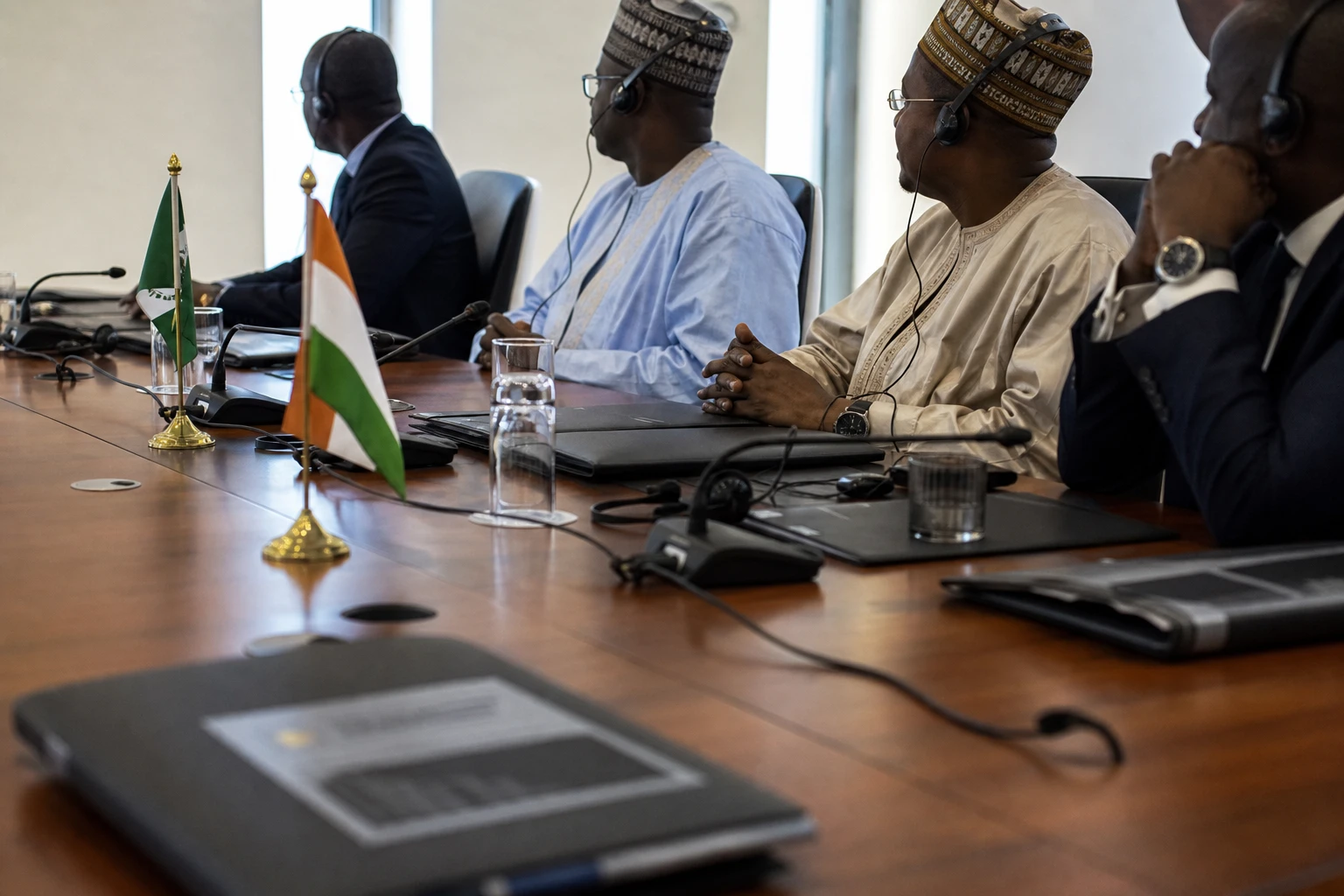
In this context, the initiative by Burkina Faso, Mali and Niger is no improvisation. According to the Nigerien Football Federation, CAF has approved their declaration of interest and authorised them to proceed to the next stages, in accordance with Article 7.3 of the bidding regulations. The step was made public after a meeting in New York on 18 July between CAF president Patrice Motsepe and officials from the three federations.
What this progress means for Burkina Faso, Mali and Niger
The Sahelian trio is not simply pitching a tournament. It is seeking to prove that it can deliver a collective project on a continental scale. For Ouagadougou, Bamako and Niamey, an Africa Cup of Nations would not merely be a sporting event; it would be a test of coordination between administrations, federations, businesses and local authorities. In countries where public resources are under heavy pressure, organising a competition of this size requires very practical choices: where to renovate, where to build, where to connect, and on what timetable.
The challenge is even greater because the three capitals are not operating in a neutral environment. They now share their own political architecture, with confederal instruments, stronger diplomatic coordination and a stated determination to speak with one voice on regional and international issues. The African Press Agency recently reported that AES foreign ministers were already working to harmonise their positions and diversify their partnerships. This gives the Africa Cup of Nations bid a significance beyond sport: it becomes an exercise in practical sovereignty.
But the process has its limits. CAF wants guarantees, not symbols. Infrastructure must meet standards. Access routes must be reliable. Hotel capacity must be credible. And security remains a major factor in a region where African institutions themselves continue to raise the alarm over attacks in Niger and Mali. The African Union condemned terrorist attacks on Nigerien and Malian armed forces on 17 and 18 July on 20 July 2026. In such an environment, the sports bid cannot be viewed without its security context.
For the population, the potential effects are numerous. In major cities, a well-prepared bid could accelerate some investments that would be useful in everyday life: roads, lighting, networks and facilities. In more remote areas, the promise is more indirect, but not absent. A major tournament can stimulate construction projects, local markets, services and training. However, if investment is concentrated solely in the capitals, the event risks widening the already visible gaps between administrative centres and the periphery.
A signal to West Africa and CAF
The continental significance of this bid also lies in its timing. CAF is opening an award process for three consecutive editions, while East Africa is already preparing for 2027 and other bids may emerge. A Sahelian bid backed by three federations together requires the body to consider not only the capacity of individual states, but also regional alliances as a possible response to the concentration of costs and requirements.
This logic matters in a West Africa undergoing realignment. Mali, Burkina Faso and Niger have left Ecowas, but they have not withdrawn from the African space. On the contrary, they are seeking to exert influence differently by building trilateral cooperation. Football thus becomes a proving ground. If the bid progresses, it will show that integration can also be built through sports institutions, federations and joint projects, not only through political summits.
The next steps in the process remain to be seen. CAF has not yet awarded the next editions. The AES has therefore cleared only one stage, an important one but an intermediate one. The real test will begin with the technical bid, followed by assessments of venues, finances and delivery capacity. That is where ambition will meet realities on the ground. It is also where, beyond football, the credibility of a regional project seeking to be judged on its ability to deliver tangible results will be at stake.