Algeria
 Egypt
 Libya
 Morocco
 Sudan
 Tunisia
 Benin
 Burkina Faso
 Cabo Verde
 Côte d'Ivoire
 Ghana
 Guinea
 Guinea-Bissau
 Liberia
 Mali
 Mauritania
 Niger
 Senegal
 Sierra Leone
 The Gambia
 Togo
 Cameroon
 Central African Republic
 Chad
 DR Congo
 Equatorial Guinea
 Gabon
 Republic of the Congo
 São Tomé and Príncipe
 Burundi
 Comoros
 Djibouti
 Eritrea
 Ethiopia
 Kenya
 Madagascar
 Malawi
 Mauritius
 Mozambique
 Rwanda
 Seychelles
 Somalia
 South Sudan
 Tanzania
 Uganda
 Angola
 Botswana
 Eswatini
 Lesotho
 Namibia
 South Africa
 Zambia
 Zimbabwe
A local vote with national significance
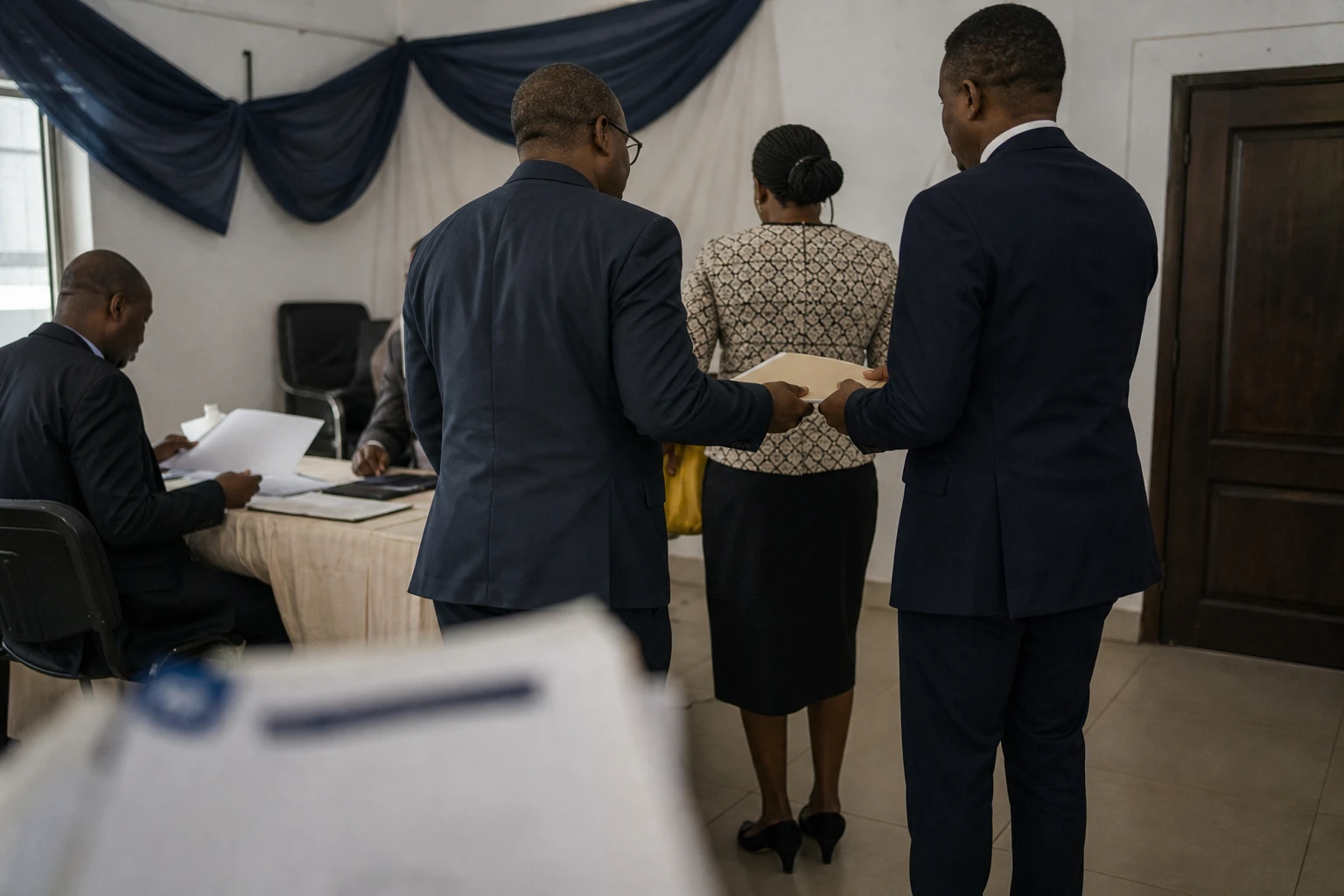
In Osun State, the contest was not just between two candidates. It also tested the staying power of an incumbent governor in a south-western Nigerian state where politics, local networks and regional balances matter as much as national party machinery. The result of the 15 August vote gives Ademola Adeleke a second term and confirms that in Nigeria, a territorial base often remains more decisive than a party label.
Osun is no peripheral state in Nigerian political calculations. It lies in the country’s Yoruba heartland, with Osogbo as its capital, and also carries weight through its mineral resources, notably gold, kaolinite, quartz, lead and zinc. State authorities say they hold 19 mining titles there, 12 of them for gold, while the Nigerian Geological Survey Agency lists maps dedicated to Osun’s mineral potential. In other words, the election result touches on both politics and economic promise.
A tense campaign and a highly political contest
Before the vote, the campaign was marked by accusations of pressure, manipulation and possible infringements on the integrity of the ballot. Nigerian media reported that several candidates had signed a peace pact, as tensions persisted over allegations of fraud, administrative obstruction and the misuse of institutions. Against this backdrop, the Independent National Electoral Commission, INEC, emphasised the importance of a peaceful vote.
Adeleke’s political journey also gave the election a particular dimension. Initially backed by the Peoples Democratic Party, the governor eventually ran under the Accord Party banner, a smaller formation, after disputes swept through the opposition camp. Osun’s PDP had publicly adopted his candidacy under this new label, while several national media outlets reported that the governor had had to contend with internal divisions and legal challenges over the party’s place on the ballot.
On the ground, the contest took shape as a head-to-head battle with Bola Oyebamiji, the candidate of the All Progressives Congress. Adeleke’s camp highlighted continuity in public works, the state’s financial management and social peace. His opponent’s camp, meanwhile, sought to capitalise on criticism of the governor’s record. In this context, the prospect of either a change of government or continuity took on a meaning far broader than a simple party contest.
What Adeleke’s victory changes
Ademola Adeleke’s re-election is first and foremost a domestic political signal. It shows that a governor can survive a party split if he retains a strong local base, community networks and a clear understanding of social expectations. In Osun, support from influential figures in his family circle and the cultural world also bolstered his campaign, not replacing the vote itself but strengthening his visibility.
Second, the election says something about Nigeria’s political economy. Osun remains a state where promises around mining, jobs and local revenues carry significant weight. The state’s investment website presents its subsoil as a development lever, with deposits and licences already identified. But this mineral wealth has political meaning only if it translates into jobs, roads, services and better redistribution. That is where voters’ concerns converge with those of economic operators.
The issue also brought to light the role of federal institutions in a state election. Between Osun’s governorship, INEC, the Economic and Financial Crimes Commission and the presidency in Abuja, the balance of power extends well beyond the boundaries of the federated state. In a country where states enjoy broad political autonomy but remain exposed to federal interference, every electoral dispute becomes a test of credibility for the system as a whole.
A precedent to watch ahead of 2027 and across West Africa
The significance extends beyond Osun. In Nigeria, state elections often serve as a testing ground ahead of general elections. A victory secured after a change of party label and a fiercely contested campaign is a reminder that coalitions remain fluid, even in supposedly stable strongholds. For the opposition and the presidential camp alike, the message is clear: regional alliances, control on the ground and the management of local tensions will be decisive in the run-up to the next major elections.
This dynamic also resonates across West Africa. Nigeria, the ECOWAS region’s largest economy and a central political actor, is closely watched for its ability to hold elections accepted by the main camps. When a state election concentrates so many issues of transparency, security and party realignment, it feeds regional debates about the quality of democracy and the actual role of electoral authorities. Osun has therefore produced more than a winner. The state has also sent a message about the state of Nigerian pluralism, from Osogbo to Abuja.